
Nothing ruins a good hair day faster than frizz, and learning how to get rid of frizzy hair starts with understanding why it happens in the first place. When the outer cuticle lifts, moisture from the air rushes into the strand, swelling it and pushing individual hairs in different directions. The result is that familiar halo of flyaways, puffiness, and rough texture that no amount of brushing seems to fix. The good news is that frizz is not a life sentence. With the right wash-day habits, a few smart product swaps, and simple changes to how you dry and sleep on your hair, you can keep strands smooth, shiny, and manageable in almost any weather. This guide walks you through twelve practical tips that actually work, from sulfate-free shampoo and weekly masks to silk pillowcases and humidity-proof serums, so you can build a routine that fits your hair type and finally enjoy calm, frizz-free hair every day.
Switch to Sulfate-Free Shampoo

- Choose a gentle sulfate-free shampoo that cleans without stripping natural oils.
- Look for glycerin, aloe vera, or coconut oil on the ingredient list.
- Lather mainly at the scalp and let the rinse clean the lengths.
- Wash two or three times a week instead of every day.
Sulfates are harsh cleansers that strip natural oils from the scalp and lengths, leaving the cuticle raised and thirsty for moisture. When the cuticle lifts, humid air rushes in, strands swell, and frizz appears almost instantly. A sulfate-free shampoo cleans gently instead, preserving the oils that keep hair smooth and flexible. Look for formulas with glycerin, aloe vera, or coconut oil, which add hydration while they cleanse. It may take a week or two for your hair to adjust, but the payoff is softer strands, better shine, and far less puffiness after every wash, even on damp days.
Pair your new shampoo with the right conditioner and you will see even better results. Apply conditioner from the mid-lengths to the ends, where hair is oldest and driest, and leave it on for two or three minutes before rinsing. If your hair still feels rough, a weekly deep-conditioning mask adds the extra moisture that daily products cannot. For more wash-day ideas, see our guide to the best shampoo for frizzy hair, which compares gentle formulas for every hair type. Small swaps like this build the foundation for smooth, frizz-free hair that stays manageable between washes.
Deep Condition Every Week

- Use a rich mask with shea butter, argan oil, or avocado once a week.
- Apply to damp hair from mid-lengths to ends, never at the roots.
- Leave it on for 15 to 20 minutes, then rinse with cool water.
- Fine hair should use a lighter mask to avoid a weighed-down finish.
A weekly deep-conditioning mask is the fastest way to restore moisture to thirsty, frizzy strands. Daily conditioners work on the surface, but a mask penetrates deeper, softening the cuticle and filling the gaps that let humidity in. Choose a formula rich in shea butter, argan oil, or avocado, and apply it to damp hair from the mid-lengths down, where damage is worst. Leave it on for fifteen to twenty minutes while you finish your shower routine, then rinse with cool water to seal everything in. After just a few weeks, hair feels silkier, tangles less, and holds a smooth style.
If your hair is fine, choose a lightweight mask and rinse it out thoroughly so strands stay bouncy instead of flat. Thick or coarse hair can handle richer formulas and even an overnight mask once a month for a deeper reset. Homemade options work too: mashed avocado with olive oil or coconut oil with honey both add serious hydration on a budget. Consistency matters more than price, so pick one mask you enjoy and use it every single week. Over time, the cuticle stays flatter, humidity has less to grab onto, and your regular styling routine becomes noticeably easier.
Rinse With Cold Water

- Finish every wash with a cool rinse to close the cuticle.
- Use lukewarm water for shampooing, never hot water.
- A cold rinse adds instant shine and locks in conditioner.
- If a full cold rinse feels harsh, rinse just the lengths.
Hot water feels wonderful, but it opens the hair cuticle and strips away the natural oils that keep strands smooth. Once the cuticle is raised, moisture escapes from inside the hair while humidity rushes in from outside, which is a perfect recipe for frizz. A cool rinse at the end of your wash does the opposite: it lays the cuticle flat, locks in your conditioner, and leaves hair looking shinier and feeling smoother. You do not need ice-cold water; cool is enough to make a visible difference. Try it for two weeks and notice how much calmer your hair looks.
Pair the cool rinse with lukewarm water for the rest of your wash, since hot water also irritates the scalp and fades color faster. If a cold rinse feels too harsh in winter, rinse only the lengths and keep the water off your scalp. Some people finish with a splash of diluted apple cider vinegar, which helps balance pH and smooth the cuticle even further. The habit costs nothing and takes ten seconds, yet it is one of the simplest ways to keep frizz under control between wash days. Smooth, glossy hair often starts with this tiny change.
Apply Leave-In Conditioner

- Apply leave-in conditioner to damp hair, never soaking wet.
- Focus on mid-lengths and ends where frizz starts.
- Use a pea-sized amount for fine hair, more for thick hair.
- Comb through with a wide-tooth comb for even coverage.
Leave-in conditioner is the bridge between washing and styling, and skipping it is one of the most common reasons frizz returns. After rinsing out your regular conditioner, strands are clean but vulnerable, and a leave-in adds a light layer of moisture that keeps the cuticle sealed while hair dries. It also makes detangling easier, which means less breakage and fewer flyaways later. Apply a small amount to damp hair, focusing on the mid-lengths and ends, then comb through gently with a wide-tooth comb. The result is softer, smoother hair that holds its shape without feeling heavy or coated.
Choose your formula by hair type: fine hair needs a lightweight spray, while thick or curly hair benefits from a richer cream. Too much product weighs hair down, so start small and add more only where you see frizz forming. For extra hold on humid days, layer a tiny amount of serum over the leave-in once hair is dry. Health experts at Healthline also recommend leave-in products as one of the simplest home remedies for frizz. With the right leave-in, wash day smoothness lasts well beyond the first morning.
Seal With Argan Oil

- Warm two or three drops of argan oil between your palms.
- Smooth over mid-lengths and ends, never the roots.
- Use on damp hair before styling or dry hair for touch-ups.
- A little goes far; too much oil looks greasy.
Argan oil is rich in fatty acids and vitamin E, which is why it has become a classic frizz fighter. It coats each strand with a thin, weightless barrier that seals moisture inside and blocks humidity from getting in. Warm two or three drops between your palms, then smooth them over the mid-lengths and ends, where frizz is worst. Never apply oil at the roots, or hair will look greasy within hours. Used this way, argan oil adds instant shine, tames flyaways, and keeps styles looking polished from morning until evening, even in damp weather.
Coconut oil and jojoba oil work similarly, so choose whichever your hair absorbs best. Coconut oil suits thick or coarse hair, while jojoba is lighter and better for fine strands. If you prefer a ready-made product, look for a serum that lists argan or silicone near the top of its ingredients. Apply the oil to damp hair before blow-drying for the smoothest finish, or press a single drop over dry flyaways as a quick fix. Sealing is the final step in any anti-frizz routine, and it makes every earlier step work harder.
Dry With Microfiber Towel

- Swap rough cotton towels for a soft microfiber towel or old T-shirt.
- Gently squeeze water out instead of rubbing hair dry.
- Wrap hair for ten minutes, then let it air-dry or diffuse.
- Never brush soaking wet hair; detangle gently when damp.
A regular bath towel is one of the sneakiest causes of frizz. Its rough loops catch on the cuticle, rough it up, and snap fragile strands, especially when you rub vigorously. A microfiber towel or an old cotton T-shirt is far gentler: the smooth fibers absorb water without creating friction, so the cuticle stays flat and curls keep their shape. After washing, gently squeeze sections of hair to press the water out, then wrap it loosely for ten minutes. This one swap reduces frizz, breakage, and drying time all at once, and it costs almost nothing to try.
If you have curly or wavy hair, try plopping: lay the T-shirt flat, flip your wet curls onto it, and wrap it into a turban. This encourages curls to dry in defined clumps instead of separating into frizz. For straight hair, simply pat and squeeze, then let it air-dry about seventy-five percent before using any heat. Our hair care tips guide covers more gentle drying methods for every texture. However you dry your hair, treat wet strands like silk, because the way you handle them now decides how smooth they look later.
Use a Silk Pillowcase

- Switch to silk or satin to cut overnight friction.
- Less friction means fewer tangles and less breakage.
- Silk also helps hair keep moisture while you sleep.
- Wash the pillowcase weekly to keep it clean and smooth.
Eight hours of tossing on a cotton pillowcase creates a surprising amount of friction. Cotton grabs at the cuticle, roughs it up, and tangles strands together, so you wake up with a halo of frizz no matter how smooth your hair was at bedtime. Silk and satin are far kinder: their smooth surface lets hair glide instead of catching, which means fewer tangles, less breakage, and a much calmer style in the morning. Silk also absorbs less moisture than cotton, so your hair keeps the hydration you worked so hard to add. It is a simple overnight fix with results.
If a silk pillowcase feels like a splurge, a satin one gives nearly the same benefit for less money, and a silk scarf or bonnet works well for curly hair. Wrap curls loosely in a pineapple ponytail on top of your head before bed to protect the curl pattern overnight. In the morning, refresh with a light mist of water and a drop of leave-in conditioner instead of rewetting everything. Small nighttime habits like these protect all the smoothing work you did during the day, and they make second-day hair look almost as good as wash day.
Try Apple Cider Rinse

- Mix one part apple cider vinegar with four parts water.
- Pour over hair after shampooing and leave for two minutes.
- Rinse with cool water and let hair air-dry.
- Use once or twice a week to remove buildup and add shine.
Apple cider vinegar is one of the oldest home remedies for frizz, and the science behind it is simple. Healthy hair has a slightly acidic pH, but many shampoos and hard water push it alkaline, lifting the cuticle and inviting frizz. A diluted vinegar rinse restores that acidity, flattens the cuticle, and dissolves product buildup that makes hair look dull. Mix one part vinegar with four parts water, pour it over your hair after shampooing, and leave it for one to three minutes before rinsing with cool water. The vinegar smell fades as hair dries, leaving strands smoother and shinier.
This rinse works best for people with buildup, dullness, or hair that feels coated despite regular washing. If your hair is very dry, follow the rinse with a light leave-in conditioner to replace moisture. Never use undiluted vinegar, and skip the rinse if your scalp is irritated or sunburned. Coconut oil is another classic home remedy: warm a small amount in your palms, smooth it over the ends, and leave it for fifteen minutes before shampooing. Simple kitchen remedies like these can support your routine between salon visits and keep frizz surprisingly manageable.
Diffuse Curly Hair Gently

- Attach a diffuser to spread airflow and protect curl shape.
- Use low heat and low speed to avoid blowing curls apart.
- Cup sections of curls in the diffuser and hold, do not move.
- Stop at eighty percent dry and let the rest air-dry.
For curly hair, the way you dry matters as much as the products you use. A regular dryer nozzle blasts curls apart, breaking clumps into separate strands that puff into frizz. A diffuser spreads the airflow over a wide area, so curls dry in their natural shape with far less disturbance. Use low heat and low speed, cup a section of curls into the diffuser bowl, and hold it still for thirty seconds before moving on. Touching curls while they dry is the enemy, so once you set them, leave them alone until they are completely dry.
Apply your styling products to soaking wet hair before you diffuse, since curl creams and gels need water to form a cast that locks the pattern in place. Once the cast sets, scrunch it out gently with a drop of oil for soft, touchable curls. If your curls still frizz, check your porosity: high porosity hair drinks up products and needs richer creams, while low porosity hair needs lighter formulas. Our curly hair routine guide explains porosity and product layering in detail. Gentle diffusing turns wash day into your best hair day.
Protect From Heat Styling
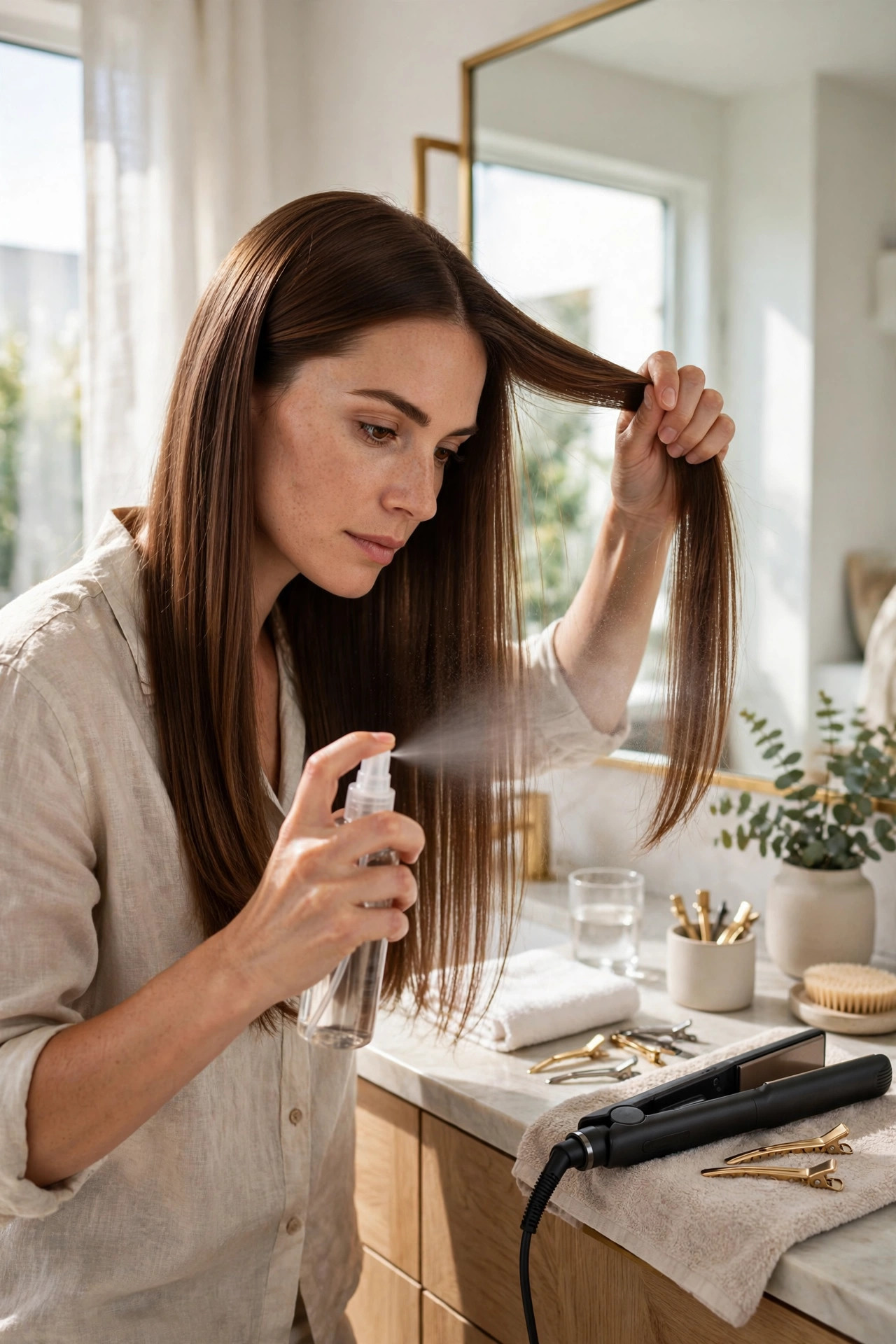
- Always apply heat protectant before flat irons or curling tools.
- Keep tools at or below 350 degrees Fahrenheit.
- Work in small sections and pass over each section once.
- Give hair heat-free days to recover between styling sessions.
Heat styling gives instant smoothness, but repeated high temperatures damage the cuticle and make frizz worse over time. Each pass of a flat iron strips moisture and roughs up the surface, so hair that looked sleek on Monday can look puffy and straw-like by Friday. A heat protectant spray creates a barrier that slows that damage: apply it evenly from roots to ends before any hot tool touches your hair. Keep the temperature at or below three hundred fifty degrees, and work in small sections so one pass does the job. Less heat, used wisely, keeps hair smoother for longer.
Give your hair regular heat-free rest days so the cuticle can recover, and lean on heatless styles like braids, buns, and rollers when you want waves. If you straighten often, a weekly protein treatment helps rebuild strength that heat takes away. Watch for warning signs like split ends, white dots on strands, or hair that snaps when you pull it gently. Those are signals to cut back on heat and add moisture fast. Protecting your hair today is the simplest way to keep frizz from becoming a permanent problem tomorrow.
Tame Humidity With Serum

- Choose a serum with silicone or sealing oils for humid days.
- Apply a pea-sized amount to dry hair before going outside.
- Focus on the canopy and ends where humidity hits first.
- Carry a travel-size serum for midday touch-ups.
Humidity is frizz's best friend, because dry hair drinks moisture straight from the air and swells within minutes. A good anti-humidity serum stops that process by coating each strand with a lightweight shield that locks moisture in and keeps damp air out. Look for formulas with dimethicone or sealing oils like argan and grapeseed, and apply a pea-sized amount to dry hair before you step outside. Focus on the canopy and ends, where frizz shows first. On very damp days, a protective style like a braid or low bun adds another layer of defense.
Serums work best as the final step, after leave-in conditioner and styling products have already done their job. If your hair is fine, use half a pea-sized amount and warm it well between your palms so it spreads evenly without weighing strands down. For thick or coarse hair, you can layer a cream underneath the serum for extra control. Reapply a tiny drop at midday if flyaways return, smoothing it over the surface with flat palms. With the right serum, humid weather stops dictating how your hair looks, and you stay in charge instead.
Trim Split Ends Regularly

- Book a trim every six to eight weeks.
- Ask for a dusting if you want to keep your length.
- Split ends travel upward, so trimming early saves length.
- Healthy ends hold styles better and look shinier.
Split ends are a hidden driver of frizz, because a frayed end catches on neighboring strands and roughs up the cuticle all the way down the hair shaft. No product can glue a split end back together, so the only real fix is a trim. A small dusting every six to eight weeks removes damage before it travels upward and forces a bigger cut later. Tell your stylist you want to keep your length, and ask them to take off only the damaged tips. Regular trims keep ends neat, styles smoother, and hair looking healthy instead of frazzled and thin.
Between salon visits, protect your ends with a drop of oil or serum, and avoid rough brushing that snaps fragile tips. Sleep with hair loosely braided to stop ends from rubbing against the pillow all night. If you notice white dots, see-through tips, or tangles that only form at the bottom, those are signs your ends need attention soon. Healthy ends make the whole style look polished, so treat trims as maintenance, not a setback. Keeping ends fresh is the quiet habit that keeps frizz from creeping back between appointments.
Frizz does not disappear overnight, but small consistent changes add up fast, and now you know how to get rid of frizzy hair for good. Start with one or two tips that feel easiest, like switching to a sulfate-free shampoo or sleeping on silk, then add the rest as they become habits. Pay attention to what your hair responds to, because fine, curly, and coarse hair all need slightly different care. Keep your routine simple, protect your strands from heat and humidity, and trim damaged ends before they split further. With patience and the right products, smooth, shiny, manageable hair is absolutely within reach, whatever the weather throws at you.
FAQ
Why does my hair frizz more in humid weather?
Humidity is the main trigger because dry, porous strands absorb moisture from the air, swell, and lift the cuticle. Sealing the cuticle with a leave-in conditioner, a light serum, or a cream helps block that moisture. On damp days, protective styles and anti-humidity products keep curls and waves smoother for longer.
Can I fix frizzy hair without cutting it short?
Yes, in most cases you can smooth frizz without a big chop. Focus on moisture first with weekly masks and leave-in products, then seal the cuticle with oil or serum. Regular small trims remove split ends that worsen frizz, while gentle drying and a silk pillowcase reduce breakage that makes hair look rough.
Is frizzy hair a sign of damage or dryness?
Frizz usually signals dryness, a raised cuticle, or both, and damage makes it worse. Healthy hair has a flat cuticle that reflects light, while dry or heat-damaged strands lift and catch humidity. A protein treatment helps if hair feels stretchy, while deep moisture works best when strands feel rough and brittle.
How often should I wash frizzy hair?
Most people with frizzy hair do best washing two or three times a week. Overwashing strips natural oils and leaves the cuticle open, which invites more frizz. On off days, refresh with a light mist of water and a little leave-in conditioner, or use dry shampoo at the roots to stretch your style.