Choosing the right clip can change how your whole hairstyle holds up, and types of hair clips explained in plain language makes that choice much easier. Most of us own a messy drawer full of clips bought on impulse, yet we reach for the same one every day because we never learned what the others actually do. Some clips grip thick hair, others vanish into fine strands, and a few exist only to add sparkle to a finished look. This guide walks through twelve clip styles, how each one works, which hair it suits best, and when to use it. By the end, you will know exactly which clip to grab for a quick updo, a polished half-up style, or a wedding guest look.
Classic Claw Clips

- Twist hair upward, then clamp the clip over the fold.
- Choose large claws for thick hair, minis for half-up styles.
- Matte and tortoiseshell finishes suit most outfits.
- Pull out face-framing strands for a softer finish.
The claw clip is the hero of lazy-day hair, and it earns that title by holding a full twist of hair with one quick squeeze. You gather your hair, twist it upward, fold the ends over, and clamp the clip down the middle. The spring-loaded teeth grip from both sides, so the style stays put through errands, workouts, and long workdays. Large claws suit thick or long hair, while mini versions handle half-up styles and short layers beautifully. Matte finishes look modern, tortoiseshell feels timeless, and bright colors add personality to an otherwise simple outfit.
If your claw clip keeps sliding out, the problem is usually size, not technique, so start by matching the clip to your hair density. Thick hair needs a large clip with long, curved teeth and a strong spring, while fine hair slips less with a smaller clip that has overlapping teeth and a non-slip lining. Try twisting tighter before you clamp, and tuck the ends under the clip for extra hold. For a polished finish, pull out two face-framing strands and let them fall softly. Byrdie’s claw clip guide shows how stylists size clips for every hair type.
Everyday Bobby Pins

- Slide pins in wavy side down for the strongest grip.
- Cross two pins in an X to lock stubborn layers.
- Match pin color to your hair for invisible hold.
- Use gold or pearl pins as a visible accent.
Bobby pins are the smallest tool in your hair kit, yet they solve more styling problems than almost any other accessory. One grooved side grips the hair while the smooth side slides in easily, so the pin stays hidden and holds firm. Use them to pin back bangs, secure a twist, tame flyaways, or anchor an updo that refuses to stay put. They work on every hair type, from fine strands to thick curls, and they cost almost nothing. Keep a few in your bag, because a single pin can rescue a hairstyle in seconds.
The trick to bobby pins is hiding them well and placing them so they grip. Slide the pin in with the wavy side facing down against your scalp, then push it through the section you want to hold and back again for a stronger anchor. Crossing two pins in an X shape locks layers in place all day. Match the pin color to your hair so it disappears, or choose gold and pearl versions when you want the pins to show. For curly or coily hair, open the pin before sliding it in so it grabs texture without snagging.
Elegant French Barrettes

- Gather the top section and slide the bar through.
- Press the clasp until it clicks shut.
- Best for fine to medium hair and half-up styles.
- Gold and tortoiseshell suit polished, dressy looks.
A French barrette is the polished cousin of the everyday clip, built for half-up styles that need to look intentional. It has a flat decorative top and a tension bar underneath that pops into place with a satisfying click. You gather a section of hair, slide the bar through, and press the clasp shut. The result sits flat against your head with no bulk, which makes it perfect for work, weddings, and dinners. Metal versions in gold or silver feel classic, while tortoiseshell and enamel designs add a modern twist to the look.
French barrettes work best on fine to medium hair, because the tension bar grips a moderate amount of hair without slipping. Thick hair can still wear them, but you should choose a larger barrette with a stronger spring and hold only a smaller section. For a classic look, smooth the top section back, secure it at the crown, and let the rest fall loose. Try pairing a gold barrette with soft waves for an elegant evening style, or explore more claw clip hairstyles when you want a faster, more casual updo instead.
Simple Snap Clips
- Bend open, place over a small section, press flat.
- Best for bangs, side pieces, and flyaways.
- Keep sections small so the clip keeps its snap.
- Decorative versions double as hair jewelry.
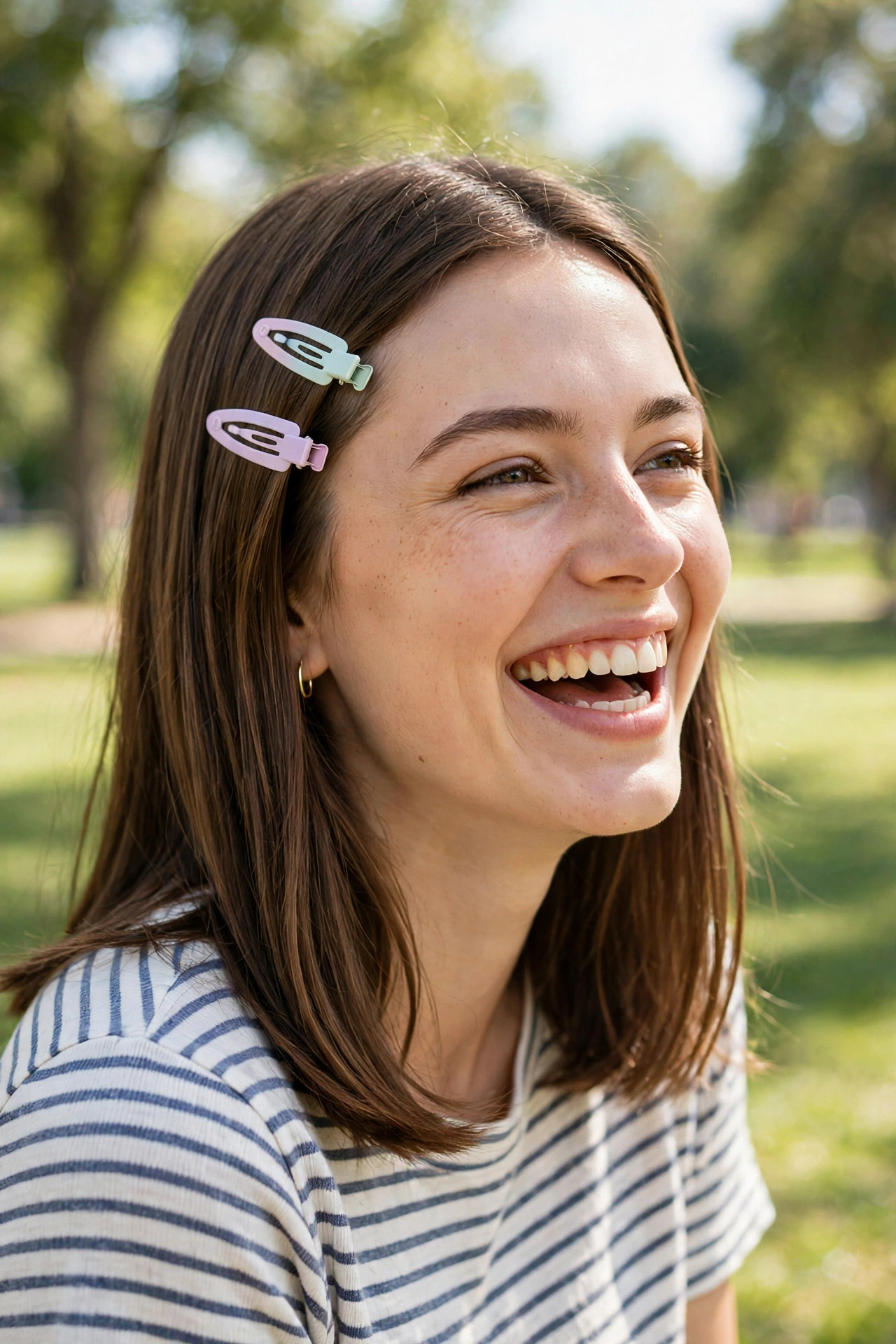
Snap clips are the simplest clips you can own, and their charm lies in how quickly they work. You bend the metal strip open, place it over a small section of hair, and press it flat until it snaps shut. They lie close to the scalp, so they hold bangs, side pieces, and flyaways without adding bulk. Kids love them for school, and adults reach for them during makeup or a quick tidy-up. They come in every color, from plain black to glitter and pastel, which makes them easy to match with any outfit.
The main limit of a snap clip is how much hair it can hold, so keep the section small and flat for the best grip. If you overload it, the metal bows, loses tension, and eventually stops snapping shut. For fine hair, choose a clip with a slightly textured or rubberized coating so it grips instead of sliding. Decorative snap clips with pearls, rhinestones, or enamel shapes double as jewelry for your hair and lift a plain ponytail in seconds. Store them flat in a small box, because bent snap clips rarely recover their original tension.
Retro Banana Clips

- Gather hair at the nape, clip upward along the curve.
- Best for long, thick, or curly hair.
- Fan the ponytail ends out for retro volume.
- Also secures French braids and low twisted buns.
Banana clips bring back a beloved eighties silhouette and turn a simple ponytail into something with real volume. The long, curved clip has a row of teeth down the middle that gathers hair from the nape upward, creating a full, lifted ponytail that fans out beautifully. You simply open the clip, slide it under your gathered hair, and close it along the curve. It works best on long hair, especially thick or curly textures that need the extra length. MasterClass guide to hair clips also lists banana clips among the classics worth knowing.
To get the most from a banana clip, brush your hair smooth first and gather it at the nape before clipping upward. The teeth should catch the hair evenly, so take a moment to spread the strands across the clip instead of bunching them in one spot. Once closed, gently tug the ponytail to add volume and fan the ends outward for a retro, bouncy finish. Banana clips also secure a French braid or a low twisted bun without flattening the shape. Choose a matte black clip for everyday wear or a tortoiseshell one when you want a vintage-inspired statement.
Strong Alligator Clips

- Clip sections away while blow-drying or curling.
- Teeth along the whole jaw grip thick hair best.
- Keep four to six clips in your styling kit.
- Wipe clean after use to keep the spring strong.
Alligator clips are the workhorses of the styling world, and hairstylists rely on them every single day. Their long jaws and strong spring grip large sections of hair firmly, which makes them perfect for sectioning during blow-drying, curling, or coloring. You clip a section away, work on the rest, then release it without creases or tangles. They also hold thick hair in a quick twist when you need it off your face. For everyday styling ideas, browse these half-up hairstyles and see how sectioning clips make each look easier to build.
Alligator clips are plain metal, but decorative versions with pearls or enamel exist for days when you want the clip to show. Choose a clip with teeth along the whole jaw if your hair is thick or slippery, because the extra grip stops sections from sliding loose mid-style. Keep a set of four or six in your kit so you can section a full head of hair at once. They are inexpensive, unbreakable, and easy to clean with a wipe. Once you start using them for blowouts and curling sessions, you will wonder how you ever styled without them.
Sleek Duckbill Clips

- Smooth jaws hold hair without creases or snags.
- Pin curls while they cool for bouncy waves.
- Match clip length to the section you hold.
- Steel versions last longest and wipe clean easily.
Duckbill clips look like slim metal bills, and their smooth, toothless jaws make them ideal for holding hair without leaving marks. Stylists use them to pin curls while they cool, hold sections during a blowout, and keep wet hair out of the way during color work. Because they have no teeth, they slide out cleanly without snagging or creasing the hair. At home, they work beautifully for setting pin curls overnight or holding a fringe back while your makeup sets. Their flat profile also means they sit comfortably under a scarf or a shower cap.
Choose duckbill clips in a length that matches the section you want to hold, because a clip that is too short will slip and one that is too long feels clumsy. Steel versions last longest and wipe clean in seconds, while colorful coated ones are easier to spot in a kit. For pin curls, roll the curl, slide the clip over the base, and let it cool before you remove it. The result is a bouncy wave with no dents. Keep a handful in your drawer for styling sessions, and you will reach for them more often than you expect.
Decorative Pearl Barrettes
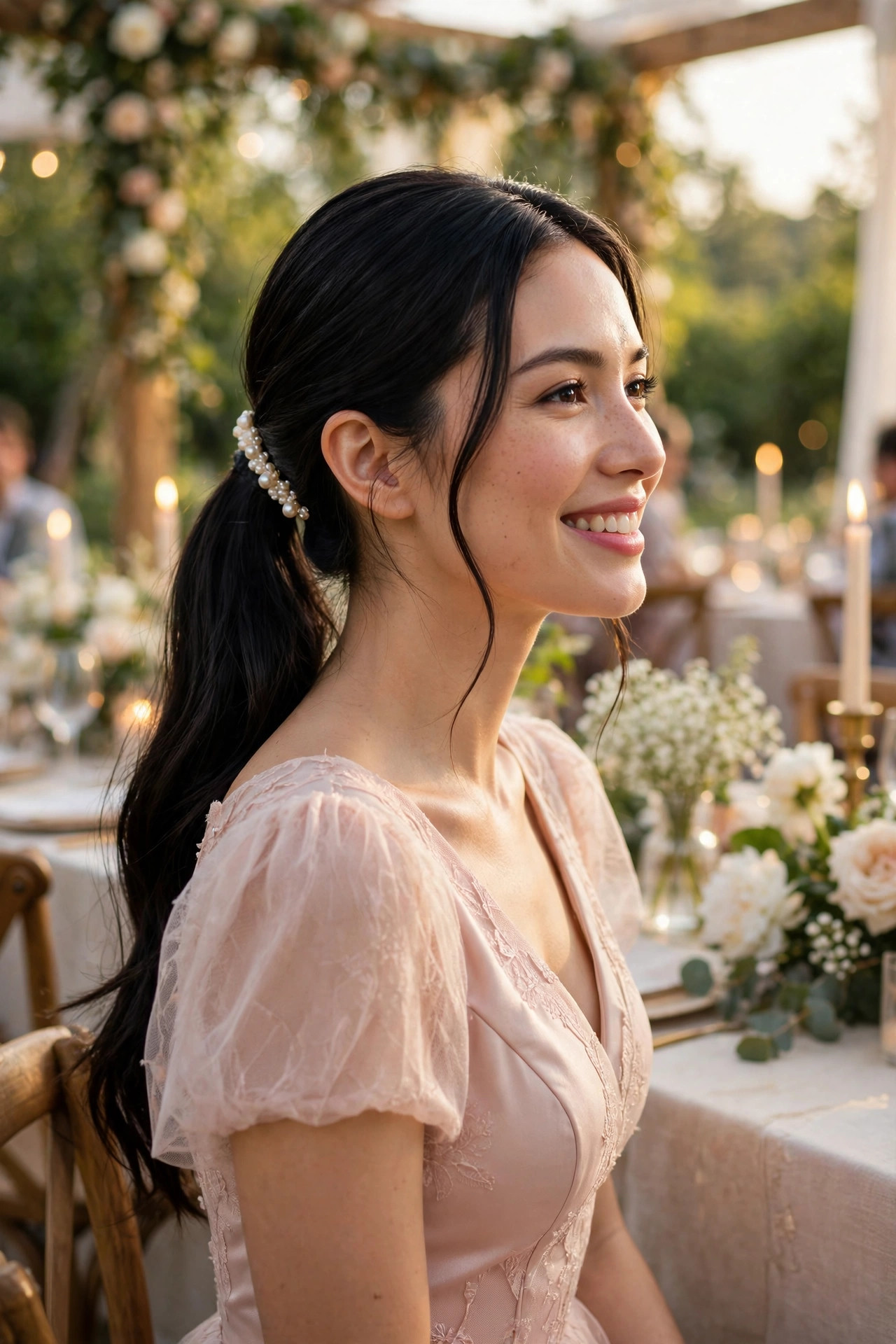
- Best in half-up styles and low ponytails.
- Pair with soft waves for wedding guest looks.
- Smooth hair first so pearls catch the light.
- Store in a soft pouch to protect the finish.
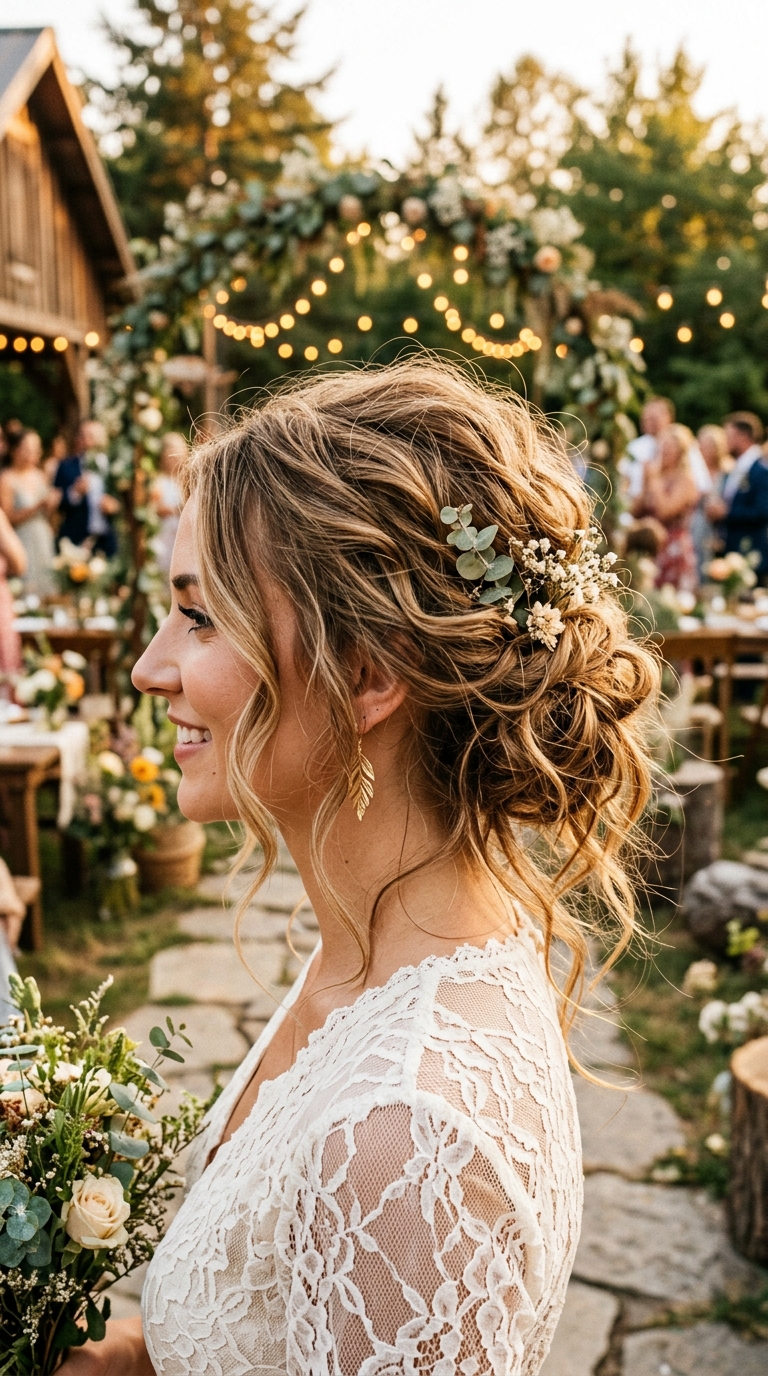
Pearl barrettes turn an ordinary hairstyle into something that looks ready for a celebration. Rows of small pearls sit along a slim metal bar, catching the light every time you move your head. They work best in half-up styles, low ponytails, and swept-back looks where the barrette stays visible. Pair one with soft waves and a neutral outfit for a wedding guest look, or use two smaller ones to frame a simple bun. Faux pearls look just as lovely as real ones and cost far less, so you can collect several styles without worry.
The key to wearing pearl barrettes is letting the pearls do the talking, so keep the rest of your look simple. Smooth the hair with a light serum before clipping, because frizz competes with the shine of the pearls. Place the barrette slightly above the ear for a classic feel, or wear a pair symmetrically for a vintage-inspired finish. They suit straight, wavy, and curly hair alike, though very thick hair may need a stronger barrette underneath. Store pearl clips in a soft pouch so the finish stays bright and the pearls stay firmly attached.
Handy French Pins
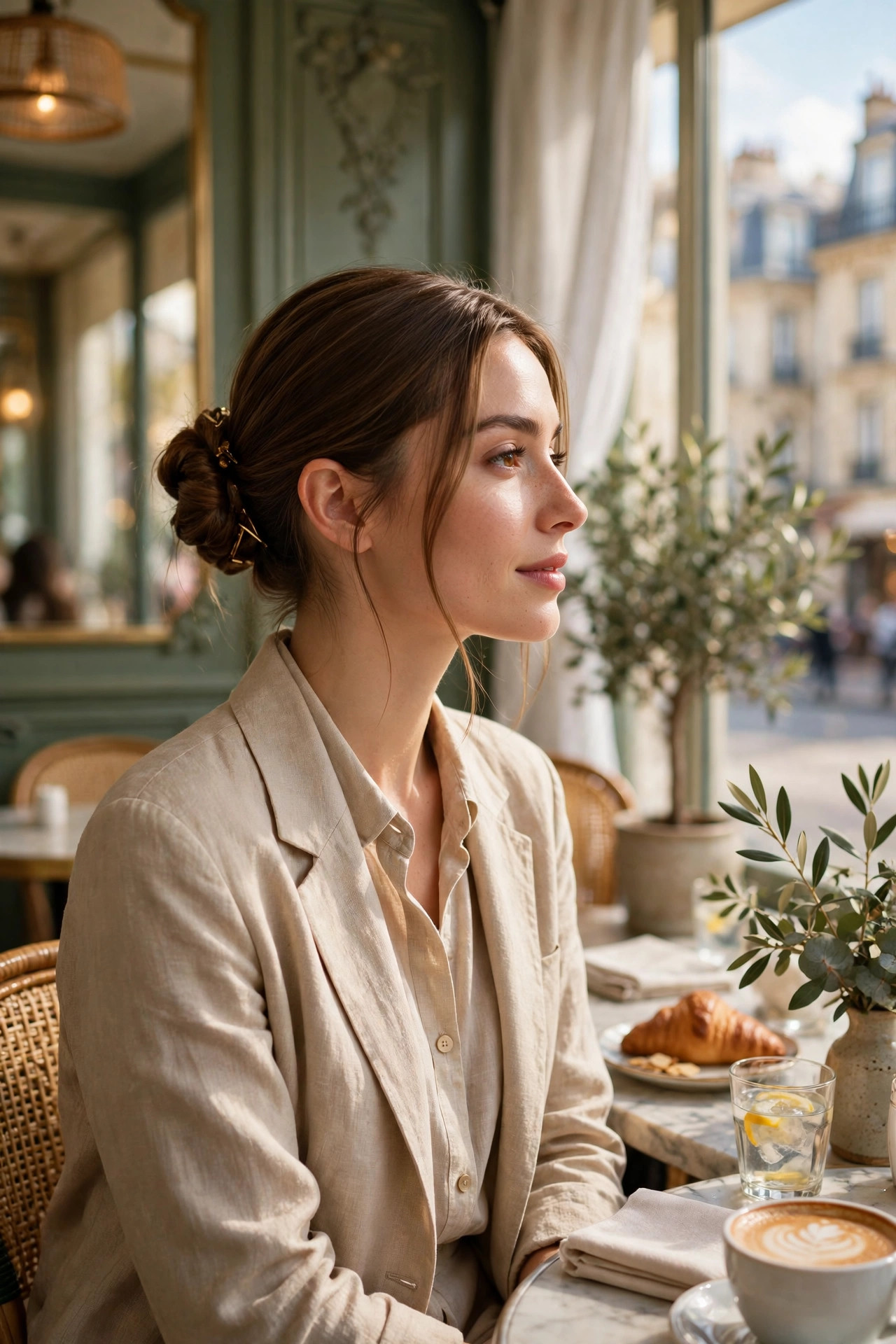
- Twist hair up, weave the pin through the fold.
- Best for long hair and crease-free updos.
- Start with damp hair while you practice.
- Wooden pins suit fine hair, metal grips thick hair.
A French pin is a single curved stick of metal or wood that holds a twist or bun with surprising strength. You gather the hair, twist it upward, then weave the pin through the fold and back out the other side. The tension of the twist keeps the pin locked in place, so the style holds for hours without a single elastic. French pins suit long hair best, and they leave no dents or creases behind. They look effortlessly chic, like something a Parisian woman would wear to a market on a Sunday morning.
Learning to use a French pin takes practice, so start with damp hair that grips more easily. Twist firmly, hold the fold with one hand, and slide the pin in at an angle, catching hair from both sides of the twist. If it slips, your twist is too loose, so try again with a tighter roll. Wooden pins feel warm and gentle on fine hair, while metal pins grip thick hair firmly. Once you master the motion, you can create updos in under a minute, and these wedding guest hairstyles show how polished a pin twist can look.
Twist-Proof Spin Pins

- Screw the pin into the bun like a corkscrew.
- Two pins hold most buns, four secure thick hair.
- Leaves no dents when you take it out.
- Rinse after use to keep the metal grippy.
Spin pins are clever little spirals that replace a whole handful of bobby pins in one twist. Each pin is a small corkscrew of metal that you screw into a bun, where it locks the hair from the inside out. Two pins can hold a full bun securely, and four will keep even the thickest hair in place through a long day. They work on every hair length that can form a bun, and they disappear completely inside the style. If bobby pins always slip out of your hair, spin pins might become your new favorite tool.
To use spin pins, twist your hair into a bun and hold it with one hand while you screw the pin in with the other. Turn it so the spiral catches the hair evenly, and stop when you feel it grip the base of the bun. Place a second pin on the opposite side for balance, then tug the bun to check the hold. The pins leave no dents, so your hair falls smooth when you take them out. Rinse them after use if you style with products, because buildup can dull the metal and weaken the grip.
Playful Butterfly Clips

- Snap onto small sections for a playful accent.
- Best for fine to medium hair and kids.
- Tease the section slightly so the clip grips.
- Mix pastel and glitter colors for festival looks.
Butterfly clips are pure nostalgia, straight from the nineties, and they are having a joyful comeback. These small, colorful clips snap onto sections of hair with a tiny hinge, and their wings flutter slightly as you move. They work best on fine to medium hair, where they can hold small sections without slipping. Use them to pin back the front pieces, decorate a braid, or add a playful pop of color to a simple ponytail. They come in pastels, glitter, and translucent shades that catch the light beautifully. Wear several at once for a playful, youthful finish.
Because butterfly clips are small and light, they suit children and adults with finer hair equally well. They also make a sweet finishing touch for festival looks, birthday parties, and summer days when your hair needs a little fun. To keep them in place, clip them onto a slightly teased section so the teeth have something to grip. Avoid overloading one clip with too much hair, because the hinge is delicate and can snap. Mix colors that match your outfit, or clash them boldly for a statement that feels fresh and confident.
Statement Jeweled Clips

- One jeweled clip is enough for evening sparkle.
- Best in low buns and side-swept waves.
- Keep other jewelry simple so the clip shines.
- Store in a lined box to protect the stones.
Jeweled clips are the finishing touch that turns a simple hairstyle into an evening look. Rhinestones, crystals, and beads are set along a slim barrette or comb, catching the light with every turn of your head. They shine brightest in low buns, side-swept waves, and half-up styles where the clip stays on display. One jeweled clip is usually enough, because the sparkle speaks for itself. Choose clear crystals for a classic glow, or colored stones that match your dress for a coordinated, red-carpet feel. They also photograph beautifully, so they are a favorite for parties, proms, and wedding photos.
When you wear a jeweled clip, keep the rest of your accessories quiet so the sparkle stays the star. A single statement earring or a plain necklace pairs well, while heavy jewelry can compete and look cluttered. Secure the clip firmly, because jeweled clips are heavier than plain ones and can slide in fine hair. A light mist of hairspray around the clip helps it stay put all evening. After the event, wipe the stones gently and store the clip in a lined box so the setting stays bright and the stones stay secure.
Now that you know what each clip does, building a small collection becomes simple and fun. Start with one large claw clip, a pack of bobby pins, and a French barrette, then add pearl or jeweled pieces for special occasions. Match the clip to your hair type first, then to the occasion, and you will rarely reach for the wrong one again. Remember that types of hair clips explained clearly is all it takes to stop guessing and start styling with confidence. Keep your favorites in one easy-to-reach spot, and enjoy how much smoother your mornings feel.
FAQ
Which hair clip holds thick hair best?
Large claw clips and strong alligator clips hold thick hair best, because their wide jaws and firm springs grip a lot of hair at once. Choose a clip with long, curved teeth and a sturdy spring, and twist the hair firmly before clamping. Avoid small snap clips for updos, since they bow under heavy hair and slip out within minutes.
Are claw clips good for fine hair?
Yes, but size matters more than the style itself. Pick a small or medium claw with overlapping teeth and a non-slip lining so it grips instead of sliding. Twist the hair tightly, tuck the ends under the clip, and add a bobby pin at the base for extra security. Matte finishes grip better than smooth, shiny plastic on silky strands.
How do I stop hair clips from slipping out?
Start with slightly textured hair, because freshly washed, silky strands are the hardest to grip. Add a little dry shampoo or texturizing spray at the roots, twist the section firmly, and choose a clip with teeth or a rubberized lining. For extra hold, crisscross two bobby pins over the clip base so it cannot slide loose during the day.
Which clips are best for weddings and formal events?
Pearl barrettes, jeweled clips, and elegant French barrettes suit formal events best, because they add polish without overpowering the hairstyle. Place one statement clip in a low bun or half-up style, keep the rest of the hair smooth, and match the metal to your jewelry. For brides, a crystal clip pairs beautifully with soft waves and an updo.