
Nothing ruins a fresh protective style faster than constant scratching, and if you are asking why do braids itch, you are far from alone. That nagging itch usually starts within a day or two of installation, and it can come from several fixable causes, including the alkaline coating on synthetic hair, braids that are pulled too tight, a dry scalp, or product buildup trapped along your parts. The good news is that most itchy scalps calm down quickly once you know what is triggering the irritation. This guide explains the twelve most common causes and the fast, gentle remedies that actually work, from a simple vinegar soak before installation to soothing oils and proper washing habits, so you can enjoy your style in comfort instead of counting the days until takedown.
Soak Extensions Before Installing

- Soak synthetic braiding hair in warm water and apple cider vinegar before your appointment.
- Mix one part vinegar with three parts warm water and submerge the hair completely.
- Wait fifteen to thirty minutes until a white film floats to the surface.
- Rinse the hair twice in cool water and air-dry it fully before braiding.
Most synthetic braiding hair leaves the factory coated in an alkaline finish that protects the fibers in the package, but that same coating can irritate your scalp the moment the style goes in. Healthy skin sits slightly acidic, around pH 4.5 to 5.5, while fresh synthetic hair can measure as high as pH 11. When the two meet, the mismatch strips the scalp's protective barrier and triggers itching, redness, and small bumps, sometimes within hours. A vinegar soak neutralizes that coating before installation, which is why it is the single most effective prevention step you can take.
Fill a basin or large bowl with warm water and add apple cider vinegar, roughly one part vinegar to three parts water, then submerge the braiding hair without removing its bands. After about fifteen minutes you should see a white film forming on the surface, which is the alkaline coating lifting off the fibers. Rinse the hair twice in cool water, squeeze out the excess gently, and let it air-dry completely before your appointment. Your stylist can install the pre-treated hair exactly as usual, and the difference in comfort is often noticeable from the very first day of wear.
Loosen Tight Braids Gently
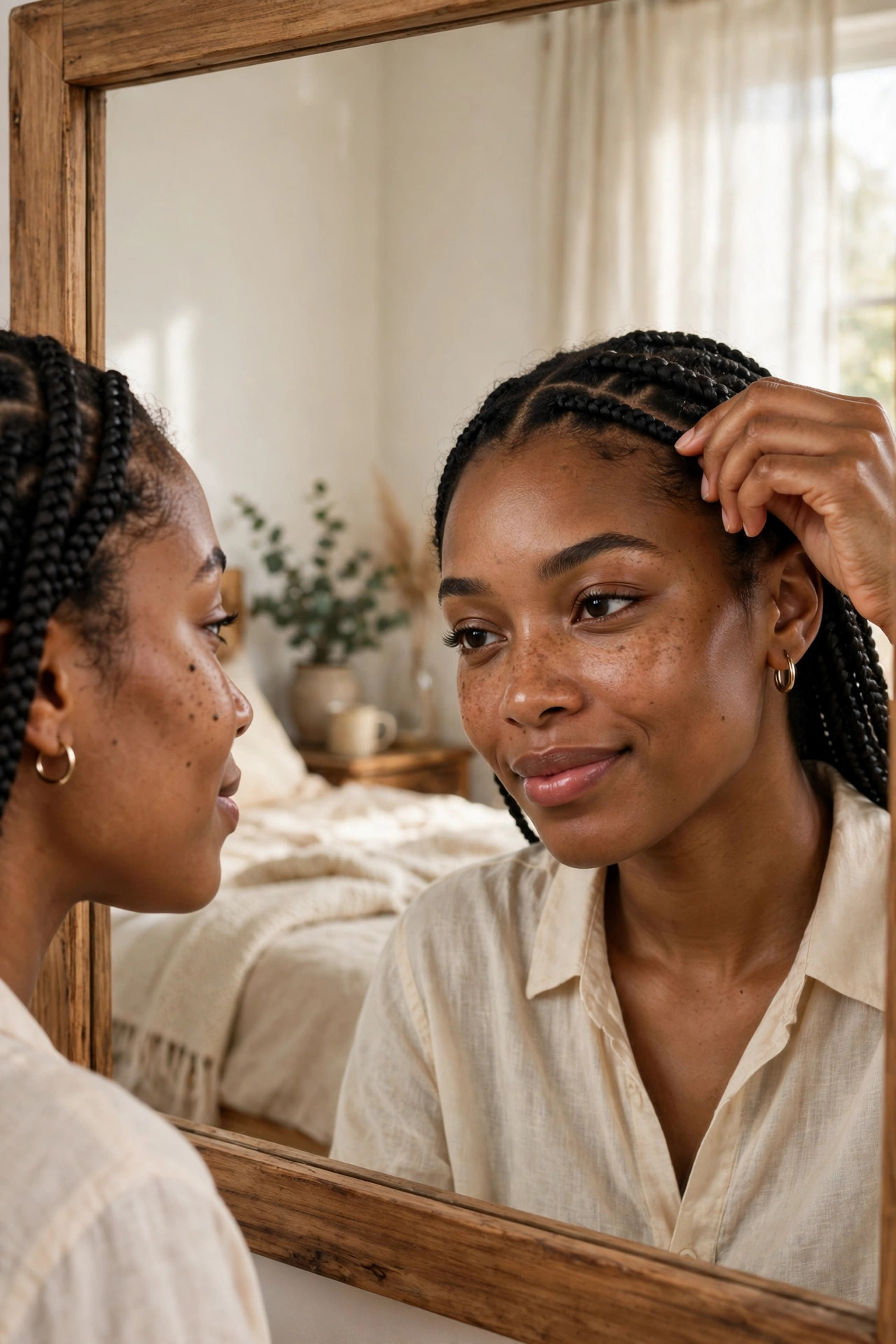
- Ask your stylist to braid with firm but comfortable tension, never painful pulling.
- Loosen the first row of braids gently with your fingertips if they ache.
- Press a warm damp towel against sore spots for ten minutes to ease tension.
- Never yank or tug at tight braids, since that can damage follicles.
Tension is the second most common cause of itchy braids, and it is also the easiest to recognize. When braids are installed too tightly, they pull constantly on the hair follicles, creating tiny areas of inflammation around each root. That irritation registers as itching, soreness, or a dull ache along the hairline and crown, and it often worsens when you lie down or tie the style up. Speak up during installation if the pulling hurts, because a good stylist would rather adjust tension now than have you return with bumps, broken edges, or a style you cannot wait to remove.
If your braids feel too tight after installation, start by loosening the perimeter braids with your fingertips, working the base back and forth until the pull eases. A warm damp towel pressed against the sore area for ten minutes relaxes the scalp and improves blood flow, which often brings quick relief. Avoid tying the style into a bun or tight ponytail while the roots are tender, since that adds pull. If soreness, swelling, or bumps last more than a few days, loosen the style or take it down, because no hairstyle is worth risking your edges.
Wash Scalp With Diluted Shampoo

- Mix a sulfate-free shampoo with water in a spray bottle before applying.
- Spray the mixture directly onto your parts and along the hairline.
- Massage gently with your fingertips, never your nails, for one minute.
- Rinse thoroughly and dry the roots completely with cool air.
Skipping wash day is one of the fastest ways to turn a comfortable style into an itchy one. Sweat, oil, dead skin, and leftover styling products collect along your parts and at the base of each braid, and that buildup feeds the yeast that naturally lives on the scalp. As the yeast multiplies, it causes flaking, redness, and the itch that no amount of scratching seems to satisfy. Aim to cleanse your scalp every seven to ten days while wearing braids, even if the braids still look fresh, because a clean scalp is the foundation of a comfortable protective style.
Diluted shampoo is the safest way to wash braided hair without creating frizz or loosening the style. Mix a sulfate-free cleanser with warm water in a spray bottle, then spray it directly onto your parts and massage gently with the pads of your fingers for about a minute. Let the rinse water run down the length of the braids instead of scrubbing them, then blot with a microfiber towel and dry the roots on a cool setting. For more wash-day guidance, see our braid care guide on keeping protective styles clean, fresh, and comfortable between salon visits.
Rinse With Apple Cider Vinegar
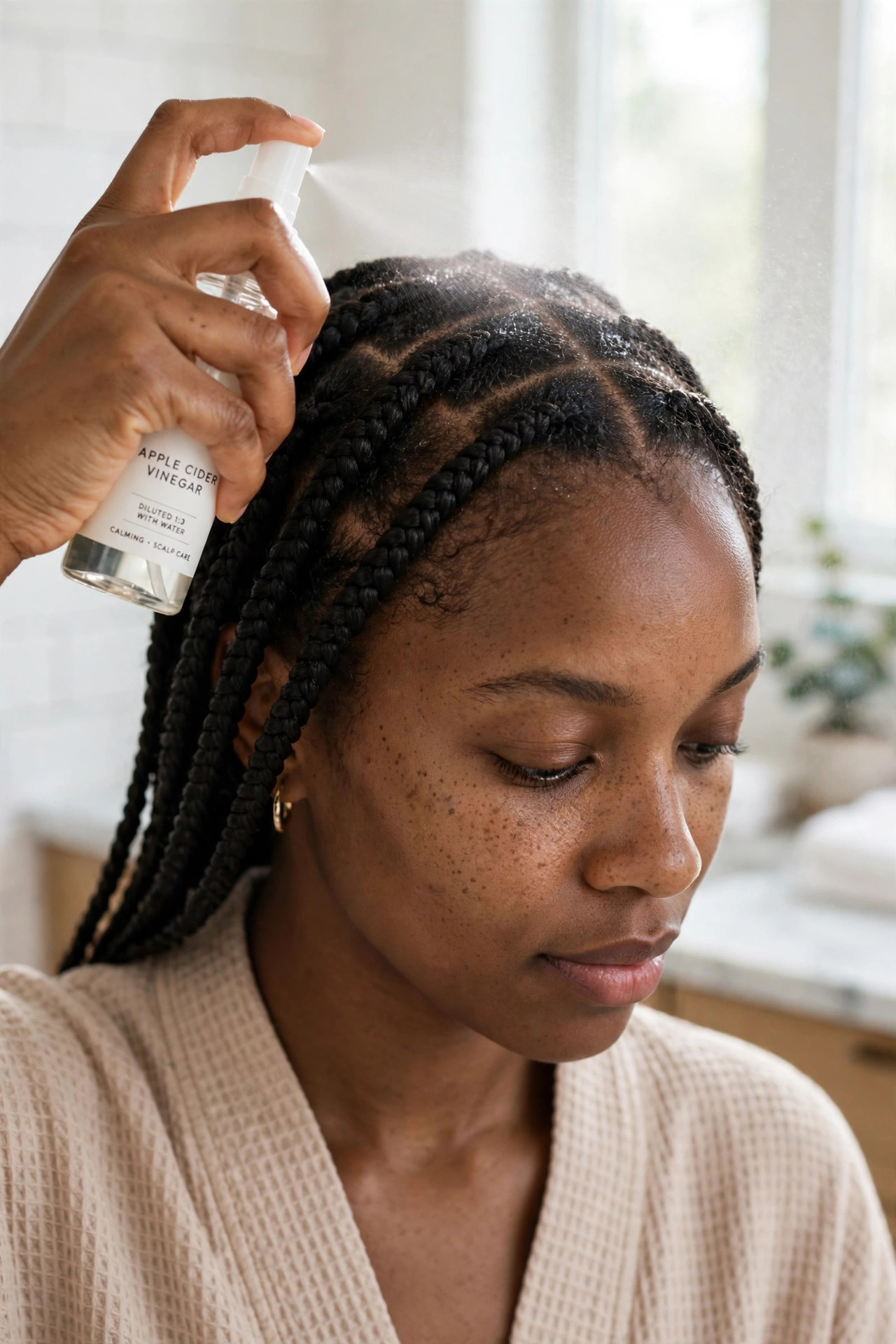
- Mix one part apple cider vinegar with three parts water in a spray bottle.
- Mist the solution along your parts and let it sit for five minutes.
- Rinse gently with cool water or leave it in if the itch is mild.
- Use the rinse two or three times a week for steady relief.
An apple cider vinegar rinse is the classic remedy for itchy braids, and the reason it works is simple chemistry. The vinegar is acidic, so it neutralizes the alkaline residue left by synthetic hair and restores the scalp's natural pH balance. That calmer environment discourages the yeast and bacteria that cause flaking and itching, while the rinse also dissolves product buildup sitting on the skin. Mix one part vinegar with three parts water, mist it along your parts, and let it sit for five minutes before rinsing. The smell fades quickly as the hair dries, leaving the scalp feeling fresh.
You can use the diluted mixture as a spot treatment when only a few areas itch. Dab it onto the irritated parts with a cotton ball or a cloth, leave it for a few minutes, and rinse lightly if the skin feels sensitive. If your scalp is red or broken from scratching, dilute the mixture further or skip the vinegar until the skin calms, since acid on open skin can sting. For most people, though, the rinse is gentle enough for use, and many find that their itching eases noticeably within the first week of adding it to their routine.
Moisturize With Lightweight Oils
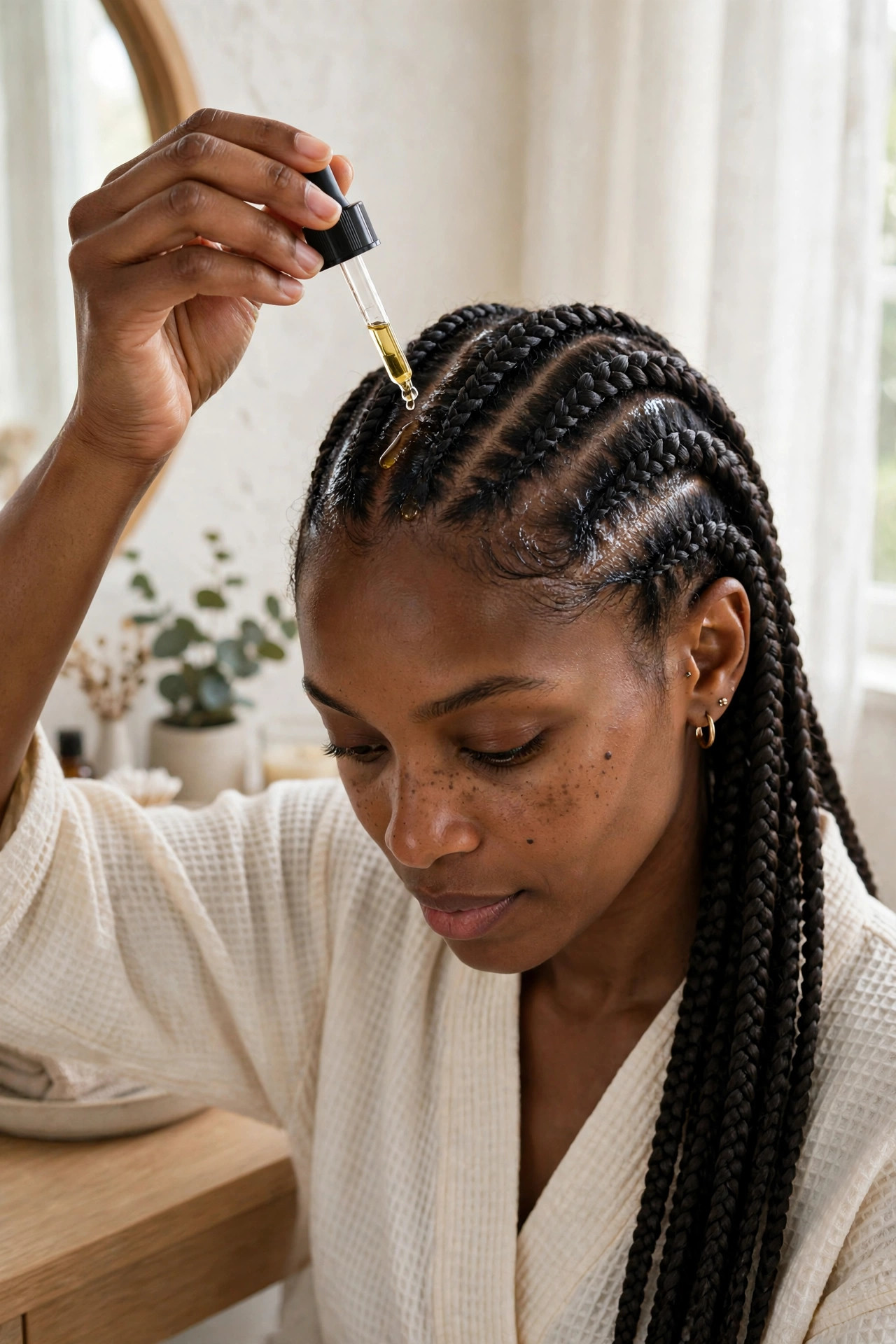
- Mist your scalp lightly with water before applying any oil.
- Choose jojoba, grapeseed, or argan oil instead of heavy grease.
- Apply a few drops along the parts with a dropper or fingertips.
- Use oil two or three times a week, never daily in heavy layers.
Braids can leave the scalp dry because the style blocks your natural oils from traveling down the hair shaft, and a dry scalp itches. The fix is moisture, but the type of moisture matters. Heavy greases and thick coconut oil sit on the surface, clog pores, and can actually feed the yeast that causes flaking, so they often make the itch worse. Lightweight oils like jojoba, grapeseed, and argan absorb easily and mimic the scalp's own sebum, which is why they calm dryness without buildup. Mist the scalp with water first, then smooth a few drops along each part.
Less is more when you oil a braided scalp, so start with only a few drops and add more only where the skin still feels tight or flaky. Apply the oil after washing, while the scalp is still slightly damp, so the moisture gets sealed in rather than sitting on dry skin. If you have a sensitive or oily scalp, choose a water-based leave-in spray instead of oil and use it every other day. With the right product and a light hand, your scalp stays hydrated, comfortable, and free of the white flakes that signal dryness.
Soothe With Tea Tree Oil

- Always dilute tea tree oil with jojoba or grapeseed oil before use.
- Mix three or four drops into a tablespoon of carrier oil.
- Dab the blend along itchy parts with a cotton ball or fingertips.
- Use it two or three times a week, not every day.
Tea tree oil is one of the most effective natural remedies for an itchy braided scalp because it works on several fronts at once. It has antifungal and antibacterial properties that fight the yeast overgrowth behind many cases of flaking and itching, and its anti-inflammatory compounds calm the redness and irritation that make the itch feel worse. The cooling tingle it leaves behind also distracts from the urge to scratch. Never apply it undiluted, though, because pure essential oil can burn sensitive skin and turn a mild itch into a painful rash.
Mix three or four drops of tea tree oil into a tablespoon of jojoba or grapeseed oil, then dab the blend along your parts with a cotton ball and let it absorb. Peppermint oil works similarly, and its menthol gives a cooling sensation that many people find instantly soothing, while lavender oil adds a calming scent that helps you relax. Health experts at Healthline also list tea tree oil among the best home treatments for an itchy scalp. If redness or burning appears after use, rinse the area well and switch to a gentler remedy like aloe vera instead.
Calm Skin With Aloe Vera

- Use pure aloe vera gel with no added fragrance or alcohol.
- Apply a thin layer directly onto itchy parts with clean fingertips.
- Leave it on for fifteen minutes, then rinse or leave it in.
- Store the gel in the fridge for an extra cooling effect.
Aloe vera is the gentlest remedy on this list, which makes it the best first choice when your scalp is red, tender, or already irritated from scratching. The gel cools on contact, calms inflammation, and adds a light layer of moisture without leaving a greasy residue on the braids. It also contains enzymes that help dissolve dead skin cells sitting on the scalp, so flakes clear faster. Choose a pure gel with no fragrance or alcohol, since those additives can sting broken skin and undo the soothing effect you are trying to achieve.
Scoop a small amount of gel onto clean fingertips and press it directly onto the itchy parts, letting it sink in for about fifteen minutes before rinsing or leaving it in place. For an extra cooling effect, keep the gel in the fridge and apply it cold, which feels wonderful on a hot, irritated scalp. Aloe also pairs well with a drop of tea tree oil for people who want both soothing and antifungal action in one step. Use it as often as needed, because unlike heavier oils, pure aloe rarely causes buildup or clogged pores.
Dab Witch Hazel on Parts
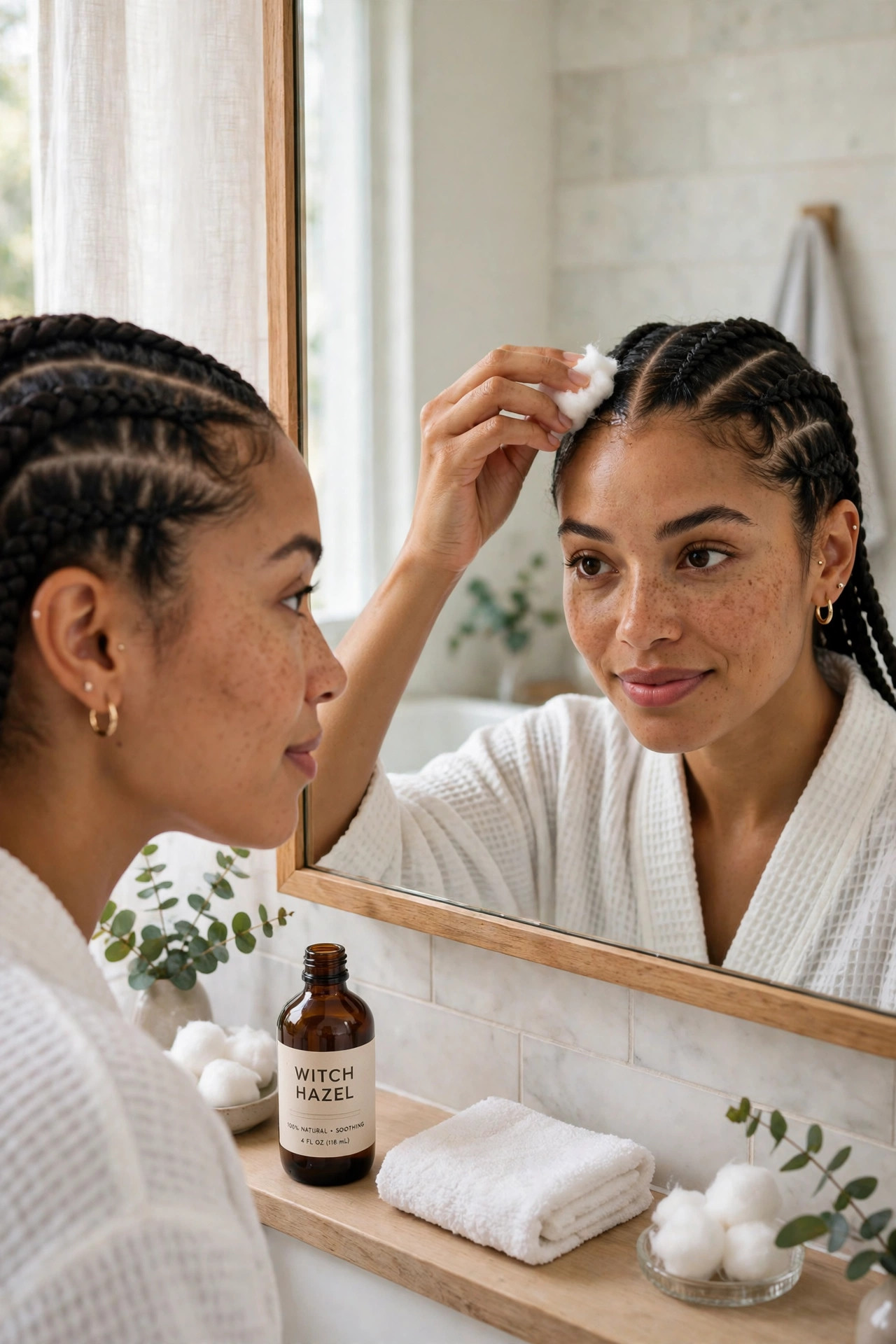
- Choose alcohol-free witch hazel to avoid drying the scalp.
- Dab it onto itchy parts with a cotton ball or soft cloth.
- Use it between washes when a full shampoo is not possible.
- Follow with a light moisturizer so the scalp does not dry out.
Witch hazel is a natural astringent, which means it tightens the skin slightly, removes excess oil, and calms irritation in one quick step. That combination makes it ideal for the moments when your scalp itches at work or on the go and a full wash is out of the question. Dab it onto the itchy parts with a cotton ball and you will feel the cooling, tightening effect within a minute or two. It also lifts away the oily residue and sweat that feed itch-causing buildup, so the relief lasts longer than a quick scratch ever could.
Pick an alcohol-free formula, since witch hazel with alcohol can dry the scalp and make flaking worse over time. Keep a small bottle in your bag with a few cotton balls so relief is always within reach, and use it once or twice a day on the worst spots. After dabbing, follow with a drop of jojoba oil or a light leave-in spray to replace any moisture the astringent removed. Used this way, witch hazel becomes a reliable everyday tool that keeps the itch quiet between wash days without disturbing your style.
Stop Scratching Your Scalp

- Never scratch with your nails or a comb, since that breaks the skin.
- Press a cool damp cloth against itchy spots for instant relief.
- Pat the scalp gently with your fingertips instead of digging in.
- Keep nails short while wearing braids to reduce accidental damage.
Scratching feels like the obvious answer, but it is the one habit that makes an itchy scalp worse. Your nails create tiny breaks in the skin, and those breaks invite bacteria, trigger more inflammation, and can even lead to painful bumps or infection along the parts. Scratching also loosens the braids at the roots, frizzes the style, and shortens how long the install lasts. The itch returns stronger within minutes because the damaged skin is even more sensitive than before, so the cycle keeps repeating itself until you break it.
When the urge hits, press a cool damp cloth against the itchy spot for a minute instead of scratching, and the cold will calm the nerve endings that carry the itch signal. Patting the scalp gently with the pads of your fingers gives a similar sensation without breaking the skin, and a quick mist of diluted vinegar or witch hazel can quiet the area for hours. Keep your nails trimmed short while wearing braids so that even an absent-minded scratch does less damage. Breaking the scratching habit is often the fastest way to let an irritated scalp heal.
Protect Scalp While Sleeping

- Wrap braids in a silk or satin scarf every night before bed.
- Switch to a silk pillowcase if scarves slip off while you sleep.
- Loosely gather long braids on top of your head before wrapping.
- Never sleep with wet braids, since dampness breeds itching.
Nighttime is when an itchy scalp often feels worst, partly because there is nothing to distract you and partly because cotton pillowcases make the problem worse. Cotton absorbs moisture from the scalp and creates friction as you toss and turn, leaving the skin drier and more irritated by morning. A silk or satin scarf lets the braids glide instead of catching, and it locks in the moisture you applied during the day. Wrap the style loosely before bed, and you will wake up with a calmer scalp and a style that still looks neat.
If scarves slip off while you sleep, a silk pillowcase gives nearly the same protection with less fuss, and a satin bonnet is another good option for longer styles. Gather the braids loosely on top of your head before wrapping so the roots are not pulled while you sleep. Never go to bed with damp braids, because trapped moisture creates the perfect environment for yeast and itching to grow overnight. For more nighttime ideas, visit our protective style care hub for routines that keep braids fresh, comfortable, and long-lasting.
Choose Human Hair Extensions

- Try human hair extensions if synthetic hair always makes you itch.
- Ask your stylist about hypoallergenic synthetic fibers as a cheaper option.
- Patch-test new hair on your inner arm for a day before installing.
- Keep the packaging so you can identify the brand that caused trouble.
Some scalps simply react to synthetic hair no matter how carefully you pre-soak it, and if every set of braids leaves you itching within hours, the fiber itself may be the problem. Human hair extensions carry no alkaline coating and feel much closer to your own hair, so they rarely trigger the same reaction. They cost more and need more care, but for people with sensitive skin the comfort is worth the price. A cheaper middle ground is hypoallergenic synthetic fiber, which is made without the harshest coatings and suits many people who react to standard Kanekalon hair.
Before committing to a new fiber, patch-test it the way you would test a new skin product. Tape a small piece of the hair to the inside of your arm and leave it there for a day, checking for redness, bumps, or itching. If the skin stays calm, the fiber is probably safe for a full install. Keep the packaging from any hair that caused a reaction, so you can avoid that brand next time and tell your stylist exactly what to skip. Finding the right fiber can turn braids from a weekly struggle into a style you genuinely enjoy.
Know When to Remove Braids

- Take braids out if itching, bumps, or soreness last more than a week.
- See a dermatologist for blisters, hair loss, or signs of infection.
- Give your scalp two to four weeks of rest before reinstalling.
- Use the break to deep-condition and rebuild scalp health.
Most itchy braids improve within a few days of the remedies in this guide, but some situations call for taking the style down rather than pushing through. If the itching lasts more than a week, or if you notice blisters, weeping skin, spreading redness, or patches of hair loss, the scalp is telling you it needs a break. Leaving braids in through those warning signs risks traction alopecia, infection, and damage that takes months to reverse. Removing the style is not a failure; it is the smartest way to protect your hair for the long term.
After takedown, give your scalp two to four weeks of rest before your next install, and use that time to wash, deep-condition, and let the skin fully recover. Watch for the warning signs that need a doctor rather than a home remedy: pus, crusting, swelling, or hair loss that keeps spreading all deserve prompt attention. The American Academy of Dermatology at aad.org offers guidance on healthy hair habits and when to seek care. A rested, healthy scalp is the best foundation for braids you can wear comfortably for weeks.
An itchy scalp does not mean your protective style is ruined, and now that you understand why do braids itch, you can fix the problem instead of just enduring it. Start with the easiest remedies first, like loosening tight braids, misting your scalp with diluted vinegar, and adding a drop of tea tree oil to your routine. If the itching started right after installation, pre-soak your extensions next time. Keep your scalp clean, moisturized, and protected at night, and never ignore soreness, bumps, or broken skin. With these twelve habits, your next set of braids can feel as comfortable as it looks.
FAQ
How long does braid itching normally last?
Mild itching from a fresh install usually fades within three to five days as the scalp adjusts to the new tension. If it starts a week or more after installation, buildup or dryness is the likely cause. Itching that lasts beyond a week, or comes with bumps and soreness, needs a closer look and possibly an early takedown.
Can I wash my scalp while wearing braids?
Yes, and you should wash it every seven to ten days to prevent the buildup that causes itching. Use diluted shampoo in a spray bottle, massage it gently along your parts with your fingertips, and rinse by letting water run down the braids. Dry the roots with cool air afterward, since damp roots can breed yeast and make itching worse.
Is itching a sign of an allergic reaction?
It can be, especially if the itching starts within hours of installation and comes with redness, small bumps, or swelling along the hairline. Synthetic hair coatings are the most common trigger, and a vinegar soak before installing usually prevents the reaction. If symptoms are severe, or you notice blisters or trouble breathing, remove the braids and seek medical care promptly.
Should I take my braids out if they keep itching?
If the itching does not improve after a week of remedies, or if you have soreness, bumps, hair loss, or broken skin, taking the style down is the safest choice. A short break lets the scalp heal, and you can reinstall later with pre-soaked hair and looser tension. No hairstyle is worth risking damage to your edges or scalp health.