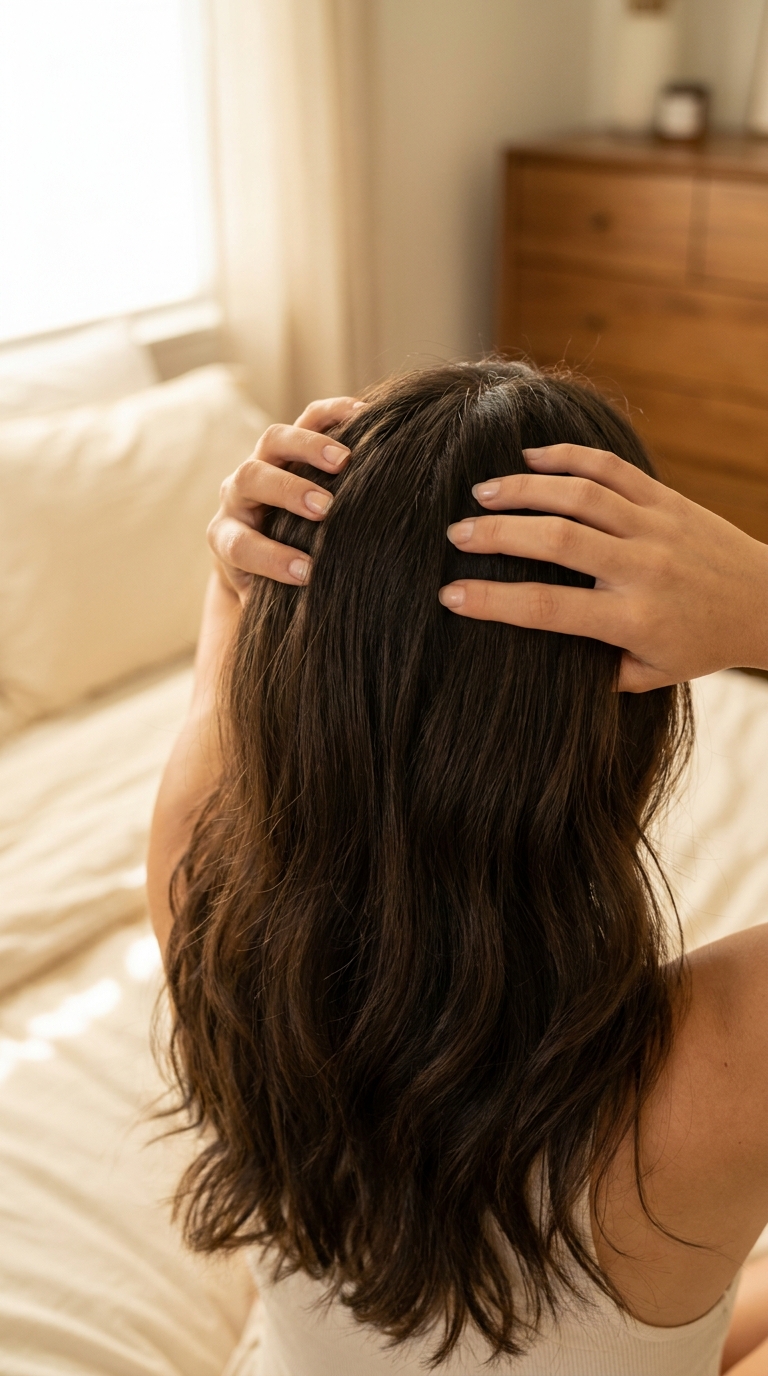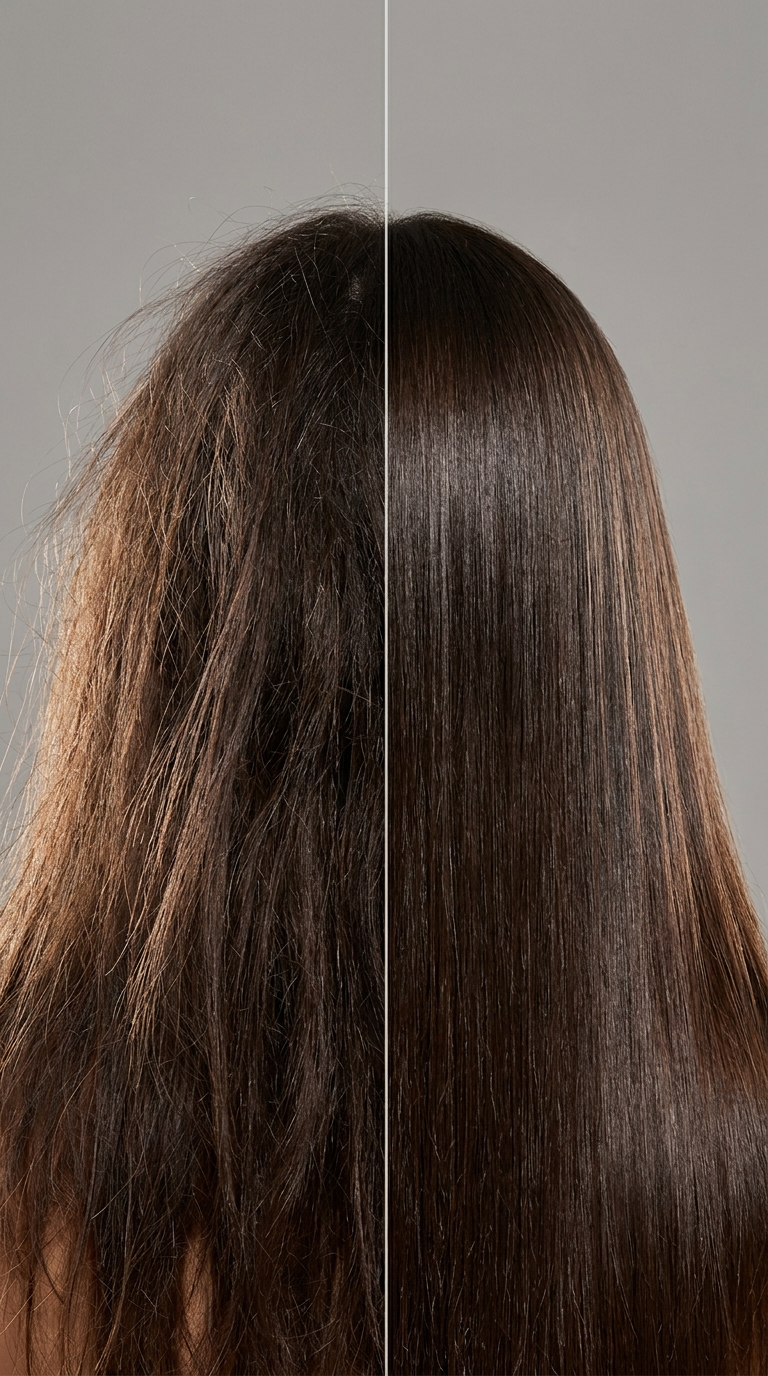
Shampoo and conditioner sit next to each other in every shower, but they’re not two versions of the same product. They work in opposite directions: one strips things off your hair, the other puts things back. Mix up how or where you use them, and you end up with the classic complaints — greasy roots, straw-like ends, hair that tangles the moment it dries, or color that fades faster than it should.
This guide breaks down what shampoo vs conditioner actually do at a chemical level, the correct order and technique for both, how often to wash based on your specific hair type, and the mistakes that quietly undo good products. By the end, you’ll know exactly how to build a routine instead of guessing.
Shampoo vs Conditioner at a Glance
| Category | Shampoo | Conditioner |
|---|---|---|
| Primary job | Cleanses the scalp and hair | Softens, smooths, and protects the hair shaft |
| Where it’s applied | Mostly the scalp | Mostly mid-lengths to ends |
| Key ingredients | Surfactants (cleansing agents) | Conditioning agents, emollients, cationic polymers |
| Electrical charge | Mildly negative (anionic) | Positively charged (cationic) |
| Effect on hair cuticle | Lifts it open to release debris | Smooths it back down |
| Rinse time | Rinsed almost immediately | Usually left on 1–5 minutes |
| Skipping it causes | Buildup, odor, dull scalp | Tangling, frizz, breakage, dryness |
What Shampoo Actually Does
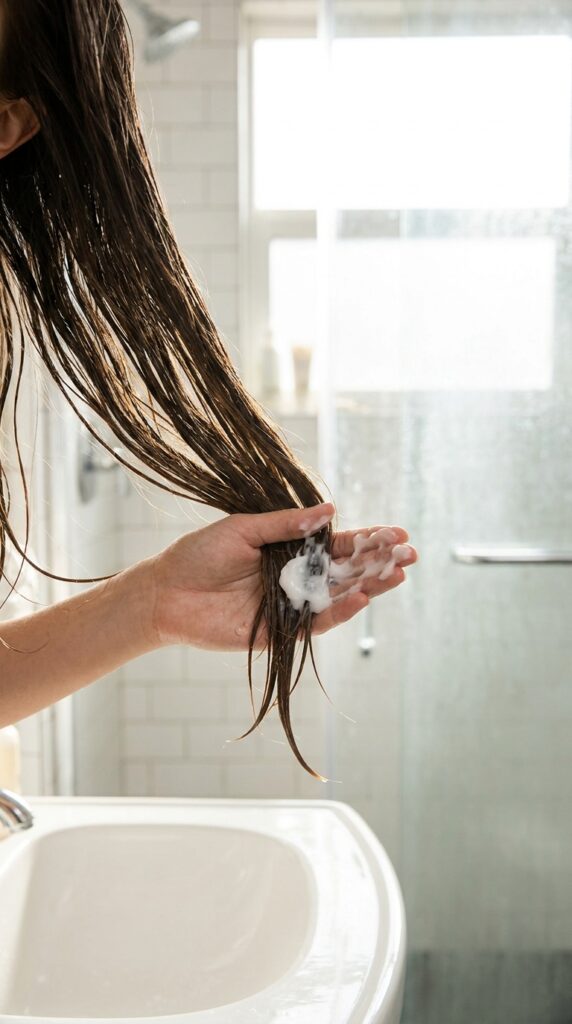
Your scalp constantly produces sebum, a natural oil that protects skin and hair from drying out. Left alone, sebum mixes with sweat, dead skin cells, airborne dust, and residue from styling products. Water alone can’t break that mixture apart efficiently because oil and water don’t mix — you need something that can grab onto both.
That’s the job of surfactants, the core cleansing molecules in shampoo. One end of a surfactant molecule is attracted to oil, the other to water. When you massage shampoo into wet hair, surfactant molecules surround oil and grime, forming tiny clusters called micelles, which then rinse away cleanly with water. Most shampoos are also formulated to be mildly acidic (roughly pH 4.5–6), which helps keep the hair cuticle — the outer layer of each strand — lying flat rather than lifted and rough.
Common Types of Shampoo and What They’re For
| Type | Best for | Watch out for |
|---|---|---|
| Daily/gentle shampoo | Regular use, most hair types | Can under-clean very oily scalps |
| Clarifying shampoo | Removing heavy product buildup, chlorine, hard water minerals | Too drying for weekly use — 1–2x/month is plenty |
| Sulfate-free shampoo | Dry, curly, color-treated, or sensitive scalps | May not fully remove heavy styling product |
| Volumizing shampoo | Fine, flat hair | Can be drying if used daily on longer hair |
| Color-safe shampoo | Dyed or color-treated hair | Still fades faster with hot water and sun exposure |
| Anti-dandruff/medicated shampoo | Flaking, itching, seborrheic dermatitis | Rotate with regular shampoo if it dries out lengths |
| Dry shampoo | Absorbing oil between washes | Not a substitute for actual washing — buildup accumulates |
How to Shampoo Correctly
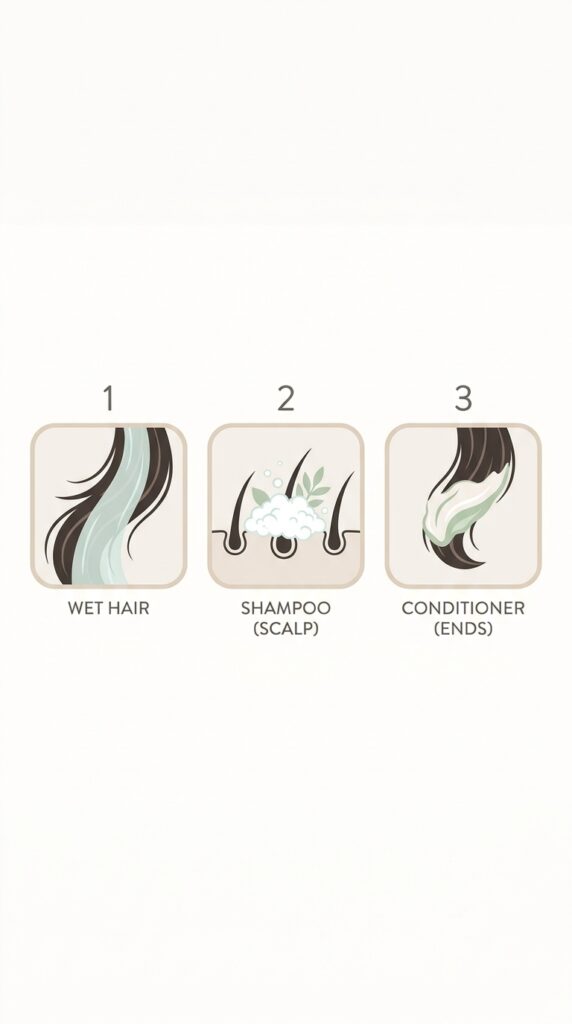
- Saturate hair fully with warm (not hot) water for at least 30–60 seconds before applying anything — this alone removes a surprising amount of surface debris.
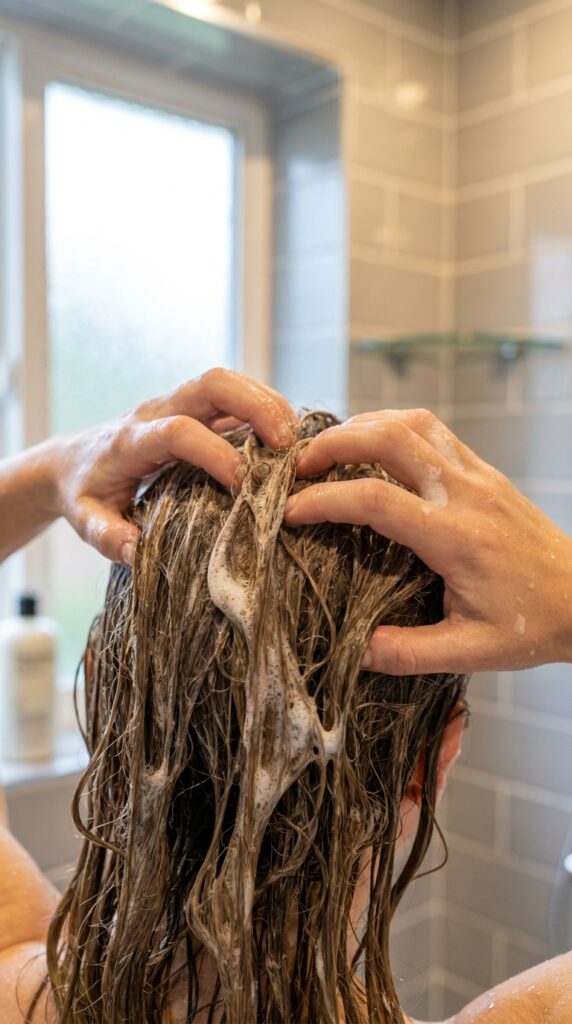
- Apply shampoo to the scalp, not the ends. A coin-sized amount is usually enough for shoulder-length hair.
- Massage with fingertips (not nails) for 30–60 seconds. This is what actually lifts buildup — the lather itself does very little.
- Let the runoff clean the lengths as you rinse. The ends rarely need direct shampoo; they get cleaned by the suds sliding through.
- Rinse thoroughly until water runs clear and hair feels squeaky, not slick.
- Double-cleanse only when needed — heavy product buildup, dry shampoo overload, or excess sweat/oil, not as a daily habit.
What Conditioner Actually Does
Shampoo leaves the hair cuticle slightly raised and the surface carrying a faint negative charge, which is part of why hair can feel rough or “squeaky” right after washing — that’s actually friction, not necessarily cleanliness. Conditioner is formulated with positively charged (cationic) ingredients that are drawn to that negatively charged surface. They coat each strand, smooth the cuticle flat, and create slip that reduces friction between strands.
That reduced friction is the real reason conditioner cuts down on tangling and breakage — it’s mechanical, not just moisturizing. Conditioner also fills in gaps in damaged cuticle with lightweight oils, silicones, or proteins, depending on the formula, which is what improves shine and softness.
Common Types of Conditioner and What They’re For
| Type | Best for | Watch out for |
|---|---|---|
| Rinse-out conditioner | Everyday use after shampoo | May not be enough for very dry or damaged hair alone |
| Leave-in conditioner | Detangling, frizz control, heat protection prep | Layering too many leave-ins causes buildup |
| Deep conditioner/mask | Damaged, chemically treated, or very dry hair | Overuse on fine hair can weigh it down |
| Protein conditioner | Weak, over-processed, breakage-prone hair | Too frequent use makes hair feel stiff or straw-like (“protein overload”) |
| Toning/purple-blue conditioner | Neutralizing brass in blonde or lightened hair | Left on too long can turn hair grey or violet-tinted |
| Co-wash / cleansing conditioner | Curly, coily, or very dry hair as an occasional wash method | Doesn’t fully remove product or oil buildup on its own |
How to Condition Correctly
- Squeeze out excess water after shampooing — soaking-wet hair dilutes conditioner and reduces how well it can coat the strand.
- Apply from mid-shaft to ends, where hair is oldest and driest. Avoid the scalp unless the product is specifically labeled for root use.
- Comb it through with a wide-tooth comb or your fingers to distribute it evenly, especially on longer or thicker hair.
- Let it sit for 1–5 minutes (check the label — deep conditioners often need longer). This isn’t just marketing; the coating and smoothing effect needs a little time to happen.
- Rinse with cool or lukewarm water. Cooler water helps the cuticle lie flatter, which can slightly boost shine.
Correct Order: Shampoo First, Then Conditioner
For the vast majority of hair types, shampoo before conditioner is the right order. Cleansing first strips oil and buildup so the hair surface is receptive to conditioning ingredients afterward. Conditioning first, then shampooing, would mean immediately washing away most of what you just applied.
Reverse Washing (Conditioner-First)
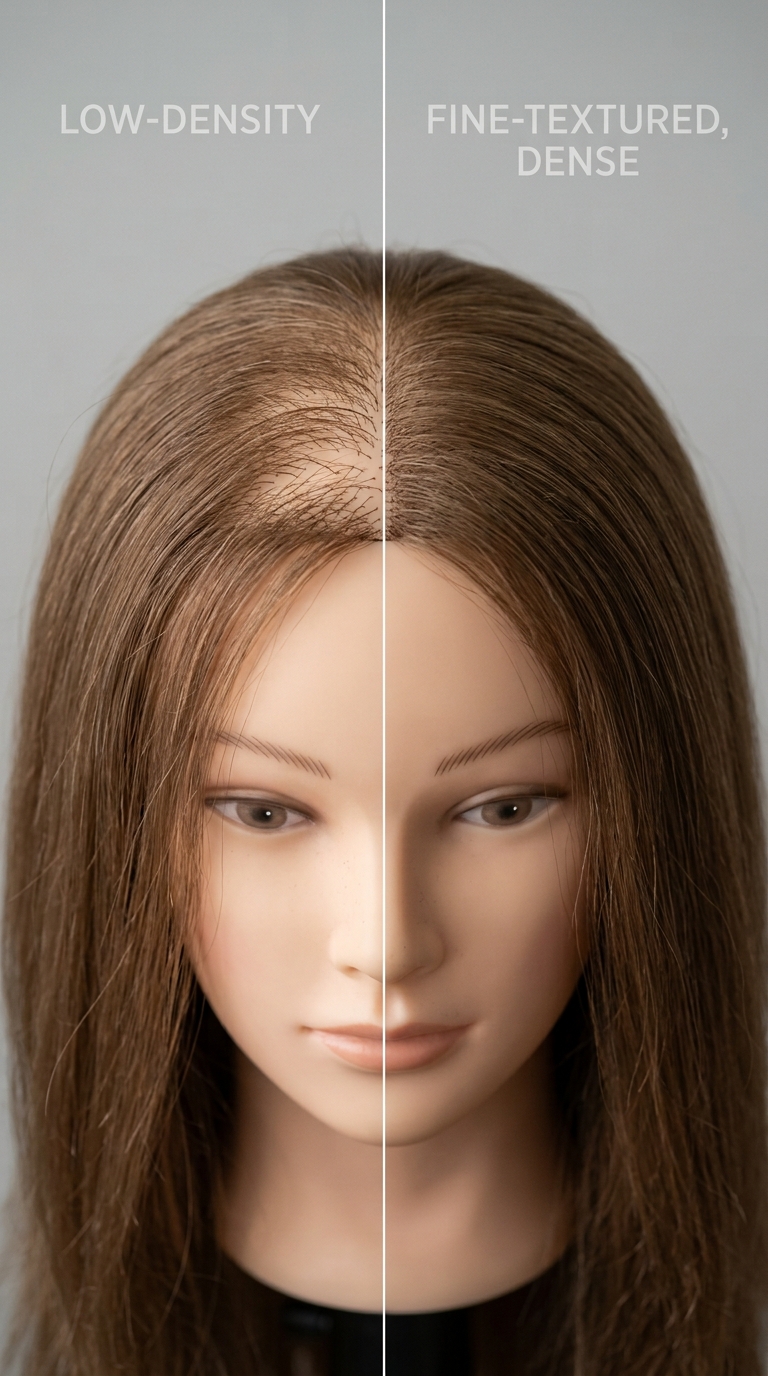
Reverse washing means applying conditioner before shampoo, then following with a light shampoo focused only on the scalp. It’s a niche technique that works well for fine, low-density hair that gets weighed down by standard conditioning, because it delivers a light layer of softness without leaving heavy residue behind. It’s not something most hair types need, but it’s worth a two-week trial if regular conditioner consistently leaves fine hair flat.
Co-Washing (Conditioner Instead of Shampoo)
Co-washing replaces shampoo entirely with a cleansing conditioner on some or all wash days. It’s most useful for curly, coily, and very dry hair textures, where the priority is retaining moisture and where natural scalp oil doesn’t travel down the hair shaft easily anyway. Co-washing isn’t a permanent substitute for shampoo, though — the scalp still accumulates product and environmental buildup that only a true surfactant-based cleanse can remove. Most people who co-wash still shampoo every one to three weeks.
How Often Should You Actually Wash?
There’s no universal number of “washes per week.” The right frequency depends on scalp oil production, hair texture, climate, and how much product or sweat you’re dealing with.
| Hair type | Typical washing frequency | Why |
|---|---|---|
| Oily scalp / fine hair | Daily to every other day | Sebum travels down thin strands quickly |
| Normal/balanced hair | 2–3 times per week | Enough to manage oil without over-stripping |
| Dry hair | 1–2 times per week | Washing too often removes needed natural oils |
| Curly or coily hair | Once a week, sometimes less | Oil doesn’t travel down curved/coiled strands easily |
| Thick or coarse hair | 1–2 times per week | Can go longer between washes; benefits from richer conditioner |
| Very active / heavy sweat | After most workouts, often with a gentle scalp-only rinse | Sweat and salt buildup can irritate the scalp |
Do You Always Need Both Products?
- Very oily roots, dry ends: Shampoo the scalp normally, but apply conditioner only to the last few inches of hair.
- Between-wash refresh: A water-only rinse or dry shampoo can hold you over without disturbing conditioner buildup from the last wash.
- Post-swim or heavy sweat: A quick shampoo without conditioner is fine if you’ll properly wash and condition later that day.
- Curly/coily routines: Some people condition on non-shampoo days (sometimes called “co-washing light”) to maintain moisture without a full cleanse.
Where Should You Spend More: Shampoo or Conditioner?
If budget is limited, conditioner is usually the better place to invest. Shampoo is rinsed out within a minute or two, so its ingredients have less contact time with your hair. Conditioner is designed to sit on the hair and actively change its texture, so formula quality has a more noticeable, lasting effect on softness, shine, and manageability.
That said, upgrading shampoo is worth it in specific situations: a sensitive or flaky scalp, color-treated hair that needs gentler cleansing, or hard water that leaves mineral buildup a basic shampoo can’t cut through.
Common Mistakes That Undo Good Products
- Shampooing only the ends — this cleans the part of your hair that needs it least and misses the scalp, which needs it most.
- Applying conditioner to the roots — a top cause of flat, greasy-looking roots, especially on fine or naturally oily hair.
- Rinsing conditioner out immediately — the smoothing effect needs at least a minute of contact time to work.
- Washing with very hot water — strips more natural oil than necessary and can make color fade faster.
- Overwashing “just in case” — triggers the scalp to produce more oil to compensate, creating a cycle of needing to wash more often.
- Skipping conditioner because hair feels oily — oily roots and dry ends can exist on the same head; the fix is targeted application, not skipping the product.
- Using the same products regardless of season — hair often needs lighter formulas in humid summer months and richer ones in dry winter air.
- Layering too many leave-in products — can cause buildup that mimics “dirty hair” even right after washing.
Ingredient Cheat Sheet
| Helpful ingredients | What they do |
|---|---|
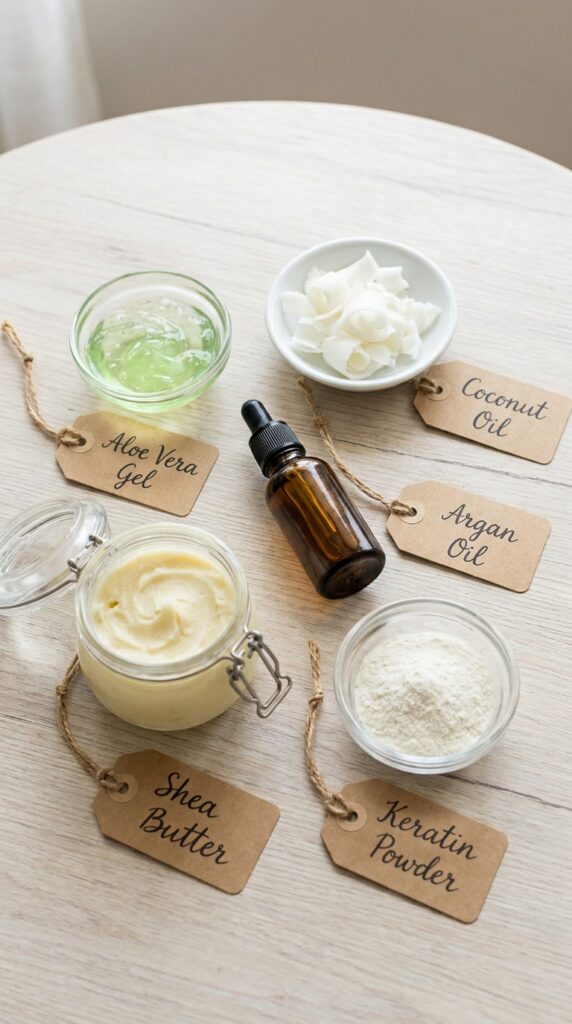
| Aloe vera | Lightweight, soothing hydration; good for sensitive scalps |
| Coconut oil | Penetrates the hair shaft; helpful for dry or damaged hair |
| Argan oil | Lightweight shine and softness without heaviness |
| Shea butter | Richer, deeper moisture for very dry or coarse hair |
| Keratin / hydrolyzed proteins | Temporarily strengthens weak or damaged strands |
| Panthenol (pro-vitamin B5) | Adds moisture and a smoother, softer feel |
| Use with caution | Why |
|---|---|
| Strong sulfates (SLS) | Can over-strip dry, color-treated, or sensitive scalps |
| Heavy silicones (non-water-soluble) | Can build up over time without clarifying washes |
| High-proof drying alcohols | Common in some leave-ins/sprays; can dehydrate hair with frequent use |
| Heavy synthetic fragrance | Can irritate sensitive or eczema-prone scalps |
None of these ingredients are automatically “bad” — the right fit depends on your hair’s needs, not a blanket rule.
Troubleshooting Guide
| Problem | Likely cause | Fix |
|---|---|---|
| Hair feels greasy the day after washing | Conditioner applied too close to the scalp, or overwashing triggering more oil production | Apply conditioner only from ear-level down; stretch wash days gradually |
| Hair tangles badly even after conditioning | Conditioner rinsed out too fast, or wrong formula for hair porosity | Leave conditioner on 2–3 minutes; try a richer or protein-based formula |
| Color fading quickly | Hot water, sulfate shampoo, or overwashing | Switch to color-safe shampoo, wash with lukewarm/cool water, space out washes |
| Hair feels stiff or straw-like | Protein overload from frequent protein treatments | Pause protein products; use a moisture-focused conditioner for a few washes |
| Flat, limp hair by midday | Heavy conditioner near the roots, or product buildup | Keep conditioner off the scalp; clarify once every few weeks |
| Itchy or flaky scalp | Buildup, sensitivity to an ingredient, or a scalp condition | Try a gentle or medicated shampoo; see a dermatologist if it persists |
Building a Routine for Your Hair Type
- Oily scalp, otherwise normal hair: Gentle daily-safe shampoo focused on the scalp; light conditioner kept strictly on the ends.
- Dry or damaged hair: Sulfate-free shampoo, wash less often, richer conditioner or a weekly deep-conditioning treatment.
- Fine, flat hair: Volumizing shampoo; lightweight conditioner applied only to the bottom third of the hair; consider trying reverse washing.
- Curly or coily hair: Sulfate-free or cleansing conditioner, wash less frequently, prioritize moisture-rich, richer conditioners.
- Color-treated hair: Color-safe shampoo, cool water rinses, nourishing conditioner to slow fading and reduce dryness from lightening.
- Thick or coarse hair: Can usually go longer between washes; benefits from deep conditioning treatments every 1–2 weeks.
Routines aren’t fixed forever — humidity, heat styling frequency, hormonal changes, and even a new water supply (hard vs. soft water) can shift what your hair needs. Reassess every few months rather than sticking to one routine indefinitely.
Frequently Asked Questions
Can I use conditioner without shampoo every time I wash?
Occasionally, yes — this is essentially co-washing. But relying on it every wash lets oil, product, and environmental buildup accumulate on the scalp over time, so most people still need a true shampoo cleanse every one to three weeks.
Is it bad to shampoo every day?
Not inherently, especially for oily scalps or fine hair — but it should be a gentle, sulfate-free formula. Daily washing with a harsh clarifying shampoo can overstrip the scalp and hair.
Why does my hair feel worse right after conditioning?
Usually one of two things: the conditioner isn’t rich enough for your hair’s porosity, or it was rinsed out before it had time to work. Give it 2–3 minutes and try a slightly richer formula if the problem continues.
Do I need a different shampoo and conditioner for winter vs. summer?
Many people benefit from it. Cold, dry air often calls for richer conditioning, while humid summer months usually call for lighter formulas that won’t weigh hair down or contribute to frizz.
Can conditioner clean my scalp instead of shampoo?
Not effectively. Conditioner is formulated to coat and smooth, not to lift oil and debris the way surfactants in shampoo do. It can’t substitute for a proper cleanse long-term.
How long should I leave conditioner in before rinsing?
One to five minutes for standard rinse-out conditioner; check the label for deep conditioners and treatments, which are often designed for 10–20 minutes or with heat.
The Bottom Line
Shampoo and conditioner aren’t optional add-ons to each other — they’re two halves of one process. Shampoo clears away what shouldn’t be there; conditioner replaces what your hair needs to stay smooth, strong, and manageable. Once you match the right formulas to your hair type, apply them in the right places, and give conditioner a little time to actually work, most day-to-day hair complaints — flatness, tangling, dullness, frizz — tend to resolve on their own without buying more products.