Frizz has a way of showing up at the worst possible moment — right before a meeting, a date, or the second you step out into humid air. One minute your hair looks smooth, the next it’s a halo of flyaways that no amount of patting down seems to fix.
The good news: frizz isn’t random bad luck. It’s a predictable reaction that happens inside your hair strand, and once you understand what triggers it, you can control it with the right routine, the right products, and a few technique changes that cost nothing at all.
This guide breaks down exactly why frizz happens, how to treat it based on your hair type, and which habits are quietly making it worse without you realizing it.
What Actually Causes Frizzy Hair?
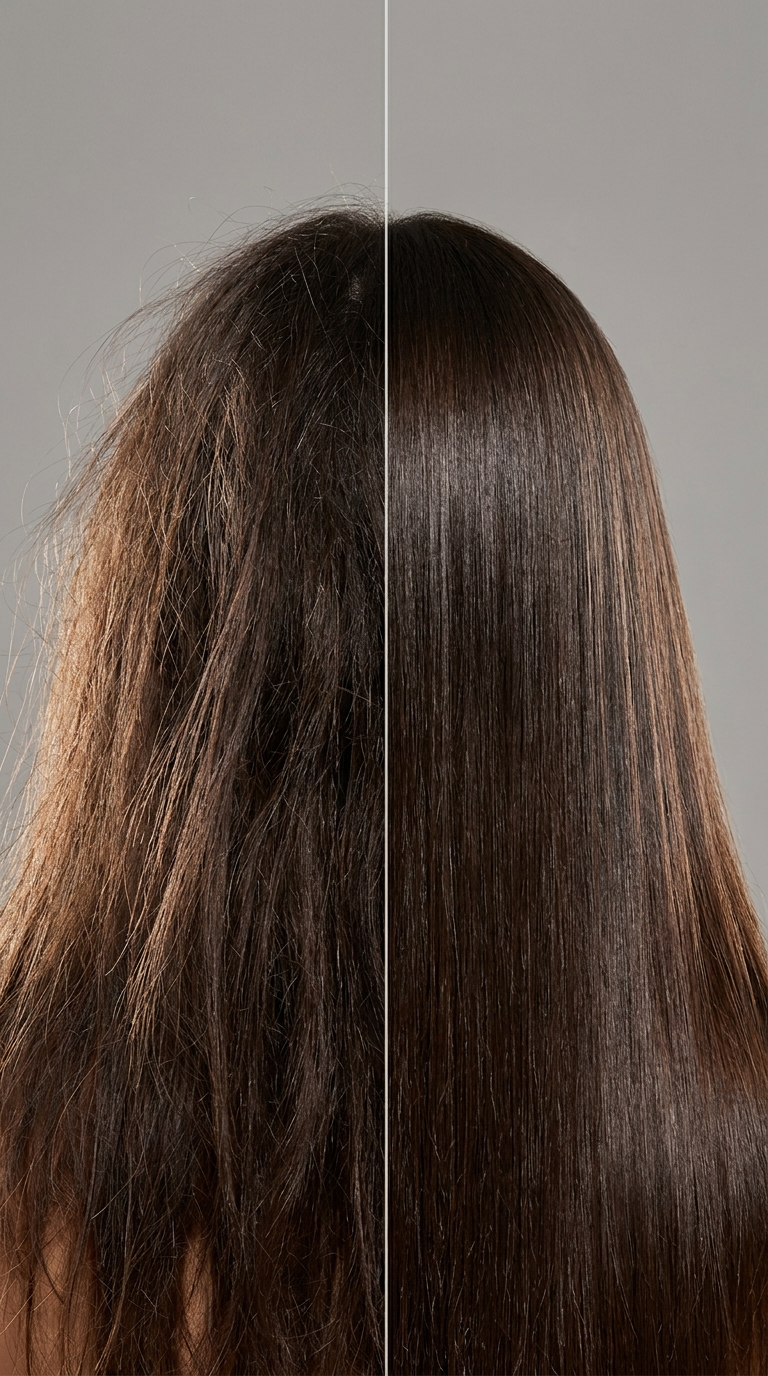
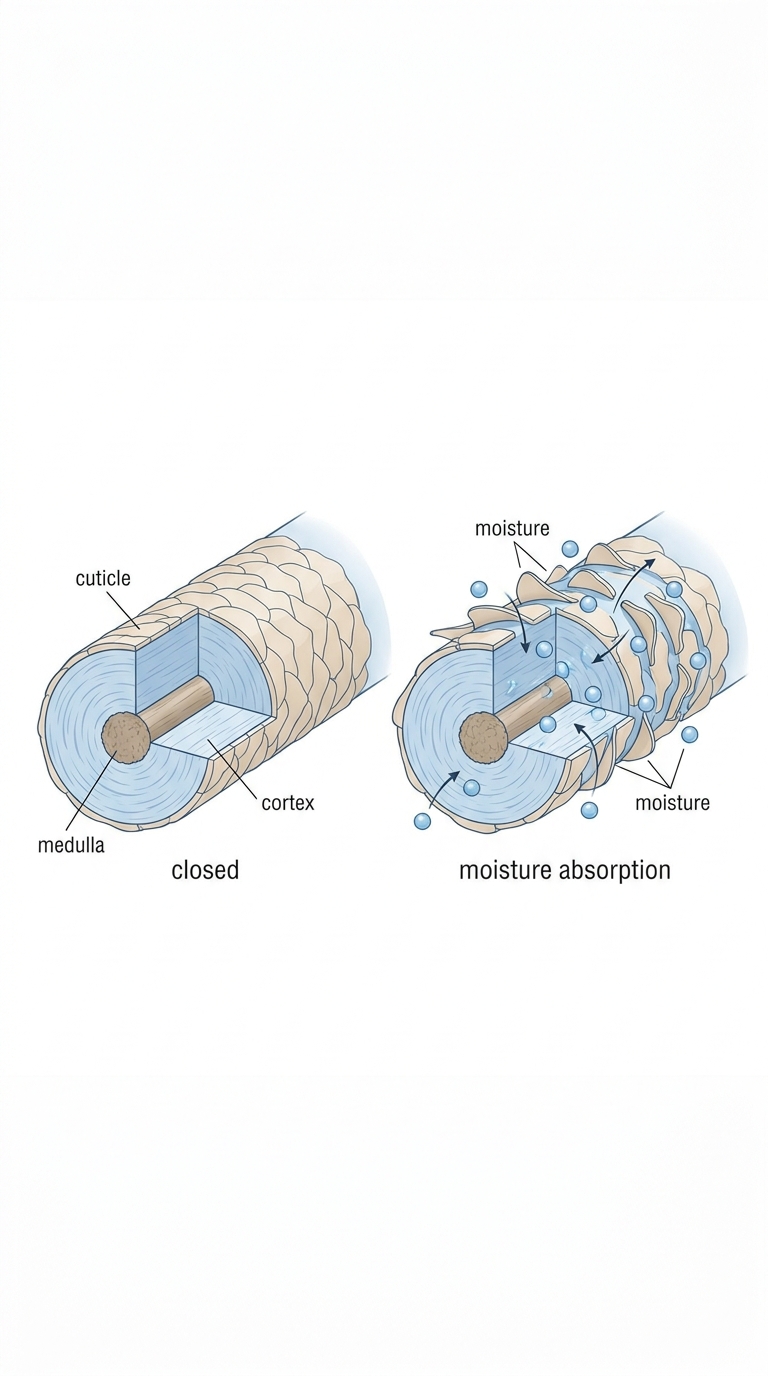
Frizz happens when the outermost layer of your hair — called the cuticle — doesn’t lie flat. Healthy, well-moisturized hair has a smooth, tightly closed cuticle that reflects light and resists moisture from the air. Dry or damaged hair has a raised, uneven cuticle with gaps that let humidity in.
Here’s the science in simple terms: hair with a rough cuticle is thirsty. On a humid day, it absorbs water vapor from the air, and each strand swells slightly. That swelling lifts the cuticle scales even further, so the strand no longer lies smooth against its neighbors — it separates and curls in on itself. Multiply that across thousands of strands and you get the frizzy, “expanded” look.
Several factors make hair more prone to this:
- Low hair porosity or high hair porosity — Porosity describes how easily your hair absorbs and releases moisture. High-porosity hair (often from color, bleach, or heat damage) has a rougher, more open cuticle and frizzes fastest in humidity. Low-porosity hair resists moisture getting in but can also trap product on the surface, leading to a different kind of frizz caused by dryness underneath buildup.
- Heat styling damage — Repeated blow-drying, flat-ironing, and curling at high temperatures wears down the cuticle over time.
- Chemical processing — Coloring, bleaching, relaxing, and perming all lift the cuticle, which is part of how they work, but it also leaves hair more porous afterward.
- Mechanical friction — Rough towels, cotton pillowcases, and aggressive brushing physically roughen the cuticle surface.
- Genuine dehydration — Hair that simply doesn’t get enough moisture and lipids from the scalp and from products dries out and frizzes more easily, regardless of porosity.
Understanding which of these applies to you determines which fixes will actually move the needle — which is why a one-size-fits-all approach to frizz rarely works long term.
How to Get Rid of Frizzy Hair: Step-by-Step Solutions
1. Rebuild Your Washing Routine Around Moisture
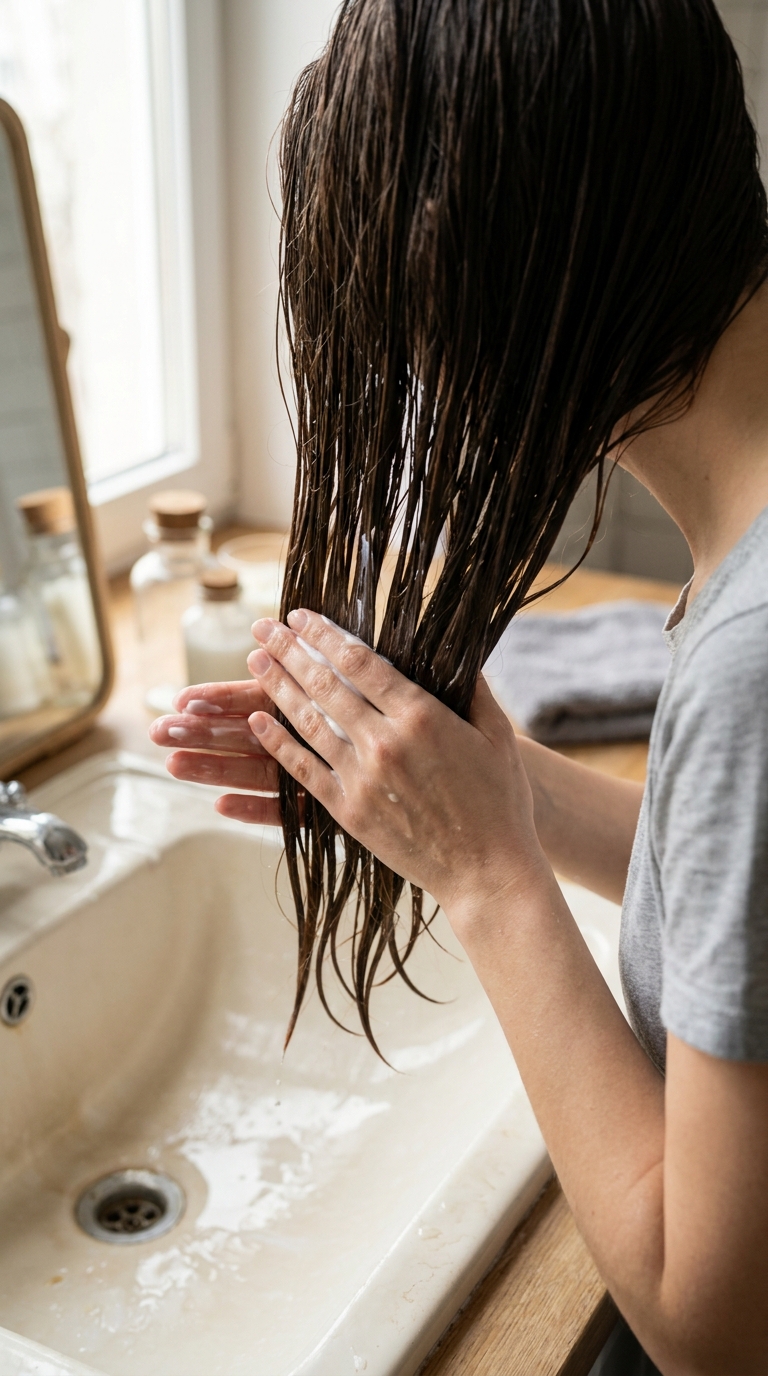
Washing habits are usually the biggest lever you can pull.
- Wash less often. Daily shampooing strips the scalp’s natural oils, which are actually a built-in frizz defense. Most hair types do well with washing every two to three days; very dry or curly hair can often stretch to once a week with the help of co-washing (conditioner-only washing) in between.
- Skip sulfates on wash day. Sulfates (like sodium lauryl sulfate) clean effectively but also strip lipids from the hair shaft. A sulfate-free, moisture-focused shampoo with humectants like glycerin or hyaluronic acid cleans the scalp without leaving hair as parched.
- Finish with a cool-water rinse. Warm water opens the cuticle so shampoo and conditioner can do their job; a cool final rinse helps the cuticle close back down, which locks in the moisture you just added and gives hair an immediate smoother appearance.
- Don’t neglect the scalp. A flaky, product-clogged scalp can indirectly worsen frizz by disrupting healthy oil distribution down the hair shaft. An occasional scalp scrub or clarifying wash (once every two to three weeks) keeps things balanced.
2. Layer Your Conditioning the Right Way
One conditioning step usually isn’t enough for chronically frizzy hair — layering different products at different stages works better.
- Rinse-out conditioner, every wash. Apply from mid-length to ends (roots don’t usually need it) and leave it on for two to three minutes so the ingredients have time to coat the cuticle.
- Deep conditioning mask, weekly. Look for humectant-rich formulas with ingredients like shea butter, avocado oil, or hydrolyzed proteins. Apply to damp, towel-blotted hair, cover with a shower cap, and leave for 15–20 minutes.
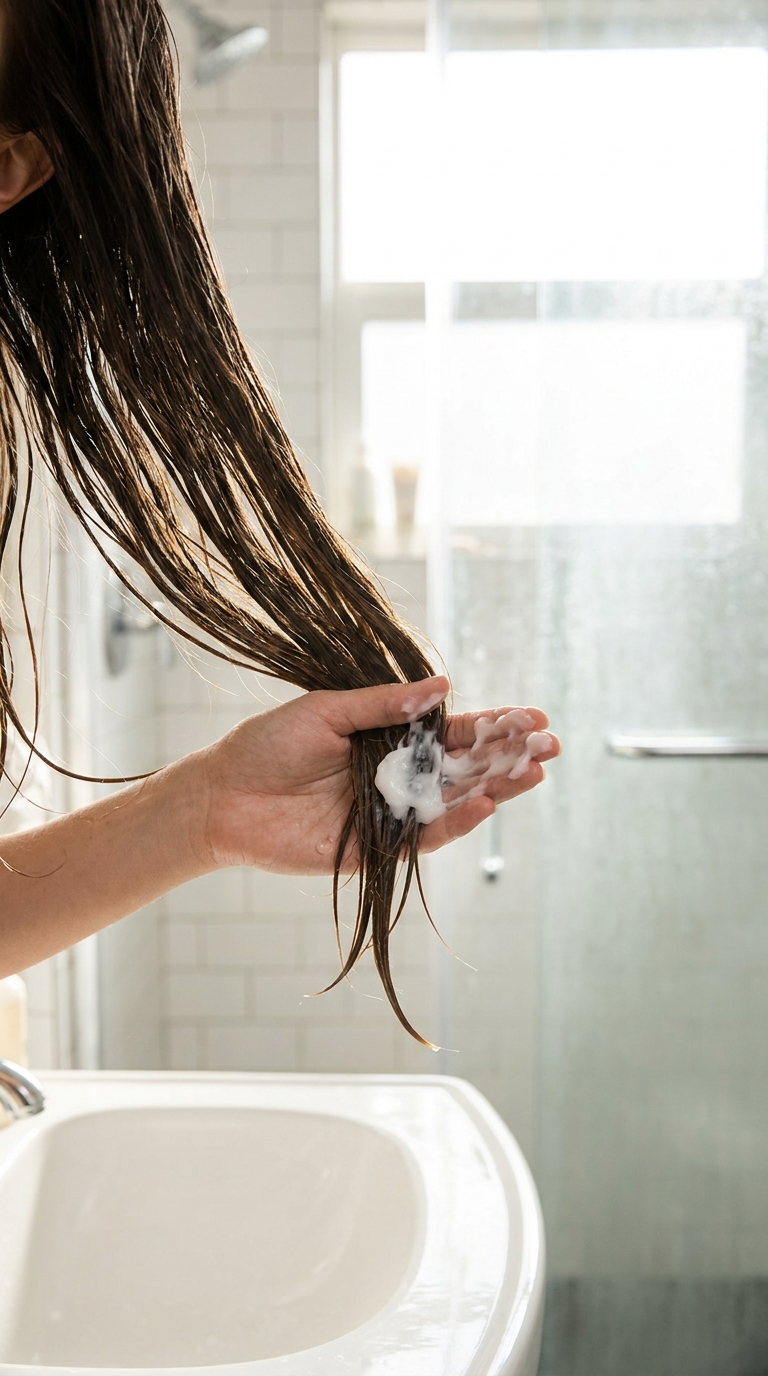
- Leave-in conditioner, every wash day. Apply to soaking-wet hair immediately after the shower, not to already-drying hair. Wet hair’s open cuticle absorbs product far more evenly, which prevents patchy frizz later in the day.
3. Change How You Dry Your Hair

Drying technique matters almost as much as the products you use.
- Swap your towel. Standard terrycloth towels are rough at a microscopic level and rough up the cuticle every time you rub. A microfiber towel or a clean cotton T-shirt creates far less friction.
- Blot and squeeze, never rub. Gather sections of hair into the towel and press gently to absorb water. For curly or wavy hair, this technique is often called “plopping” — wrapping soaking-wet hair up in a towel or T-shirt for 10–15 minutes to absorb excess water while encouraging natural shape.
- Let hair air-dry partway before using heat. Heat styling on soaking-wet hair does the most damage. Letting hair air-dry to about 70–80% dry, then finishing with a blow dryer on low heat, cuts down on both drying time and cuticle damage.
- Always use a heat protectant if you’re using any hot tool.
4. Pick Tools That Work With Your Hair, Not Against It
- Wide-tooth comb over a brush, especially on wet hair.
- Boar-bristle or mixed-bristle brush for smoothing dry hair without static.
- Ionic or ceramic blow dryer to help reduce frizz-causing static electricity.
- Diffuser attachment, essential for wavy and curly textures.
5. Build a Layered Product Routine for All-Day Control
Think of frizz-fighting products in three categories, applied in this order on wet hair:
| Step | Product Type | Purpose |
|---|---|---|
| 1 | Leave-in conditioner | Deep hydration, detangling base |
| 2 | Styling cream or gel | Defines shape, adds hold |
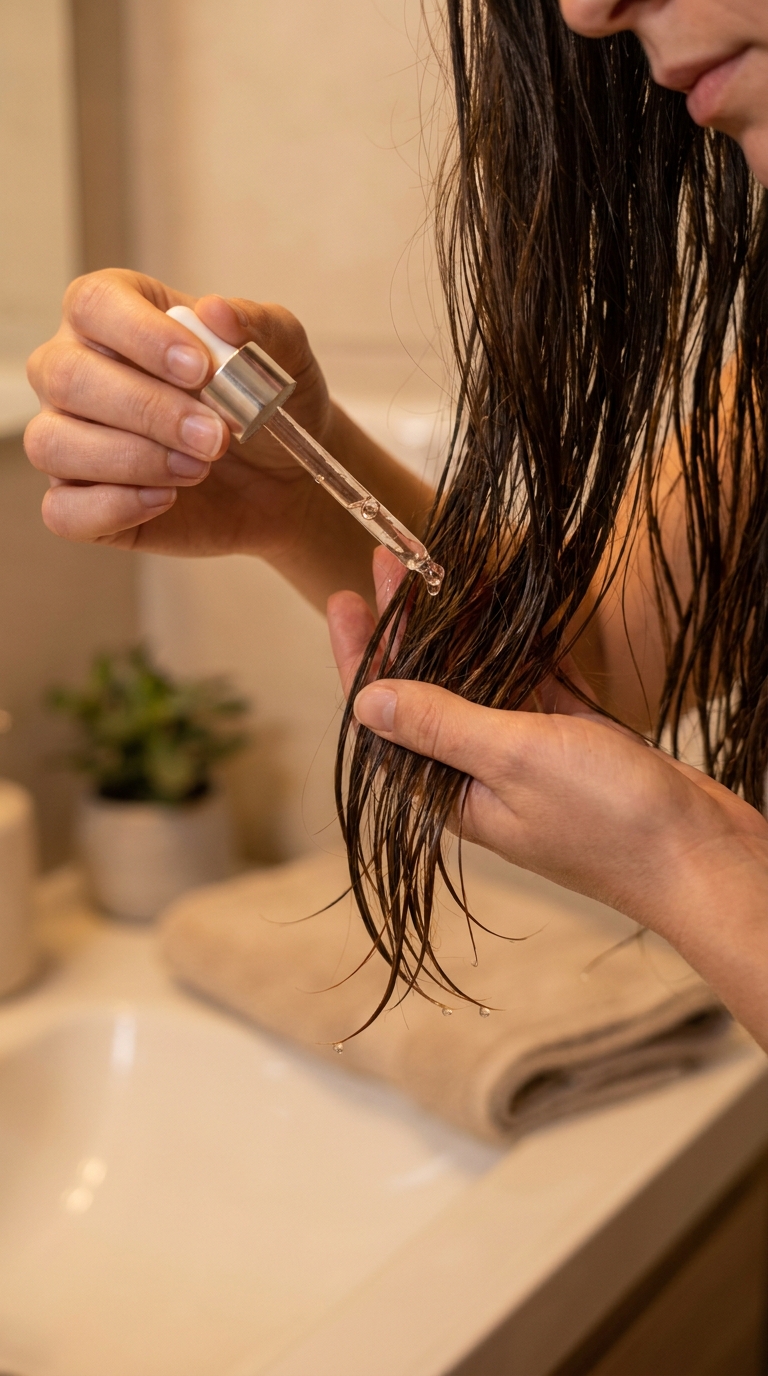
| 3 | Serum or hair oil | Seals the cuticle, adds shine, blocks humidity |
Applying products in this order — light to heavy — prevents the greasy, weighed-down look that happens when oil is applied first. A few drops of a lightweight serum on mid-lengths and ends is usually enough.
6. Protect Your Hair Overnight
- Switch to a silk or satin pillowcase. Cotton pulls moisture from hair and creates friction all night.
- Loosely braid or use a silk bonnet. Keeps strands from rubbing against each other or against fabric.
- Never sleep with soaking-wet hair, since hair is weakest and most stretch-prone when wet.
7. Work With Your Natural Texture, Not Against It
| Hair Type | Main Frizz Trigger | Best Fix |
|---|---|---|
| Straight (Type 1) | Flat, oily roots pushing frizz to mid-lengths | Lightweight leave-in; avoid heavy oils near roots |
| Wavy (Type 2) | Uneven moisture distribution | Scrunching technique with light gel or mousse |
| Curly (Type 3) | Cuticle naturally more raised due to curl shape | Wet application (LOC/LOG method), diffusing, plopping |
| Coily (Type 4) | High porosity, fast moisture loss | Deep conditioning, sealing with butters/oils, protective styles |
8. Natural and At-Home Remedies
- Apple cider vinegar rinse (weekly). One part ACV to three or four parts water, poured over hair after shampooing, left for 60 seconds, then rinsed with cool water.
- Coconut oil pre-wash treatment. Applied to dry hair 15–30 minutes before shampooing; it can penetrate the hair shaft rather than just coat the surface.
- Aloe vera gel as a lightweight styling base for wavy and curly hair.
A quick caution: always patch-test a new ingredient, and avoid leaving acidic rinses like ACV on longer than recommended.
9. When to Consider a Professional Treatment
- Keratin or smoothing treatments coat the hair shaft with protein and can reduce frizz for two to six months.
- Glossing or glaze treatments add shine and smooth the cuticle temporarily (one to a few weeks).
- A porosity and texture consultation with a stylist can save months of trial and error.
Common Mistakes That Make Frizz Worse
- Over-washing — strips the natural oils your hair needs.
- Skipping heat protectant — leaves the cuticle exposed to direct heat damage.
- Brushing dry hair aggressively — roughens the cuticle and causes static.
- Using too much product at once — weighs hair down without sealing it.
- Ignoring regular trims — split ends can’t be repaired, only cut off.
- Touching your hair throughout the day — transfers oil unevenly.
- Applying oil-based products to bone-dry hair instead of damp hair.
Signs You May Need More Than a Routine Change
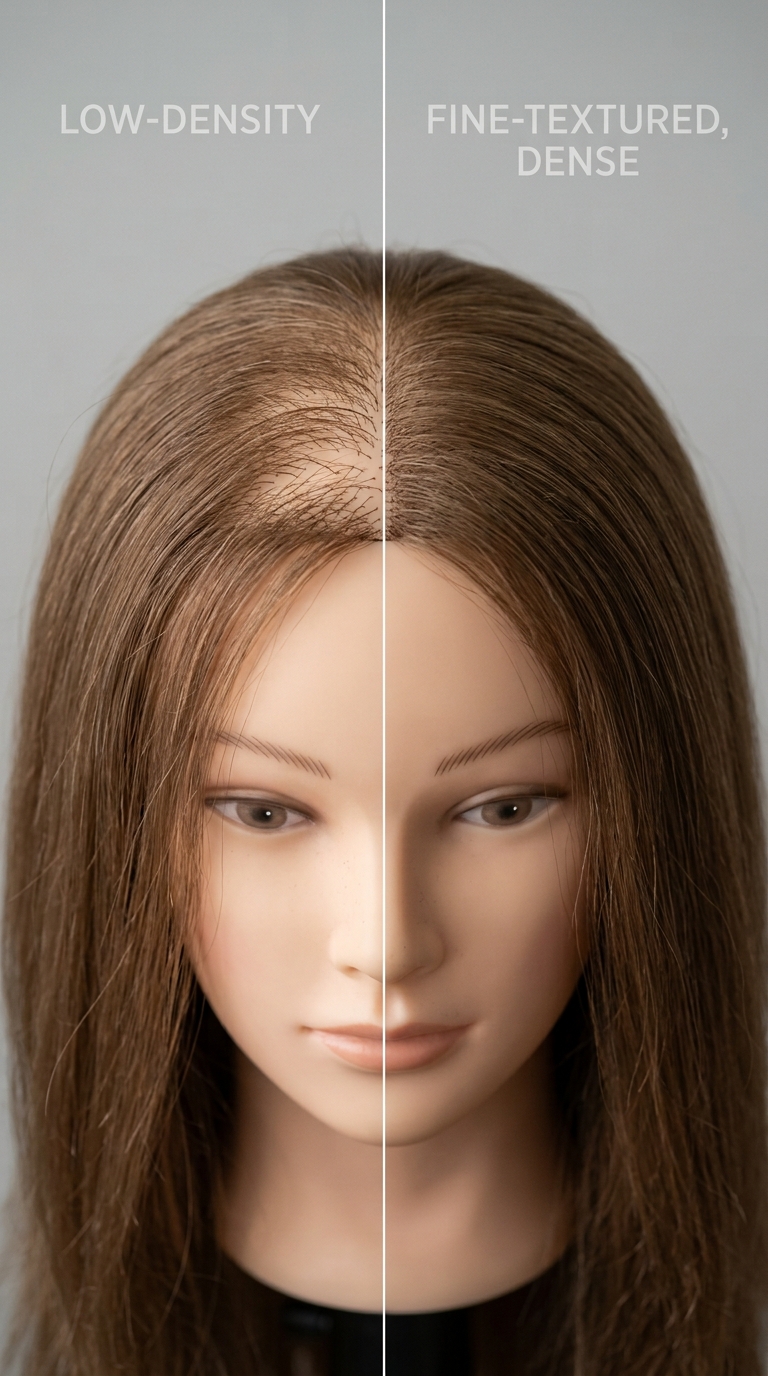
Occasional frizz in humid weather is normal, even for healthy hair. But if you notice sudden breakage, straw-like texture regardless of products, scalp itching or flaking, or frizz paired with thinning, it may be worth speaking to a dermatologist or trichologist rather than just trying more products.
Frequently Asked Questions
Does frizzy hair mean my hair is unhealthy?
Not necessarily. Frizz is often just a sign of dryness or low humidity resistance, not damage. However, chronic frizz combined with breakage or split ends usually does point to some level of cuticle damage worth addressing.
Can I get rid of frizz permanently?
Not permanently, since frizz is a reaction to environmental moisture. But you can dramatically reduce how often and how severely it happens with a consistent moisture-focused routine.
Is frizzy hair caused by not brushing enough?
No — over-brushing, especially on dry hair, usually causes more frizz by disturbing the cuticle. Gentle detangling on wet, conditioned hair is far more effective.
Do anti-frizz products actually work?
Yes, when matched to your hair’s needs. Silicone- and oil-based serums physically seal the cuticle and block humidity from getting in.
How long does it take to see less frizz after changing my routine?
Most people notice a difference within two to four weeks of consistent changes.
Is frizz worse for curly hair than straight hair?
Curly and coily hair types are generally more prone to frizz because their natural shape means the cuticle sits at a slight angle even when healthy, making it easier for humidity to lift it further.
Final Thoughts
Frizz isn’t a flaw — it’s just hair doing exactly what dry or porous strands are built to do in humid air. The fix isn’t one miracle product; it’s a combination of gentler washing, smarter drying, the right layering of products, and technique changes that protect your cuticle instead of roughing it up further.
Start with two or three changes from this guide and build from there. Give it a few weeks before judging the results. Smoother hair is less about fighting your texture and more about finally working with it.