Hair clips are one of those things every woman owns, but almost nobody actually knows by name. You point at the drawer and say “that grabby one” or “the clicky ones.” Sound familiar? You are not alone.
The truth is, different clips are designed for very different jobs. Some hold thick hair through a workout, others add a pretty finishing touch to an updo, and a few are secret weapons for taming flyaways. Using the wrong clip usually means it slides out by noon or, worse, snaps your strands.
This guide walks through nine common types of hair clips, what each one is best for, and how to pick the right one for your hair. By the end, you will actually know what is in your drawer.
1. Claw Clip
The claw clip is the undisputed queen of effortless hairstyles. It has two rows of interlocking teeth that clamp hair in place with a simple squeeze, and it comes in every size from tiny minis to oversized statement pieces. If you have ever twisted your hair up in ten seconds flat, you were probably using one of these.
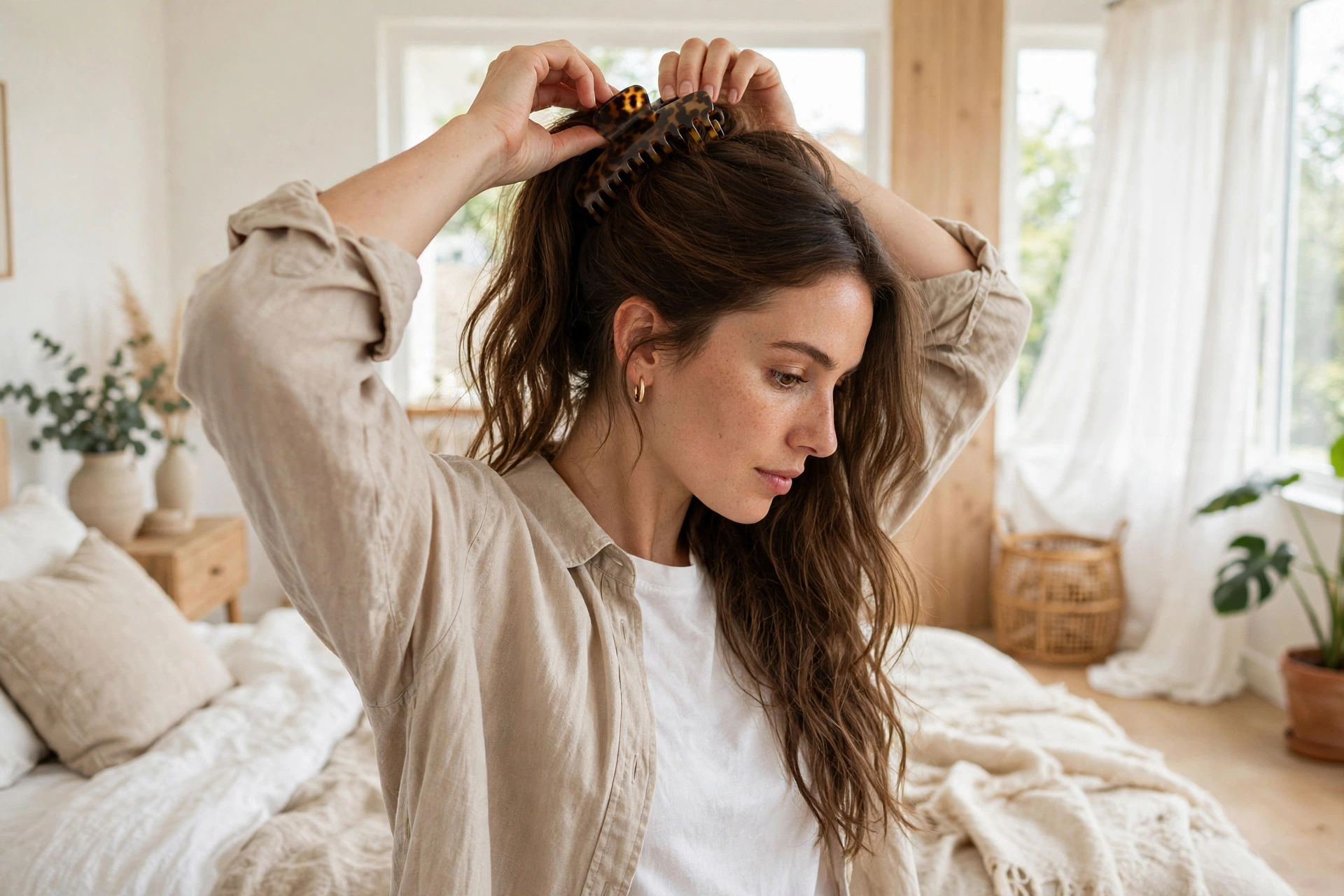
Claw clips work best for medium to long hair and are gentle enough for daily wear because they distribute pressure instead of pulling from one point. They are perfect for messy buns, twist-up styles, and keeping hair off your neck on hot days. For thick hair, look for a large clip with strong teeth; fine hair does better with a medium size so the clip does not slide.
2. Bobby Pin
The humble bobby pin might be the hardest-working tool in all of hairstyling. These small metal pins have one straight side and one wavy side, and that wavy side is the secret: it grips the hair and locks the pin in place. One pin alone does not look like much, but a handful can hold an entire updo together.
Bobby pins are ideal for pinning back bangs, securing twists and braids, taming flyaways, and hiding the ends of an updo. The trick most people miss is sliding them in wavy-side down against your head, which gives dramatically better hold. They come in colors matched to common hair shades, so they practically disappear when placed well.
3. Snap Clip
Snap clips are the flat little clips that bend slightly and snap shut with a satisfying click. You have seen them holding back toddler bangs and securing face-framing pieces on adults. They are lightweight, lie almost flat against the head, and come in endless colors and finishes.
These are best for fine to medium hair and for holding small sections, like side-swept bangs or a deep side part. They are also great for workouts and for keeping hair out of your face while doing makeup. Because they grip with light pressure, they are not the pick for very thick or heavy hair, which will pop them right open.
4. Banana Clip
The banana clip is the long, vertical clip that fastens top to bottom, creating that classic long ponytail shape from the eighties and nineties that has come roaring back. It interlocks like a zipper along the length of your hair, which distributes weight evenly from roots to ends.
This clip is made for long hair. It is one of the few accessories that can comfortably hold a full head of long, thick hair all day without a headache. It gives you a sleek vertical ponytail or a folded French-twist effect with almost no effort. If your hair is short or fine, though, a banana clip will feel oversized and slip.
5. Alligator Clip
Alligator clips get their name from their long, toothy jaws that snap shut like their namesake. Stylists use them constantly to section hair during blowouts and coloring, but they are just as useful at home. They grip firmly and hold large sections without leaving dents the way elastic bands can.
Use them to section your hair while styling, to hold curls as they cool for longer-lasting shape, or to pin hair up while your face mask does its work. They come in metal and plastic versions; the metal ones grip hardest and are favorites for thick hair. They are more of a styling tool than a fashion piece, but they earn their keep.
6. Barrette
Barrettes are the decorative clips that snap shut over a section of hair, and they range from simple tortoiseshell rectangles to crystal-covered statement pieces. Unlike purely functional clips, barrettes are meant to be seen. They are jewelry for your hair as much as they are holders.
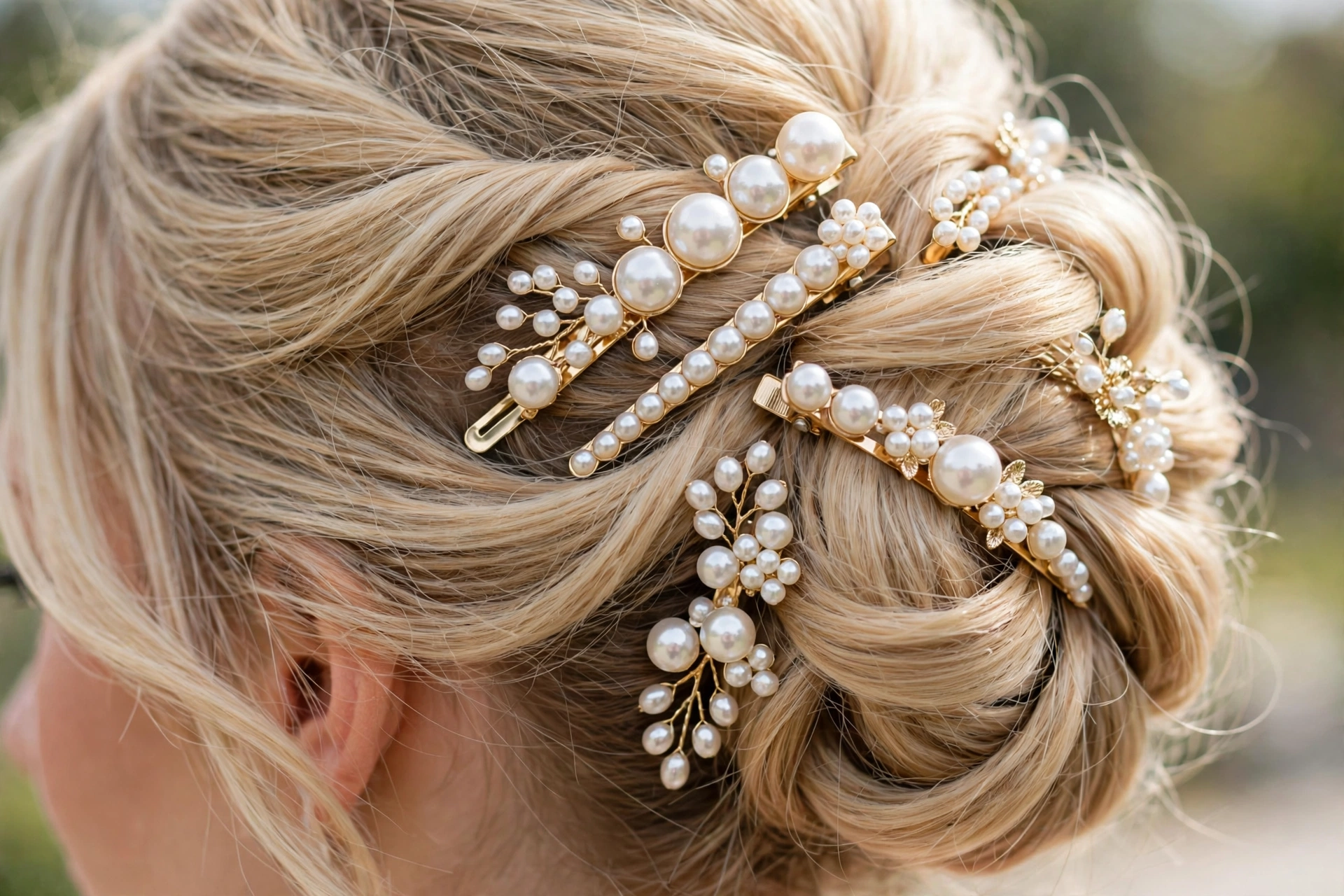
Use a barrette to pin back one side of your hair, to decorate a low ponytail, or to add polish to a half-up style. They work on most hair types as long as you are only securing a small to medium section. For special occasions, a pair of pearl or rhinestone barrettes can make even a simple style look intentional and dressed up.
7. French Barrette
The French barrette, also called an automatic barrette, is the curved clip with a locking clasp underneath that you press to open and snap to close. It sits flatter and more securely than a basic barrette, and the curved shape follows the contour of your head for a comfortable, all-day hold.
This is the grown-up workhorse for ponytails, French twists, and sleek low buns. It holds more hair than a standard barrette and stays put through a full workday. If you want one reliable clip that looks polished and never quits, the French barrette is it. Choose one with a strong clasp and smooth edges so it never snags.
8. Hair Comb Clip
Hair combs are the decorative pieces with teeth that slide into an updo, part hair accessory and part structural support. You will see them in bridal styles, elegant chignons, and vintage-inspired looks. The teeth anchor into the hair while the decorative top, often adorned with pearls, crystals, or metalwork, sits on display.
Combs are best for special occasions and for medium to long hair that is already styled up. They do not hold a style on their own from scratch; instead, they reinforce an updo and add a finishing flourish. Slide one above a bun or along the side of a twist, and an everyday updo instantly looks event-ready.
9. Butterfly Clip
Butterfly clips are the small, colorful claw-style clips that were everywhere in the nineties and have made a full comeback. They work just like mini claw clips: squeeze to open, release to clamp. Their charm is in the numbers, scattered through braids, twists, and half-up styles for a playful, nostalgic look.
These are best for accent styling rather than heavy lifting. Use them to pin back small face-framing pieces, decorate the end of a braid, or add pops of color to a simple ponytail. They are lightweight and fun, and because they are so small, they work on nearly every hair type without weighing anything down.
Wrapping Up
Nine clips, nine different jobs. The claw clip handles your everyday updos, bobby pins do the invisible detail work, and decorative pieces like barrettes and combs bring the style. Once you match the clip to the task, you will stop fighting with accessories that were never designed for what you asked them to do.
Start with the basics that fit your hair type and lifestyle, then add a fun one or two for variety. A well-chosen clip collection is small, affordable, and makes getting ready noticeably easier.
Frequently Asked Questions
Which hair clip is best for thick hair?
Large claw clips, banana clips, and strong French barrettes are the best choices for thick hair. They distribute weight and grip firmly without popping open. Avoid small snap clips and mini butterfly clips, which cannot handle the volume and will slide out quickly.
Do claw clips damage hair?
Claw clips are among the gentlest options because they clamp rather than pull. To keep them damage-free, avoid yanking them out, choose clips with smooth rounded teeth, and do not clamp the same spot every single day. They are far kinder than tight elastics worn daily.
What is the difference between a barrette and a French barrette?
A standard barrette usually has a simple snap or hinge closure and is often decorative. A French barrette has a curved shape with a locking automatic clasp underneath, sits flatter against the head, and holds more hair more securely. Think of it as the sturdier, more reliable cousin.
How do I keep bobby pins from sliding out?
Slide them in with the wavy side facing down against your scalp, which is how they are designed to grip. For extra hold, crisscross two pins over each other, or lightly tease the section underneath before pinning. Matching the pin color to your hair also keeps them invisible.