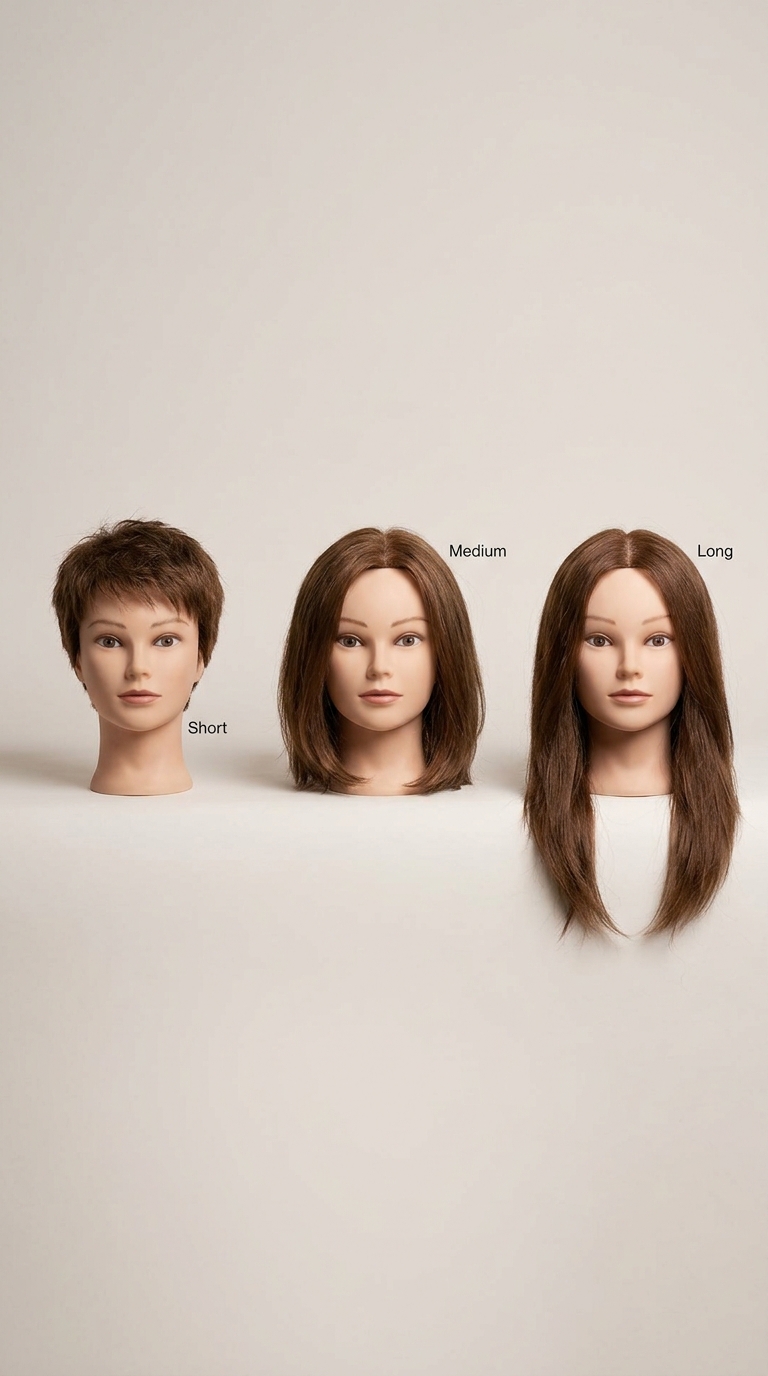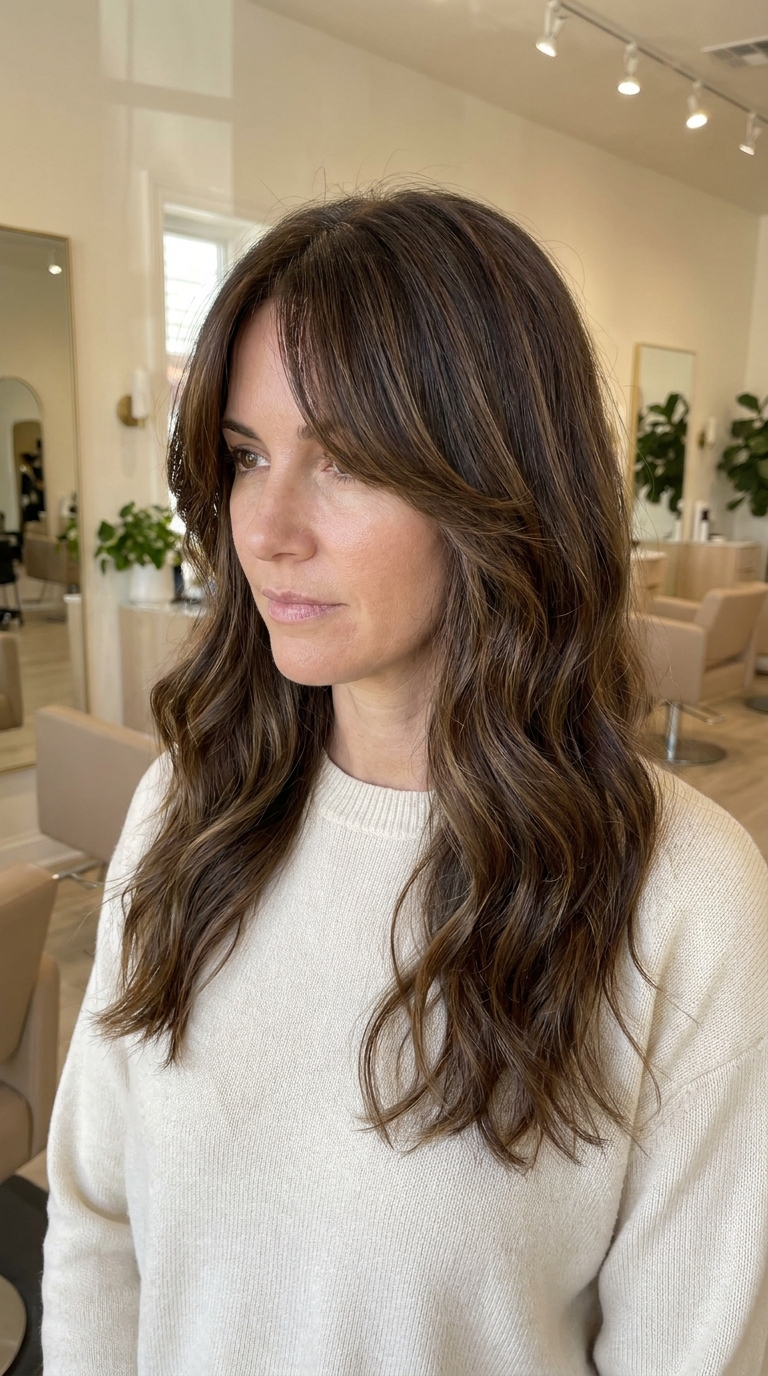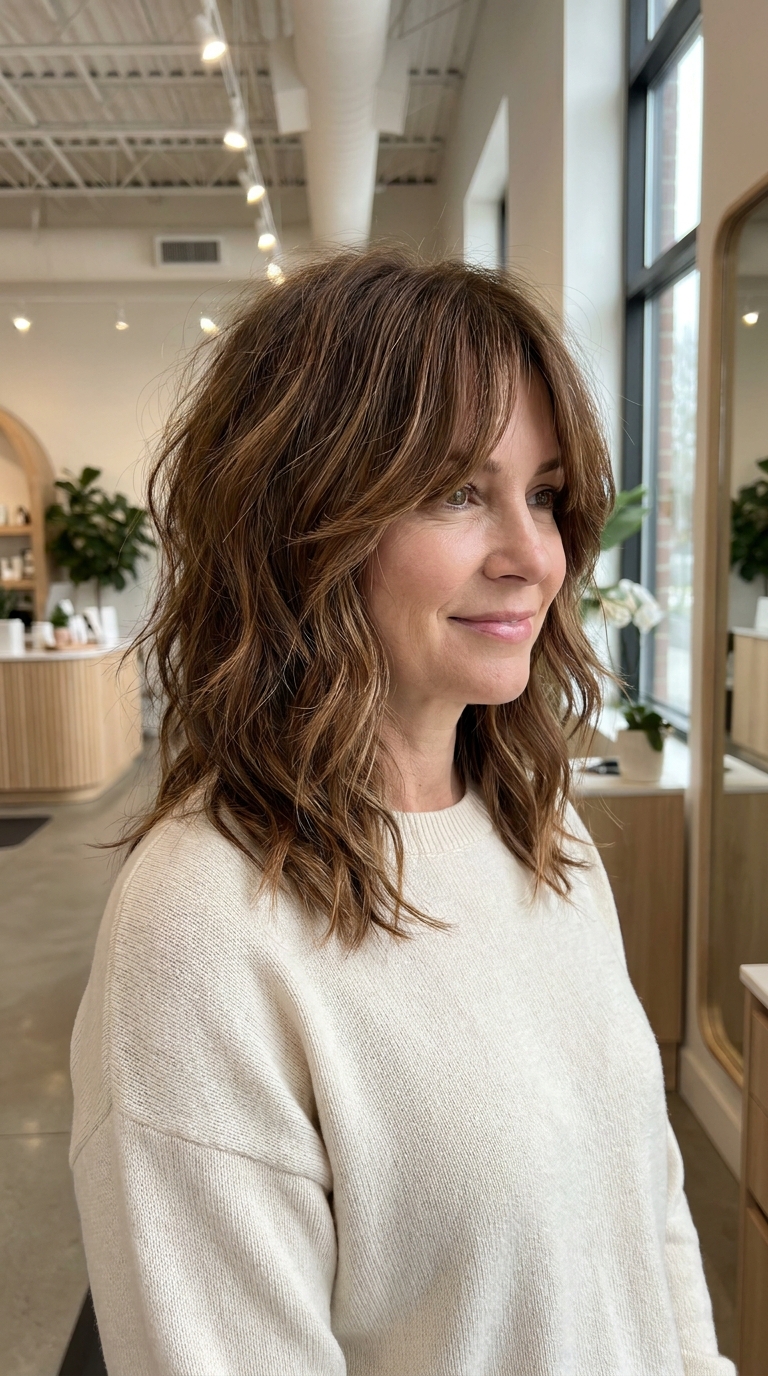
Scroll through enough hair inspiration and you’ll see “textured bob” and “layered bob” used almost interchangeably. In the chair, they’re not the same request — and asking for the wrong one is the fastest way to end up with a cut that looks nothing like your reference photo.
Both start from the same basic bob shape. From there, they diverge in how the stylist cuts the hair, how much daily styling the result needs, and which hair types they flatter. This guide breaks down exactly how each cut is created, who it suits, and how to walk into your next appointment knowing precisely what to ask for.
Textured Bob vs Layered Bob: The Quick Answer
If you only have thirty seconds: a textured bob keeps the hair at roughly one length and uses cutting techniques to add movement and break up the blunt edge — the layering is invisible. A layered bob cuts the hair into visibly different lengths, creating tiers you can actually see. Texture is a finishing technique; layering is a structural one.
| Textured Bob | Layered Bob | |
|---|---|---|
| Base length | Mostly one length | Multiple visible lengths |
| Technique | Point cutting, slide cutting, razoring | Vertical or diagonal sectioning into tiers |
| Look | Soft, choppy, lived-in | Full, structured, dimensional |
| Best for | Wavy or curly hair, low-maintenance routines | Fine hair (volume) or thick hair (weight removal) |
| Daily styling | Minimal — often air-dry friendly | Moderate — usually needs a blow-dry or round brush |
| Trim frequency | Every 8–10 weeks | Every 6–8 weeks |
| Grows out | Gracefully, shape holds | Loses definition faster |
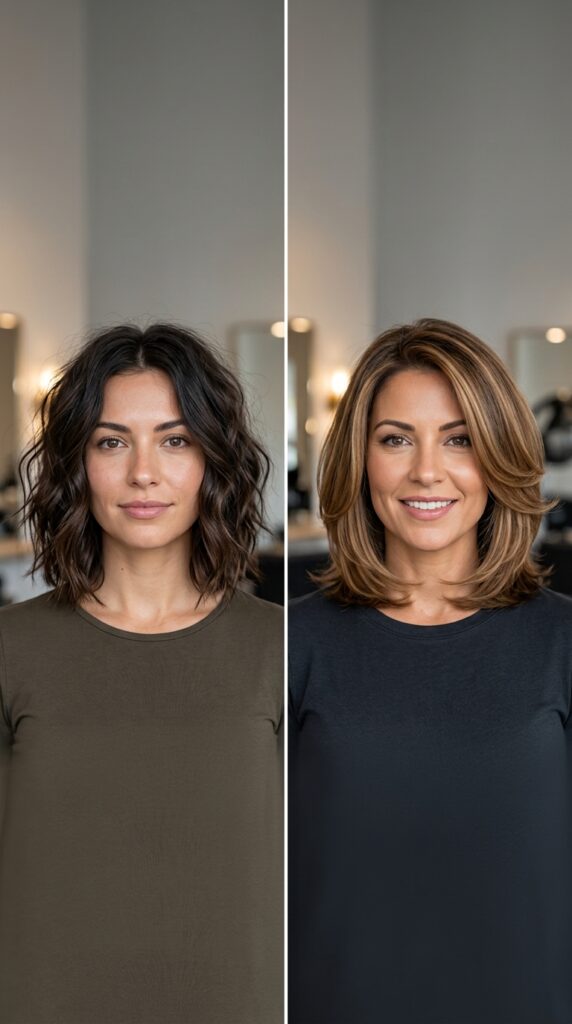
What Is a Textured Bob?
A textured bob is built on a bob that’s cut mostly at one length, then refined so the ends aren’t blunt. Instead of removing length, the stylist removes weight — thinning out sections near the ends using scissor techniques like point cutting or slide cutting, or a razor for an even softer edge.
The result is a cut where you can’t spot individual layers, but the hair still has movement, separation, and a slightly undone finish. Think of it as texture worked into the silhouette rather than layers built into the structure.
Who It Works Best For
- Wavy and curly hair benefits the most. The texturizing works with your natural pattern, so waves clump and curls separate without much effort.
- Fine, straight hair can wear it too, but the “movement” won’t show up on its own — you’ll need to add loose waves with a curling wand or texturizing spray to get the effect the cut is designed for.
- Very coily or tightly coiled textures are usually better served by a sleeker, more structured bob. Heavy point-cutting on tight coils can create unpredictable shrinkage and a shape that’s harder to control day to day.
Pros and Cons
Pros:
- Low daily maintenance — many people can air-dry and go
- Grows out without losing its shape dramatically
- Flatters natural texture instead of fighting it
- Forgiving of humidity and second- or third-day hair
Cons:
- Straight, fine hair may need heat styling to show off the intended movement
- Harder to reverse into a fully blunt bob without significant cutting
- Not the best choice for very tight curl patterns
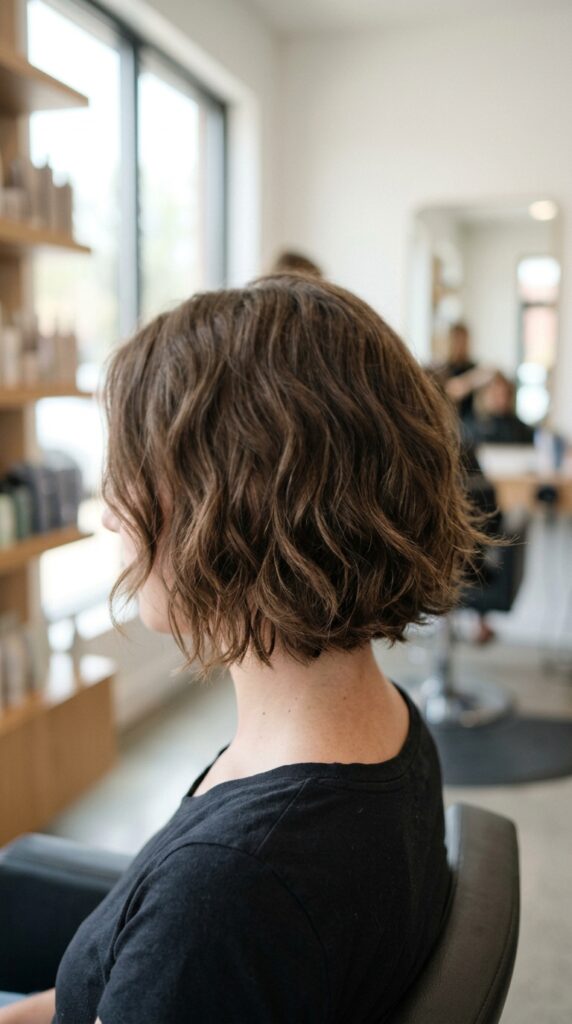
What Is a Layered Bob?
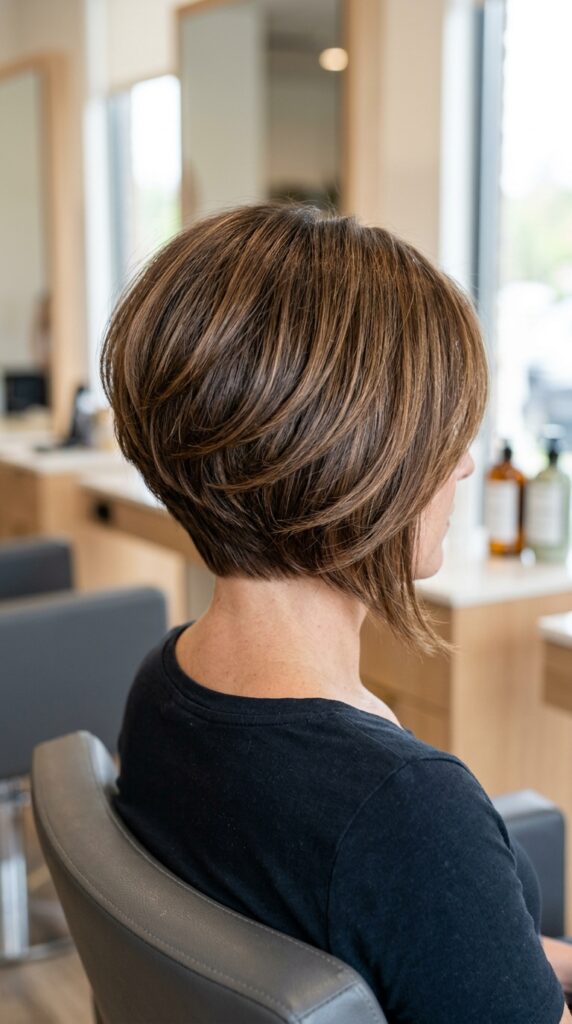
A layered bob takes the opposite approach. Instead of hiding the structure, it’s built from it. The stylist sections the hair and cuts distinct tiers, so strands throughout the head end at different lengths. You can see the layering when the hair is styled — that’s the point.
Layered bobs aren’t one fixed look. Depending on how dramatic the tiers are and where the bob sits, you’ll hear a few common variations:
- Classic layered bob — subtle, blended layers, chin-to-shoulder length
- Long layered bob (“lob”) — layers built into a longer bob that sits around the collarbone
- Stacked or inverted bob — shorter, more graduated layers at the back with longer pieces in front, for a dramatic angled silhouette
- Shaggy layered bob — heavier, more feathered layering for a softer, retro-inspired finish
Who It Works Best For
- Fine hair gains the appearance of thickness. Shorter layers underneath lift the roots and create the illusion of density that a one-length cut can’t fake.
- Thick or heavy hair gets weight removed from the interior, which stops the cut from sitting like a solid triangle and lets it move more naturally.
- Hair with some natural wave tends to show the layers off best, though straight hair layered bobs are just as common — they simply rely more on styling to define each tier.
Pros and Cons
Pros:
- Adds real volume and body, especially for fine hair
- Removes bulk from thick hair without sacrificing length
- Offers more style versatility (sleek, voluminous, tousled)
- Very customizable — subtle to dramatic
Cons:
- Needs more regular styling to look intentional rather than flat
- Grows out less gracefully; the tiers blur and need trimming sooner
- Can require more frequent salon visits to maintain the shape
How to Choose Based on Your Hair Type
Technique matters, but hair type is usually what decides the right call.
Fine, straight hair. A layered bob is the stronger pick if volume is your main goal — the shorter interior layers do work that texture alone can’t. If low maintenance matters more than volume, a textured bob with a few well-placed layers near the crown can still add some lift without demanding daily styling.
Thick, straight hair. Layering removes bulk and stops the cut from turning into a heavy, triangular shape. A textured bob can also work if you want to keep the fullness but soften the ends.
Wavy hair. This is where a textured bob shines — the choppy ends let your wave pattern do the styling for you. A layered bob also looks great on wavy hair and adds extra dimension, but expect to spend a bit more time scrunching or diffusing to define each layer.
Curly hair. Texturizing techniques (especially razor cutting, used carefully) help curls clump and reduce bulk without disrupting the curl pattern. Heavy structural layering can sometimes cause curls to spring up unevenly, so many curly stylists lean toward texture over dramatic layers.
Coily or tightly coiled hair. A sleeker, minimally layered bob with careful shaping usually holds up better day to day than either heavily textured or heavily layered versions, since both techniques can be harder to control on tighter curl patterns.
How to Choose Based on Face Shape
Face shape has less influence than hair type, but it’s still worth factoring in.
- Round faces — A textured bob with less width at the sides, or a layered bob that falls just below the chin, helps elongate the face.
- Square faces — Soft texture around the jaw softens strong angles. Keeping length closer to the collarbone (rather than a short, blunt jaw-length cut) also helps balance a defined jawline.
- Heart and diamond faces — Both cuts work well since the jaw and cheekbones can carry a shorter length without overwhelming the face.
- Oval faces — Close to universally flattering. This is the shape where the decision comes down almost entirely to hair type and how much styling time you want to commit to.
What Your Routine Will Actually Look Like
This is the part most people underestimate — and the biggest reason people end up disappointed with a cut that looked perfect in a photo.
Textured Bob Routine
- Apply a lightweight leave-in or texturizing spray to damp hair
- Air-dry, or diffuse on low heat if you have wavy or curly hair
- Scrunch gently to encourage natural movement
- Tuck front pieces behind your ears to frame your face
- Refresh with dry shampoo on day two or three
- Book a trim every 8–10 weeks to keep the ends from getting stringy
If you want a bit more definition, wrap a few random pieces around a curling wand for extra movement — but this cut is designed to look intentional even without it.
Layered Bob Routine
- Rough-dry with a blow-dryer to about 80% dry
- Use a round brush section by section to define each layer and add lift at the root
- Apply a root-lifting spray or mousse at the crown before drying if volume is the goal
- Finish with a flat iron for a sleek look, or leave slightly tousled for texture
- Touch up with dry shampoo and a bit of texturizing spray between washes
- Book a trim every 6–8 weeks — layers blur and the shape softens faster than a textured bob’s
Both cuts benefit from a heat protectant on styling days and a lightweight, hydrating conditioner, since shorter cuts show dryness and split ends more visibly than long hair.
Common Mistakes to Avoid
- Choosing based on a photo, not a routine. A model’s textured bob has usually been styled for an hour before the photo. Ask your stylist how the cut looks on day three, unstyled — that’s the version you’ll actually be wearing most days.
- Asking for “layers” when you want a textured bob. These words get used loosely. If you want the internal, low-maintenance version, say “point-cut” or “razored ends,” not just “textured.”
- Skipping trims. Both cuts rely on precise cutting to hold their shape. A layered bob especially can look shapeless within weeks of missing a trim.
- Ignoring hair density. A layered bob on already-thin, fine hair cut too aggressively can leave ends looking wispy rather than voluminous. A skilled stylist will adjust how many layers to cut based on your density, not just a reference photo.
- Not accounting for shrinkage. Curly and coily clients should always discuss how much a cut will “bounce up” once dry — wet length and dry length can look very different.
How to Talk to Your Stylist
Being specific is the single best way to avoid a mismatched result.
For a textured bob, say you want a mostly one-length shape with soft, choppy ends created through point cutting or razor work — not visible layers. Mention that you want it to air-dry well and hold up on day two or three without much styling.
For a layered bob, ask for distinct layers cut throughout to build volume, and specify where you want the bob to sit (jaw, chin, or collarbone). Be upfront that you’re willing to spend extra time styling, so your stylist knows they can cut in more dramatic layers if that’s what you want.
Either way, bring reference photos, but also describe your actual morning routine — not the one you aspire to. Tell your stylist honestly whether you reach for a blow-dryer daily or almost never. That single detail changes how a good stylist will cut your hair.
Textured Bob vs Layered Bob: Final Comparison
| Factor | Textured Bob | Layered Bob |
|---|---|---|
| Effort to style | Low | Moderate to high |
| Volume for fine hair | Mild | Strong |
| Weight removal for thick hair | Mild to moderate | Strong |
| Best hair type | Wavy, curly | Fine or thick, straight or wavy |
| Grow-out flexibility | High | Moderate |
| Trim frequency | 8–10 weeks | 6–8 weeks |
| Overall vibe | Relaxed, undone | Polished, structured |
FAQ
Can a bob be both textured and layered? Yes. Most modern bobs blend the two — a few structural layers for shape, plus point-cutting or razoring on the ends for movement. If you want the best of both, ask your stylist for “soft layers with textured ends” rather than choosing strictly one or the other.
Which cut is lower maintenance? A textured bob is generally easier to maintain day to day, since it’s designed to air-dry and look intentional without much styling. A layered bob usually needs a blow-dry and round brush to look its best.
Which cut lasts longer between trims? A textured bob tends to grow out more gracefully, often stretching to 8–10 weeks between trims. A layered bob typically needs a trim every 6–8 weeks to keep the tiers from blurring together.
Is a textured bob or layered bob better for thin hair? A layered bob is usually the stronger choice for fine or thin hair, since shorter interior layers lift the roots and create the appearance of thickness that a mostly one-length textured cut can’t achieve on its own.
Does a layered bob work on curly hair? It can, but many curly-hair stylists lean toward texturizing techniques instead, since heavy structural layers can sometimes cause curls to spring up unevenly. A hybrid — light layers with texturized ends — often works best.
How do I know which one I actually want? Answer honestly: do you air-dry most days, or do you reach for a blow-dryer? If it’s air-dry, lean textured. If you don’t mind styling and want more volume or shape, lean layered.
The Bottom Line
Neither cut is objectively better — they’re built for different hair types and different amounts of time in front of a mirror. A textured bob rewards hair that already has movement and a routine built around low effort. A layered bob rewards hair that needs help creating volume or shedding weight, and a willingness to spend a few extra minutes styling it.
The real test isn’t how either cut photographs on day one. It’s how it looks on day three, when you haven’t touched it. Choose based on that, and you’ll walk out of the salon with a cut you’re still happy with weeks later.