With so many types of bangs to choose from, finding the right fringe can feel like standing in front of a menu with too many options. But here’s the thing: bangs are one of the fastest ways to completely refresh a hairstyle without losing length or committing to a drastic change. The right fringe can highlight your eyes, soften angular features, balance your proportions and make your entire look feel more polished or more effortlessly undone, depending on what you’re after.
Whether you want something soft and romantic, sharp and editorial, or somewhere in between, there’s a bang style designed for exactly that mood. The challenge is figuring out which one works with your hair texture, your face shape and your daily routine.
This guide walks through 12 visually distinct fringe styles, from classic to trending, so you can picture each one clearly and decide which deserves a spot on your Pinterest board and a conversation with your stylist.
1. Curtain Bangs
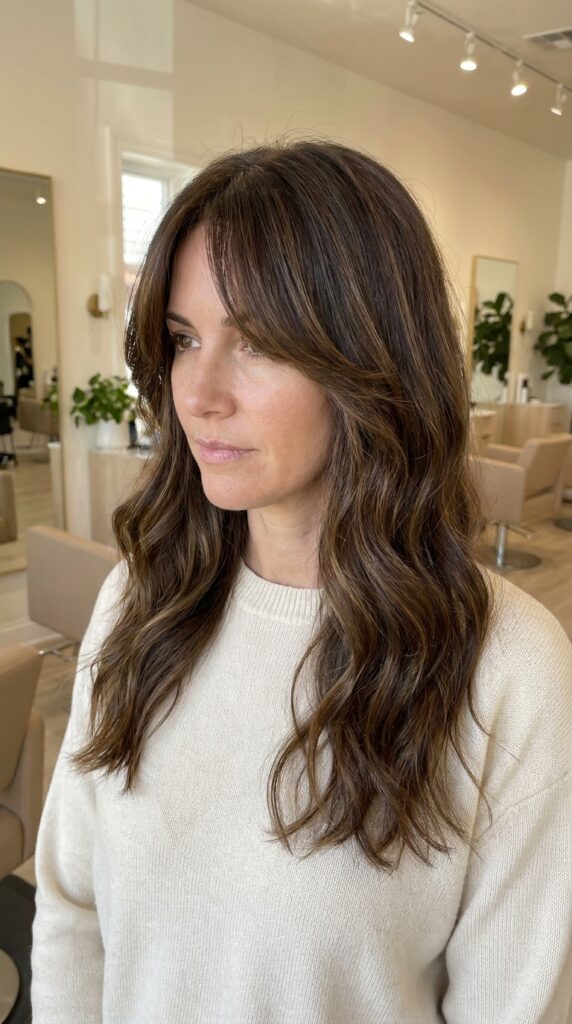
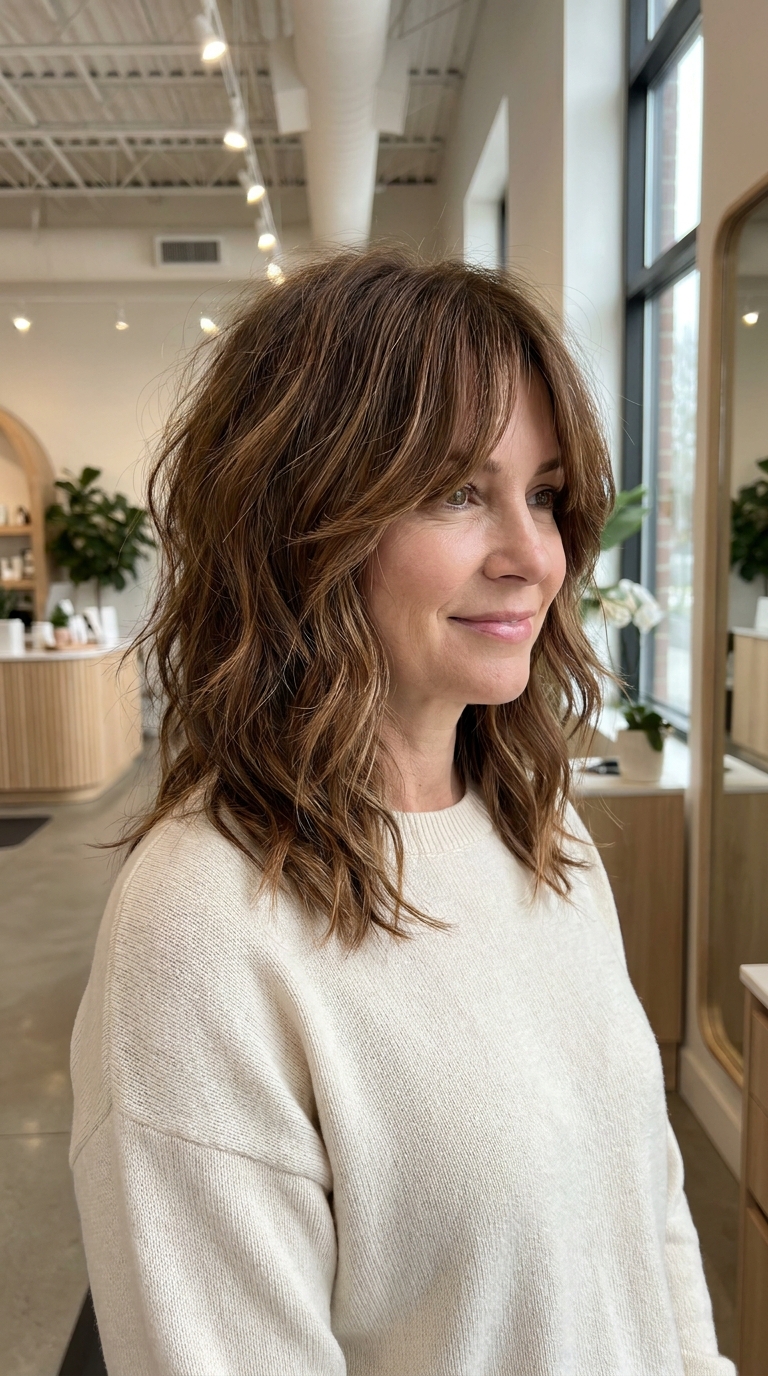
Prompt 1: A realistic beauty portrait of an adult woman with long dimensional brunette hair and beautifully styled curtain bangs. The fringe has a soft center part, shorter strands opening naturally around the forehead and longer pieces sweeping outward toward the cheekbones. The bangs blend seamlessly into long face-framing layers. Hair has soft loose waves with natural movement and subtle crown volume. Warm dimensional chocolate brunette with delicate caramel highlights. Photographed chest-up at a soft three-quarter angle so both sides of the curtain fringe are clearly visible. She wears a simple cream knit top. Background: bright upscale salon with warm neutral decor, softly blurred mirrors and subtle natural daylight. Soft window lighting highlights the texture and individual hair strands. Elegant, effortless, feminine hairstyle photography, natural skin texture, realistic hair density, vertical 2:3 portrait, no text, no watermark.
Curtain bangs frame the face with a gentle center part, falling shorter through the middle of the forehead and gradually lengthening as they sweep toward the cheekbones. The shape creates a soft opening around the eyes and brow area while the longer side pieces blend naturally into the rest of the haircut. This seamless transition is what makes them feel so effortless.
They work beautifully on straight, wavy and even loosely curly hair, and they tend to flatter oval, round and heart-shaped faces by softening the frame around the forehead without fully covering it. Styling is relatively simple: a round brush and a quick blow-dry can shape them in under two minutes.
If you’ve never had bangs before, curtain bangs are one of the easiest places to start. They grow out gracefully, blend into layers naturally and never feel too committed. Best for: first-time bang wearers, low-maintenance styling and versatile face framing.
2. Blunt Bangs
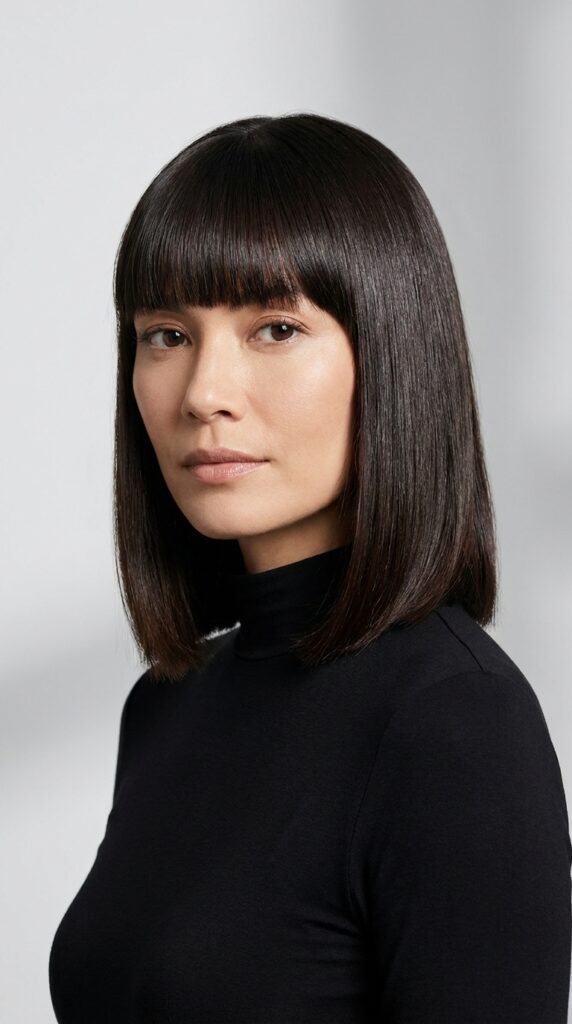
Prompt 2: An editorial hairstyle portrait of a different adult woman with sleek, straight, glossy dark espresso hair and precise blunt bangs. The bangs form a clean horizontal fringe across the forehead, sitting close to eyebrow level with a dense, polished appearance. Paired with a sophisticated shoulder-length one-length bob. Hair looks smooth and healthy with realistic shine, not artificial or excessively reflective. Model is front-facing from chest-up so the precision and symmetry of the fringe are immediately visible. She wears a minimalist black high-neck top. Background: contemporary light gray photography studio with subtle shadows. Soft diffused beauty lighting with gentle highlights across the fringe. Polished, sophisticated, modern editorial beauty photograph, realistic skin and hair texture, vertical 2:3 format, no writing, no watermark.
Blunt bangs are cut in a clean, straight horizontal line across the forehead, typically sitting right at or just above the eyebrows. The dense, uniform edge creates immediate visual impact and draws attention directly to the eyes. There’s nothing subtle about them, and that’s exactly the point.
This style generally works best on hair with enough natural density to create that full, solid fringe line. Straight and slightly wavy textures tend to hold the precise shape most easily, though thicker wavy hair can achieve a similar look with some blow-drying. Oval and oblong face shapes often wear blunt bangs beautifully, as the horizontal line can visually shorten a longer face.
The trade-off is maintenance. Blunt bangs show every millimeter of growth, so regular trims keep them looking intentional. A flat brush and a blow-dryer pointed downward are your best friends for keeping them smooth and in place.
3. Side-Swept Bangs
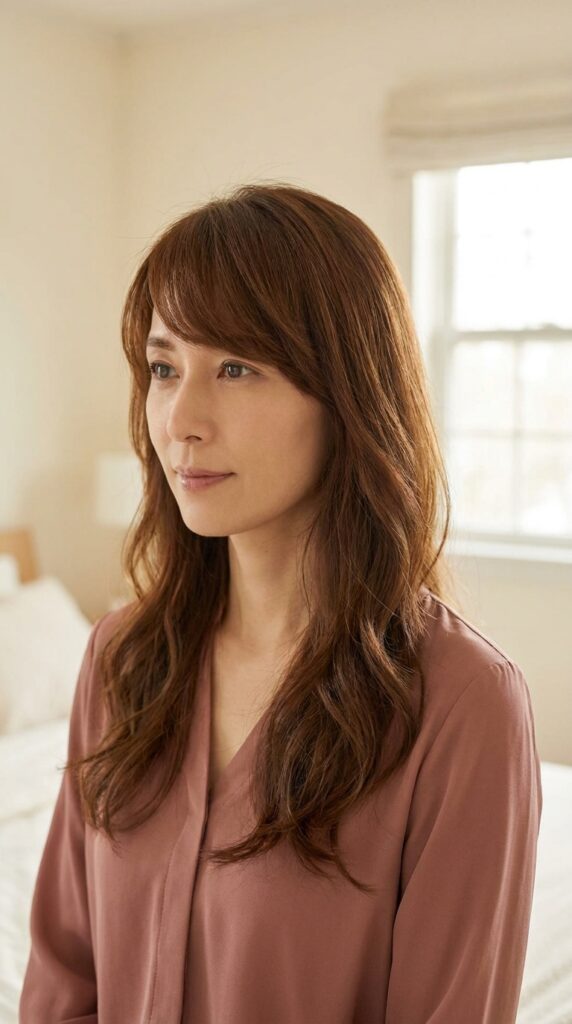
Prompt 3: A soft, sophisticated hairstyle photograph of an adult woman with medium-length warm chestnut hair and elegant side-swept bangs. The fringe begins shorter near one side of the forehead and gradually becomes longer as it sweeps diagonally toward the opposite cheekbone. Bangs blend naturally into long layered hair with subtle body and soft bends. Model at a natural three-quarter angle with her head slightly turned so the diagonal movement of the fringe is obvious. She wears a modest dusty-rose blouse. Background: softly illuminated bedroom or dressing-area interior with cream walls and minimal decor. Diffused morning window light for a romantic but realistic finish. Natural, wearable, refined hairstyle inspiration, detailed hair strands, realistic texture, vertical 2:3 portrait, no text or watermark.
Side-swept bangs angle diagonally across the forehead, starting shorter on one side and gradually lengthening as they sweep toward the opposite cheekbone. That diagonal line naturally creates a softening effect, drawing the eye along a gentle slope rather than a hard horizontal edge.
This makes them especially useful for visually elongating a rounder face or softening a stronger jawline. They pair well with almost any haircut, from bobs to long layers, and adapt easily to straight, wavy and curly textures since the shape doesn’t rely on rigid precision.
One of the biggest practical advantages of side-swept bangs is how forgiving they are during the grow-out phase. As they lengthen, they simply blend into the rest of your hair without that awkward in-between stage. Styling usually requires nothing more than directing the fringe to one side with a brush during blow-drying.
4. Wispy Bangs
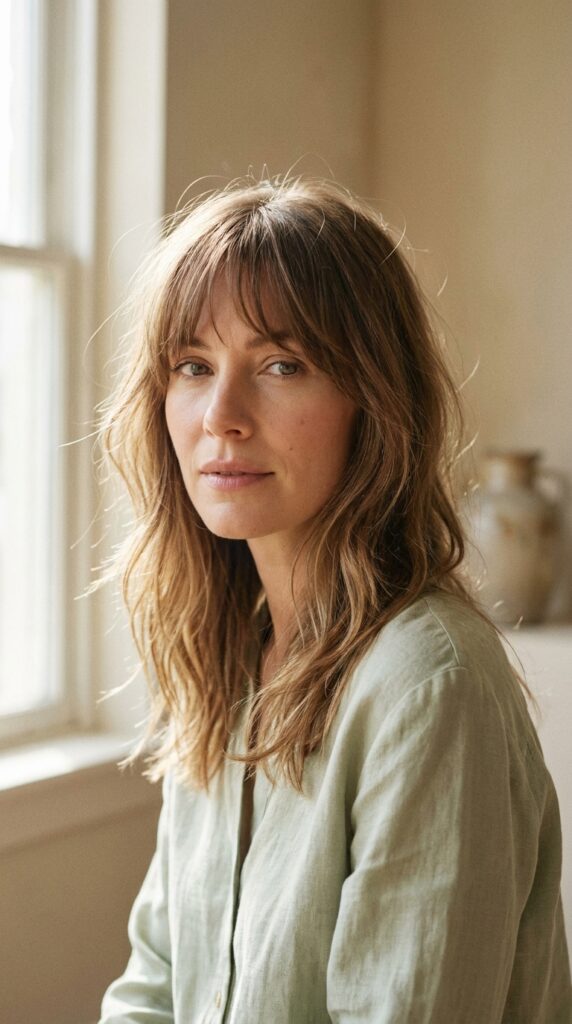
Prompt 4: A delicate editorial portrait of an adult woman with fine-to-medium light brown hair and airy wispy bangs. The fringe consists of lightweight, feathered, separated strands with subtle forehead visibility between them. Bangs are soft around eyebrow length with delicate pieces gently framing the temples. Paired with medium-length softly layered hair with a natural straight-to-slightly-wavy finish. Shoulders-up composition so the airy fringe is the visual focus. She wears a modest pale sage top. Background: minimal warm beige interior with soft natural daylight and subtle shallow depth of field. Lighting illuminates the fine strands without making the hair look overly shiny. Soft romantic aesthetic, natural complexion, realistic fine hair texture, editorial photography, vertical 2:3, no text, logo or watermark.
Wispy bangs are deliberately thin and airy, with lightweight strands that fall softly across the forehead while allowing skin to peek through between them. Unlike blunt bangs, which create a solid curtain of hair, wispy fringe feels delicate and barely-there. The effect is a gentle frame around the face without any heaviness.
This style is particularly well suited to fine and medium hair textures, where the natural lightness of the strands creates that feathered separation organically. They also tend to flatter a wide range of face shapes because the soft, broken fringe doesn’t create a harsh line anywhere.
If the idea of full bangs feels too bold, wispy fringe offers a middle ground. You get the freshness of a fringe without the full commitment. Styling is minimal: a light pass with a blow-dryer and your fingers is usually enough. A tiny amount of texture spray can enhance the piecey separation.
5. Curly Bangs
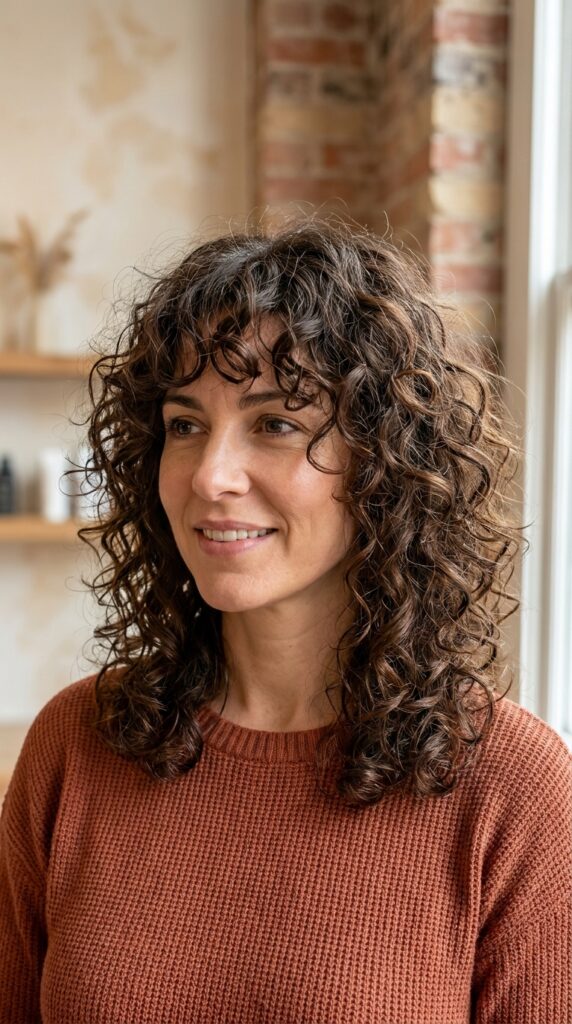
Prompt 5: A highly realistic hairstyle portrait of an adult woman with naturally curly medium-to-dark brown hair and beautifully shaped curly bangs. The fringe follows her natural curl pattern rather than appearing artificially straightened. Individual curls fall naturally across and slightly above the eyebrows, with different curl lengths creating soft dimensional face framing. Paired with shoulder-length layered curls full of realistic definition, bounce and volume. Photographed chest-up from slightly off-center. She wears a modest terracotta top. Background: warm contemporary salon or stylish loft with textured neutral walls, softly blurred. Natural side lighting reveals curl definition and dimensional texture. Celebrates authentic curly hair with realistic flyaways, natural density and believable curl variation. High-end hair inspiration, vertical 2:3 composition, no text, no watermark.
Curly bangs are designed to work with your natural curl pattern rather than against it. That means the fringe is cut to account for how curls spring upward as they dry, which is why the wet length and the dry length can look dramatically different. A stylist experienced with textured hair will typically cut curly bangs dry or at least evaluate the final shape on dry curls.
The finished look features individual curls falling across the forehead at slightly different lengths, creating beautiful face framing with natural dimension. Depending on your curl pattern, the fringe might sit above the brows, graze them or fall just below.
Styling curly bangs usually means refreshing the curl definition with a lightweight cream or curl-specific product and either air-drying or diffusing. Between washes, a quick spritz with water or curl refresher and some gentle scrunching can bring the shape back to life. The key is embracing the variation that natural curls create rather than forcing uniformity.
6. Micro Bangs
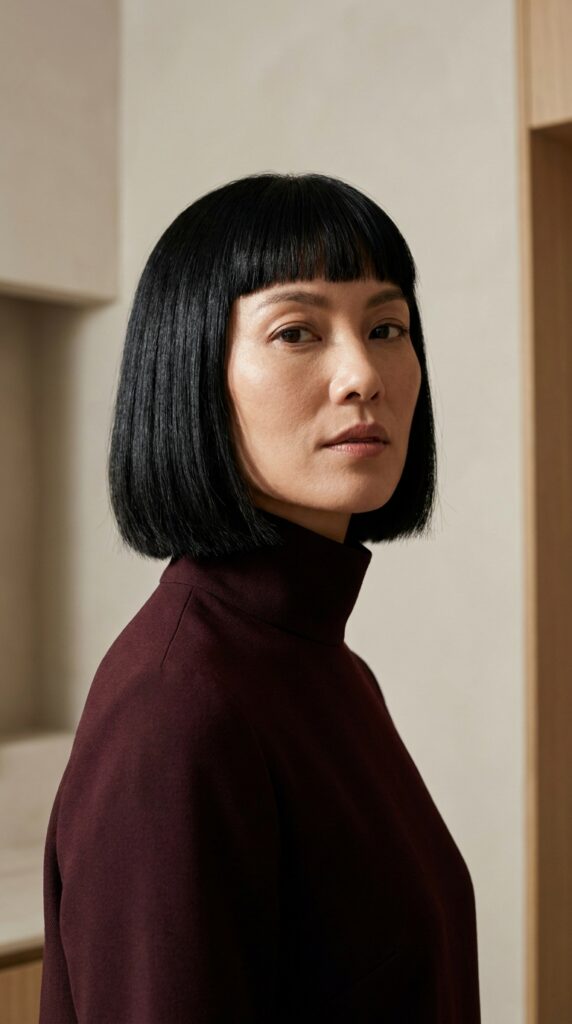
Prompt 6: A bold, fashion-forward beauty portrait of an adult woman with a sleek short black bob and sharply defined micro bangs. The fringe sits clearly above the eyebrows and exposes a noticeable portion of the forehead. Bangs are short, intentional and precise while maintaining a wearable editorial aesthetic. The bob sits around jaw length with smooth texture and subtle inward movement at the ends. Model nearly front-facing from shoulders-up to emphasize the dramatic fringe. She wears a simple structured burgundy high-neck top. Background: clean modern architectural interior in soft neutral tones. Directional editorial lighting with controlled shadows for a strong fashion feel. Ultra-realistic beauty photography, natural skin texture, precise hair details, vertical 2:3 image, no text, watermark or logo.
Micro bangs, sometimes called baby bangs, sit well above the eyebrows, exposing a significant portion of the forehead. This is one of the most statement-making fringe styles you can choose. The ultra-short length draws immediate attention to the eyes and brow bone, creating a bold, fashion-forward silhouette.
They can be cut in a straight clean line for maximum sharpness or with a slightly softened edge for a more approachable look. Straight and slightly wavy hair textures tend to hold the short shape most neatly, though curly micro bangs can look stunning with the right shaping.
Oval and heart-shaped faces often complement this style well, but personal confidence matters more than any face-shape guideline here. Because the fringe is so short, even a small amount of growth changes the look noticeably, so regular trims are essential. Growing micro bangs out also takes more patience than most other fringe styles, so consider this a commitment piece.
7. Bottleneck Bangs
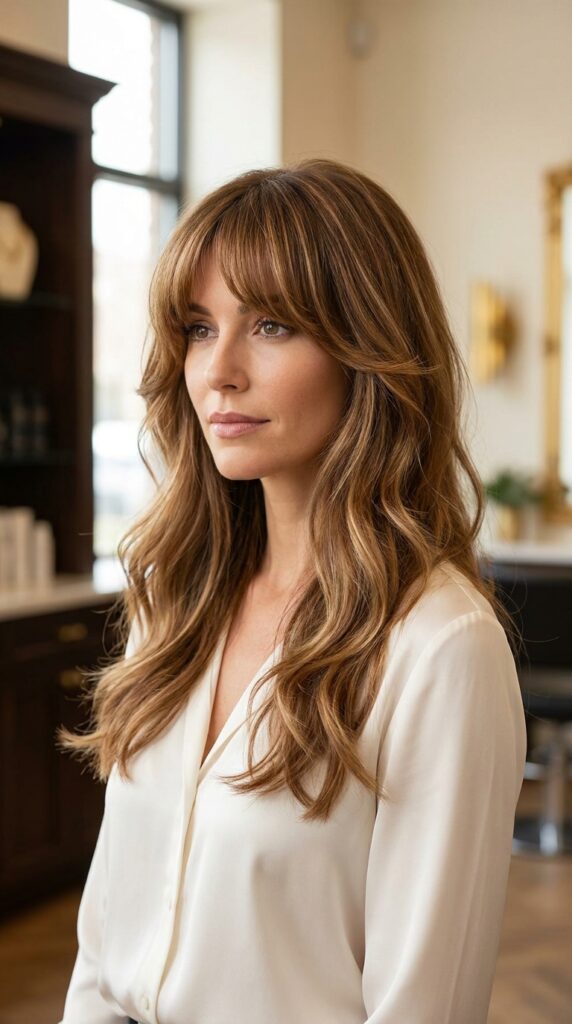
Prompt 7: A luxurious hairstyle portrait of an adult woman with long dimensional caramel-brown hair and flattering bottleneck bangs. The fringe is shortest through the central forehead and gradually lengthens toward the cheekbones, creating a recognizable curved bottleneck silhouette. The center is softly full rather than sparse. Longer side pieces seamlessly connect into flowing face-framing layers. Rest of hair styled with polished loose waves. Photographed chest-up at a relaxed three-quarter angle. She wears an elegant ivory blouse with a modest neckline. Background: sophisticated boutique salon with warm wood, cream walls and blurred golden accents. Soft directional window light for dimensional shine. High-end hairstyle editorial, realistic strands, natural hair texture, vertical 2:3 composition, no text or watermark.
Bottleneck bangs take the curtain-bang concept and add more structure. The fringe is shortest at the center of the forehead and gradually curves outward and downward toward the cheekbones, creating a rounded silhouette that resembles the neck of a bottle. Unlike curtain bangs, which part openly, bottleneck bangs maintain more coverage through the center while the elongated sides blend into face-framing layers.
This shape contours the face naturally, narrowing around the forehead and opening up around the cheekbones, which makes it especially flattering for round and square face shapes. The fringe works well on medium to thick hair since it needs enough density to hold that fuller center section without looking sparse.
Styling involves blow-drying the center section forward and gently curving the longer sides outward with a round brush. The finished effect is polished but soft, sitting somewhere between curtain bangs and a full fringe.
8. Choppy Bangs
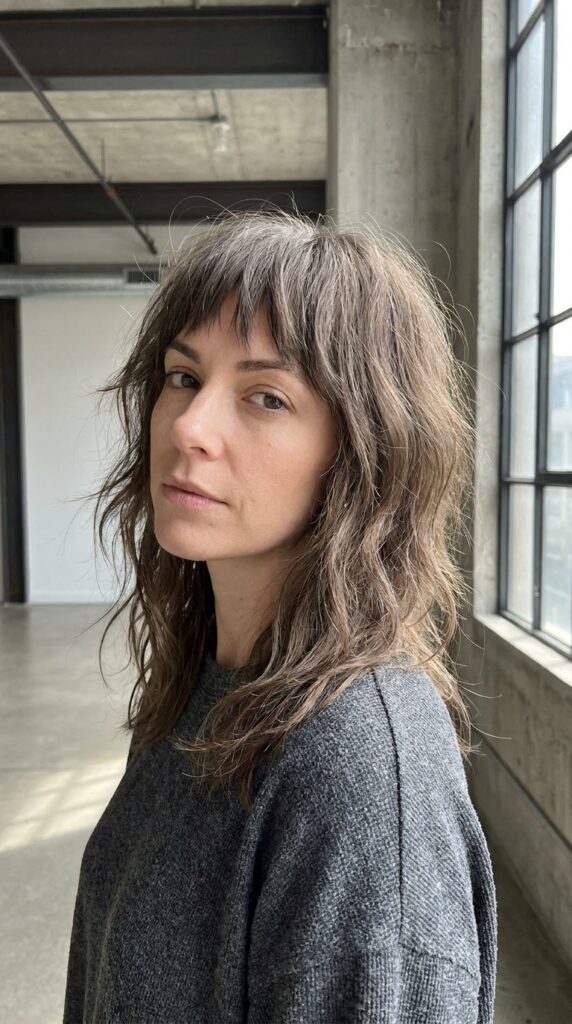
Prompt 8: An edgy but wearable hairstyle photograph of an adult woman with medium-length dimensional ash-brown hair and choppy textured bangs. The fringe has intentionally uneven, piecey ends and visible separation instead of one perfectly straight edge. The variation looks professionally cut rather than damaged or accidental. Paired with a textured shoulder-length shag-inspired haircut with loose natural waves. Photographed chest-up with a subtle head tilt that shows movement through the fringe. She wears a modest charcoal-gray top. Background: modern industrial-style studio with softly blurred concrete textures and natural window light. Lighting reveals individual separated pieces and dimensional texture. Contemporary editorial aesthetic, realistic hair, believable flyaways, vertical 2:3 format, no text, logo or watermark.
Choppy bangs trade clean precision for deliberate imperfection. Instead of one uniform cutting line, the fringe is point-cut or razor-cut to create uneven, piecey ends with visible texture and separation. The result looks relaxed, slightly rebellious and intentionally undone.
They pair naturally with textured haircuts like shags, layered cuts and messy bobs. The fringe echoes the same lived-in energy as the rest of the hair, so everything feels cohesive rather than disconnected. Medium to thick hair textures tend to show off the choppy separation most clearly, though fine hair can achieve a similar look with strategic cutting.
Styling usually involves working a small amount of texture paste or dry shampoo through the fringe with your fingertips, separating the pieces and letting them fall naturally. The whole point is that they look like you didn’t try too hard, so avoid over-brushing or over-smoothing.
9. Bardot Bangs
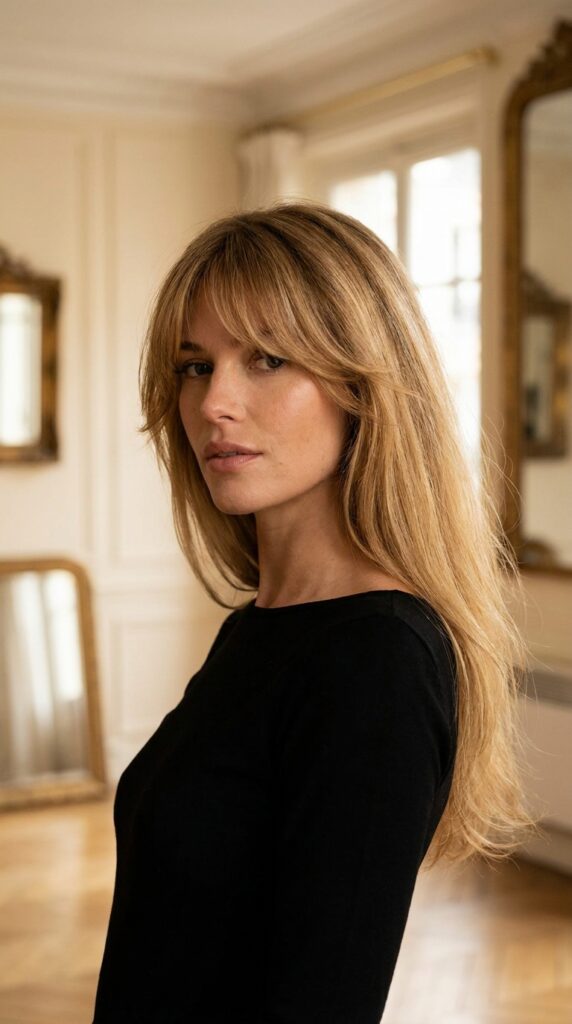
Prompt 9: A romantic vintage-inspired yet modern hairstyle portrait of an adult woman with voluminous honey-blonde hair and glamorous Bardot bangs. The bangs are full and softly parted through the center, with rounded volume around the forehead and longer swooping side pieces blending toward the cheekbones. The fringe appears fuller and more glamorous than delicate curtain bangs. Long hair styled with soft, brushed-out waves and gentle retro volume. Photographed chest-up at a graceful three-quarter angle. She wears a simple modest black boat-neck top. Background: elegant Parisian-inspired interior with warm cream walls and subtle vintage details, heavily softened through shallow depth of field. Warm diffused beauty lighting. Timeless French-inspired beauty editorial, natural skin texture, realistic hair strands, vertical 2:3 composition, no text or watermark.
Bardot bangs carry a sense of French glamour that feels timeless and unapologetically feminine. They’re fuller and more voluminous than standard curtain bangs, with a soft center part and rounded, swooping sides that blend toward the cheekbones. The overall shape creates a lush frame around the face with more presence and movement than a lighter fringe.
Hair with medium to thick density tends to support the full, swooping shape most naturally, since the style relies on having enough volume to create that rounded silhouette around the forehead. Straight and wavy textures both work well, though the fringe often looks best with a soft bend through the sides, typically achieved with a round brush or large-barrel curling iron.
The effect is romantic and slightly retro without feeling costume-like. They pair beautifully with long loose waves and add instant personality to even the simplest hairstyle.
10. Layered Bangs
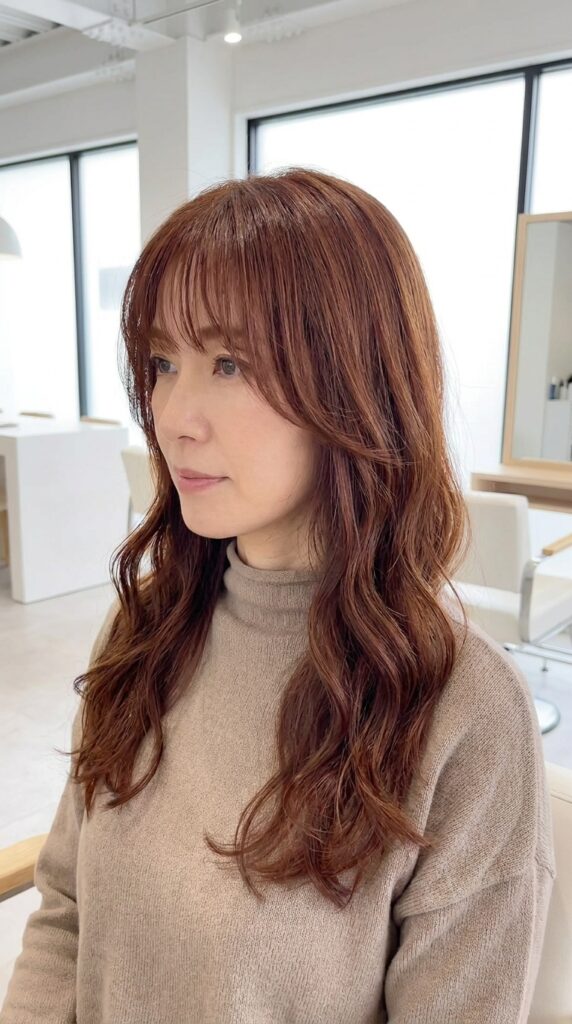
Prompt 10: An elegant hairstyle portrait of an adult woman with long rich auburn hair and softly layered bangs. The fringe contains several carefully graduated lengths rather than one uniform line. Shorter pieces fall around the forehead while progressively longer sections blend seamlessly into cheekbone and jaw-length face-framing layers. The entire haircut feels cohesive, flowing and dimensional. Hair styled with soft natural waves. Model photographed chest-up, slightly turned from the camera so the gradual layering is visible. She wears a muted beige high-neck top. Background: airy minimalist salon filled with soft natural light and a blurred neutral interior. Luminous but realistic editorial lighting. Sophisticated hairstyle inspiration, highly detailed strands, believable density, vertical 2:3, no text, graphics or watermark.
Layered bangs contain multiple graduated lengths within the fringe itself, creating depth and movement that a single-length cut simply can’t achieve. Shorter pieces fall near the forehead while longer sections cascade outward and blend seamlessly into face-framing layers, making it nearly impossible to tell where the bangs end and the haircut begins.
This built-in blending makes layered bangs one of the most customizable fringe options. A stylist can adjust the shortest layer, the longest layer and everything in between to suit your specific face shape, hair density and styling preference. They work on both fine and thick hair, though the layering strategy will differ: fine hair benefits from fewer, more strategic layers, while thick hair can handle more dramatic graduation.
Growing out layered bangs is also relatively painless since they already contain multiple lengths that transition naturally into the rest of your hair.
11. Korean See-Through Bangs
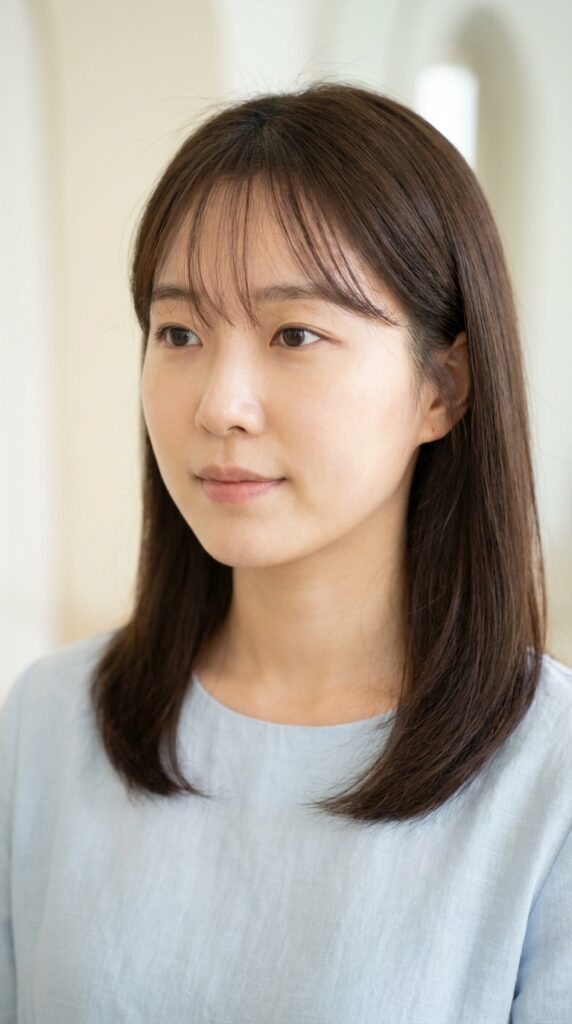
Prompt 11: A fresh minimalist beauty portrait of an adult East Asian woman with smooth dark brown hair and authentic Korean see-through bangs. The fringe is extremely lightweight and intentionally sparse, with fine strands gently falling across the forehead while plenty of skin remains visible between them. Central fringe is soft and delicate with slightly longer side pieces framing the temples. Paired with glossy medium-length straight hair featuring subtle inward bends near the ends. Photographed shoulders-up from a mostly front-facing angle so the transparency of the fringe is clearly visible. She wears a simple pale-blue modest blouse. Background: clean bright Korean-inspired beauty studio with cream and white tones, softly blurred. Soft diffused daylight for fresh natural luminosity. Refined K-beauty aesthetic, realistic skin and hair strands, vertical 2:3 composition, no text, logos or watermark.
Korean see-through bangs are intentionally cut with very few strands, creating an ultra-light fringe that reveals most of the forehead. The effect is barely-there and youthful, with delicate wisps falling softly across the skin rather than forming a visible curtain. Slightly longer pieces often frame the temples for added softness.
While they might sound similar to wispy bangs, the difference lies in how much hair is actually used. See-through bangs are even more minimal, with noticeably wider gaps between the strands. This makes them ideal for fine, straight hair that naturally falls in thin, separated pieces. Thicker hair can achieve the look, but it requires careful thinning and layering to avoid heaviness.
Styling is quick: a gentle blow-dry and perhaps a light setting spray to keep the strands in place. The biggest maintenance factor is oil control, since bangs this sheer can look limp or clumpy if the forehead gets oily throughout the day. A small amount of dry shampoo can help between washes.
12. Shaggy Bangs
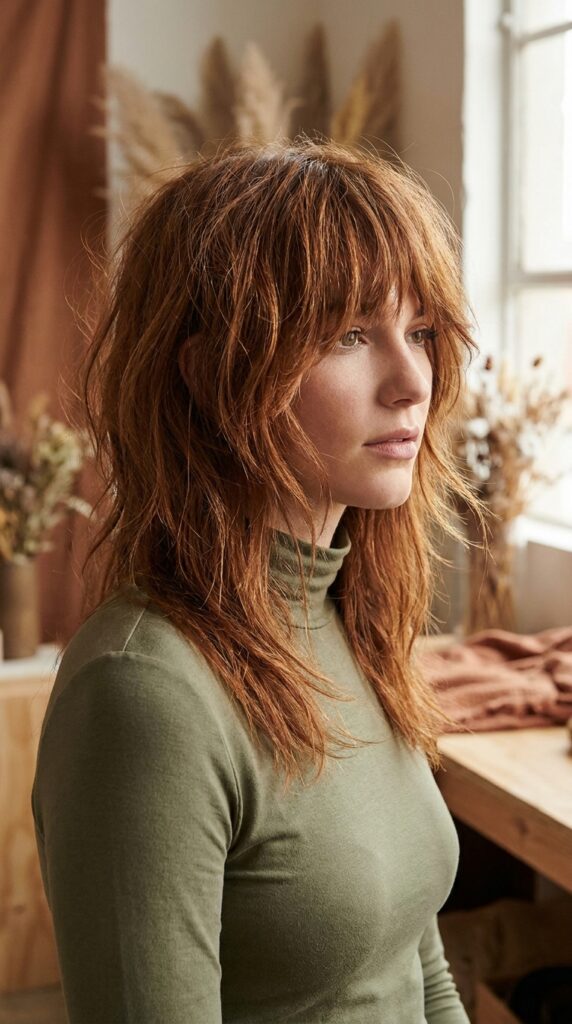
Prompt 12: A stylish editorial hairstyle portrait of an adult woman with thick medium-length copper-brown hair and textured shaggy bangs. The fringe features irregular layered lengths, piecey separation and soft undone movement around the forehead and eyebrows. It blends naturally into a modern shag haircut with heavily textured face-framing layers. Hair is intentionally effortless but professionally styled. Natural bends and tousled texture rather than polished curls. Photographed chest-up at a dynamic three-quarter angle with slight natural movement in the hair. She wears a simple dark olive high-neck top. Background: warm creative studio with muted earthy colors and softly blurred natural textures. Gentle side daylight enhances copper dimension and separation through the layers. Cool, carefree hairstyle editorial, realistic strands and flyaways, vertical 2:3 format, no text, watermark or logo.
Shaggy bangs bring together irregular lengths, piecey texture and a deliberately undone attitude that makes them feel effortlessly cool. Unlike choppy bangs, which focus primarily on uneven cutting at the ends, shaggy bangs incorporate layering within the fringe itself, creating depth, movement and a natural blend into a textured haircut.
They’re designed to look like they weren’t fussed over, with soft bends, natural flyaways and strands that fall in slightly different directions. This makes them a natural partner for shag haircuts, textured lobs and layered styles where imperfection is part of the aesthetic.
Medium to thick hair shows off the shaggy texture most visibly, though wavy and curly hair can also create gorgeous results with the right layering. Styling usually involves scrunching a texture spray or mousse through damp fringe and letting it air-dry, or giving it a quick tousle with a blow-dryer on low heat. The less structured the approach, the better they tend to look.
How to Choose Bangs for Your Face Shape
Face-shape guidance is a helpful starting point, but it’s never a strict set of rules. Personal preference, hair texture and the overall haircut all matter just as much as proportions. Use these suggestions as a starting point rather than a limitation.
Oval Face
Oval faces have naturally balanced proportions, which means most bang styles tend to work well. This is a great shape for experimenting with anything from blunt bangs to wispy fringe to curtain styles. The main consideration is what kind of mood you want to create rather than what you need to balance.
Round Face
Bangs with longer side sections, diagonal movement or a center part can help create the appearance of length and structure. Curtain bangs, side-swept bangs and bottleneck bangs all tend to flatter round faces by drawing the eye vertically rather than emphasizing width.
Square Face
Softer fringe styles can complement a defined jawline beautifully. Wispy bangs, layered bangs and side-swept fringe create gentle contrast against stronger angles. The key is introducing softness around the forehead without making the fringe too heavy or too blunt.
Heart-Shaped Face
A wider forehead and narrower chin benefit from bangs that create coverage across the brow area while keeping the cheekbones open. Curtain bangs, wispy fringe and Bardot bangs all work well here, drawing attention to the eyes and mid-face rather than emphasizing the forehead width.
Long or Oblong Face
Fuller bangs can visually shorten the forehead and make the overall face proportions feel more balanced. Blunt bangs, Bardot bangs and thicker curtain styles all help here. The one thing to watch for is excessive volume at the crown, which can sometimes add height and work against the goal of shortening.
How to Choose Bangs for Your Hair Texture
Fine Hair
Lightweight fringe styles work best because they don’t remove too much hair from the main body of the cut. Wispy bangs, see-through bangs and soft curtain bangs all create beautiful results without making the rest of the hair look thinner. Avoid overly thick, dense fringe that requires pulling a large section of hair forward.
Thick Hair
Thick hair can support almost any fringe style, including options that need density to look their best. Blunt bangs, Bardot bangs, shaggy bangs and layered bangs all benefit from having more hair to work with. Internal layering within the fringe can help manage the weight without sacrificing fullness.
Straight Hair
Straight hair showcases precision cuts beautifully. Blunt bangs, micro bangs and see-through bangs all hold their shape cleanly on straight texture. The flip side is that any unevenness or imprecision also shows more clearly, so regular maintenance matters.
Wavy Hair
Natural waves add built-in movement and body to bangs, making styles like curtain bangs, shaggy bangs, bottleneck bangs and choppy bangs look effortlessly textured with minimal styling effort.
Curly or Coily Hair
The most important factor with curly bangs is accounting for shrinkage. Curls spring upward as they dry, so the cutting length needs to be longer than the desired final result. Working with a stylist who understands your curl pattern and cuts accordingly makes all the difference. Avoid choosing reference photos of straight-hair bangs and expecting the same result on curly texture. Instead, look for inspiration photos with a similar curl type to yours.
Caring for Your New Bangs
Bangs tend to get oily faster than the rest of your hair because they sit against the forehead. You don’t always need to wash your entire head to keep them fresh. A quick rinse and blow-dry of just the fringe can make a noticeable difference, and a light dusting of dry shampoo at the roots absorbs oil without adding visible residue.
When styling, work with your bangs while they’re still slightly damp for the smoothest results. Use a round brush to create volume and direction, or a flat brush for a sleeker finish. Always apply heat protectant before blow-drying, and direct the airflow downward along the hair shaft to reduce frizz.
Humidity can cause bangs to swell, curl or separate unpredictably. A lightweight anti-humidity spray or a small amount of smoothing serum can help keep them in place throughout the day. For curly bangs, refresh the curl pattern with a water spritz and a touch of curl cream rather than re-washing.
Trim frequency depends entirely on your fringe style and how fast your hair grows. Micro bangs and blunt fringe may need reshaping every three to four weeks to maintain their precision, while longer styles like curtain bangs or side-swept fringe can go six to eight weeks or longer between trims. Pay attention to when the style starts losing its intended shape rather than following a rigid schedule.
When growing bangs out, be patient and strategic. Pin them back, braid them into the sides or tuck them behind your ears during the transition. Side-swept and curtain styles grow out most gracefully, while blunt and micro bangs typically require the most patience during the in-between phase.
Quick Bang Style Comparison
| Bang Style | Overall Vibe | Best Hair Texture | Styling Level | Grow-Out Ease |
|---|---|---|---|---|
| Curtain Bangs | Soft, feminine, versatile | Most textures | Low | Easy |
| Blunt Bangs | Bold, polished, structured | Straight to slightly wavy | Moderate | Moderate |
| Side-Swept Bangs | Classic, soft, romantic | Most textures | Low | Very easy |
| Wispy Bangs | Delicate, airy, understated | Fine to medium | Low | Easy |
| Curly Bangs | Natural, textured, dimensional | Curly, coily | Low to moderate | Moderate |
| Micro Bangs | Edgy, fashion-forward, bold | Straight to slightly wavy | Low | Difficult |
| Bottleneck Bangs | Polished, contoured, flattering | Medium to thick | Moderate | Easy |
| Choppy Bangs | Relaxed, edgy, textured | Medium to thick | Low | Moderate |
| Bardot Bangs | Glamorous, romantic, retro | Medium to thick | Moderate | Easy |
| Layered Bangs | Dimensional, flowing, blended | Most textures | Low to moderate | Very easy |
| See-Through Bangs | Minimal, youthful, fresh | Fine, straight | Low | Easy |
| Shaggy Bangs | Cool, effortless, textured | Medium to thick, wavy | Low | Easy |
How to Ask Your Stylist for Bangs
The most effective way to communicate the bangs you want is to bring visual references. Save several photos from Pinterest that show the fringe length, density, parting and overall shape you’re drawn to. Having multiple images helps your stylist see the common thread in what you like, even if the photos aren’t identical.
During the consultation, talk through these key details:
- Fringe length: Where do you want the shortest pieces to fall? Above the brows? At the brows? Below?
- Density: Do you want full, thick bangs or something lighter and more see-through?
- Parting: Center part, side part or no part at all?
- Forehead coverage: Full coverage or visible skin between the strands?
- Face-framing length: How far should the longest pieces extend? Cheekbone? Chin? Jawline?
- Natural texture: How does your hair behave when air-dried? Does it wave, curl or fall straight?
- Growth patterns: Do you have a cowlick or a natural part that might affect how bangs lay?
- Daily effort: How much time are you willing to spend styling your fringe each morning?
- Grow-out plan: Do you want something easy to grow out, or are you committing long-term?
A good stylist will also evaluate your hair density, forehead size and hairline shape to make sure the bangs work harmoniously with your natural features. The more honestly you communicate your lifestyle and styling habits, the better the result.
Types of Bangs FAQs
What type of bangs are easiest to maintain?
Curtain bangs and side-swept bangs are generally the lowest-maintenance options. They don’t require precise positioning every morning, they blend naturally into the rest of the hair and they look intentional even when slightly grown out. Wispy bangs are also easy to manage since their imperfect separation is part of the style.
What bangs are best for beginners?
Curtain bangs are widely considered the best starting point for anyone trying fringe for the first time. They’re forgiving, versatile and easy to grow out if you change your mind. Side-swept bangs are another low-risk option since they blend into the haircut smoothly and don’t require a dramatic commitment.
Which bangs grow out the easiest?
Side-swept bangs, curtain bangs and layered bangs tend to grow out most gracefully. Their shapes already incorporate longer pieces that transition naturally into the rest of the hair, so the awkward in-between phase is shorter and less noticeable. Micro bangs and blunt bangs typically require the most patience during grow-out.
Which type of bangs makes your face look slimmer?
Bangs with longer side sections and diagonal movement can help create the appearance of a more elongated face shape. Curtain bangs, side-swept bangs and bottleneck bangs all draw the eye vertically and create a slimming frame around the cheekbones. Avoiding a heavy, straight-across fringe can also help.
What bangs work best for fine hair?
Wispy bangs, see-through bangs and light curtain bangs all work well with fine hair because they require fewer strands, preserving the density of the rest of your hair. The key is avoiding bangs that pull too much hair forward, which can make the sides and crown look thin.
What bangs work best for thick hair?
Thick hair supports most fringe styles beautifully, especially those that need density to look their best. Blunt bangs, Bardot bangs, shaggy bangs and choppy bangs all benefit from having more hair to create fullness and texture. Internal layering within the fringe can help manage the weight.
Can curly hair have bangs?
Absolutely. Curly bangs can look stunning when cut by a stylist who understands curl behavior and shrinkage. The key is cutting to accommodate the natural spring of the curl so the dry length falls where you want it. Look for inspiration photos with a similar curl pattern to yours rather than straight-hair references.
What is the difference between curtain and bottleneck bangs?
Curtain bangs part openly in the center with shorter face-framing pieces that sweep outward. Bottleneck bangs maintain more coverage through the center of the forehead while the sides curve gradually longer toward the cheekbones, creating a rounded, contoured shape. Bottleneck bangs feel slightly more structured and face-sculpting.
What is the difference between wispy and see-through bangs?
Both are lightweight fringe styles, but see-through bangs use even fewer strands, creating wider gaps that show significantly more forehead. Wispy bangs are delicate and feathered but still provide moderate coverage. See-through bangs are closer to a hint of fringe than a full commitment.
How do I know if bangs will suit me?
The truth is, almost everyone can wear some form of bangs. The key is choosing the right style for your face shape, hair texture and lifestyle. If you’re unsure, start with something versatile and low-commitment like curtain or side-swept bangs. Bring several inspiration photos to your stylist and ask for their professional opinion during a consultation before cutting.
Final Thoughts
Whether you’re drawn to the soft romance of curtain bangs, the sharp confidence of a blunt fringe or the carefree energy of shaggy layers, there’s a bang style that can transform your look without changing your entire hairstyle. The right choice comes down to what makes you feel most like yourself.
Your hair texture, density, face shape and how much time you’re willing to spend each morning all play a role in finding the best match. But so does something less measurable: how the style makes you feel when you look in the mirror. The best bangs are the ones that make you excited about your hair again.
Don’t feel pressured to follow trends that don’t resonate with you. Instead, focus on the styles that caught your eye as you read through this guide. Save those to your Pinterest boards, collect a few different angles of each, and bring your favorites to your next salon appointment. Your stylist can help refine the vision from there, tailoring the fringe to your unique features and making sure you walk out loving what you see.